


Nuclear power proponents yesterday said they would launch new referendum proposals to extend the operation of nuclear power plants and relocate nuclear waste stored on Orchid Island (Lanyu, 蘭嶼), after the government said it would decommission the reactors on schedule.
A majority of voters on Nov. 24 last year voted in favor of abolishing Article 95-1 of the Electricity Act (電業法) — which states that all nuclear power generation facilities must halt operations by 2025 — in a referendum held alongside the local elections.
However, the Ministry of Economic Affairs on Jan. 31 said it has no plans to extend the 40-year permits of the operational nuclear reactors or resume the construction of the mothballed Fourth Nuclear Power Plant, sparking criticism.
The Jinshan Nuclear Power Plant in New Taipei City’s Shihmen District (石門) has started decommissioning, but the municipality is opposed to a nuclear waste storage for the plant proposed by Taiwan Power Co.
Meanwhile, the permits for four reactors at the Guosheng Nuclear Power Plant in the city’s Wanli District (萬里) and the Ma-anshan Nuclear Power Plant in Ma-anshan (馬鞍山), Pingtung County, are to expire between 2021 and 2025, according to the Atomic Energy Council.
The council has said that applications to extend reactors’ operations must be filed five years before permits expire, but that is merely a rule set by the council, which it can adjust at will, said Nuclear Myth Busters founder Huang Shih-hsiu (黃士修), who launched last year’s referendum about the Electicity Act.
To push the government to respect the electorate’s support for nuclear power, Huang and other supporters would launch three new referendum proposals to extend the three operational plants’ licenses, resume construction of the Fourth Nuclear Power Plant and relocate barrels of low-radioactivity nuclear waste stored on Orchid Island, he said.
The second proposal last year garnered more than 200,000 signatures and would be forwarded to the Central Election Commission for review next month, he said.
Critics have said that Huang does not care about Orchid Island’s residents, but he would prove them wrong by launching a referendum proposal to push the government to move nuclear waste back to the plants, he said, adding that nuclear waste can be safe if it is properly stored in a secluded location.
The proponents would have more discussions with Orchid Island’s Tao people about how they should launch the nuclear waste proposal and announce an initial plan later this week, said Liao Yen-peng (廖彥朋), a nuclear power supporter and Chinese Society of Medical Physics member.
Separately yesterday, opponents of nuclear power called on the government to decommission the plants according to schedule, saying that their locations near fault lines continue to pose a danger to local residents.

Kenting National Park service technician Yang Jien-fon (楊政峰) won a silver award in World Grand Prix Photography Awards Spring Season for his photograph of two male rat snakes intertwined in combat. Yang’s colleagues at Kenting National Park said he is a master of nature photography who has been held back by his job in civil service. The awards accept entries in all four seasons across six categories: architectural and urban photography, black-and-white and fine art photography, commercial and fashion photography, documentary and people photography, nature and experimental photography, and mobile photography. Awards are ranked according to scores and divided into platinum, gold and

More than half of the bamboo vipers captured in Tainan in the past few years were found in the city’s Sinhua District (新化), while other districts had smaller catches or none at all. Every year, Tainan captures about 6,000 snakes which have made their way into people’s homes. Of the six major venomous snakes in Taiwan, the cobra, the many-banded krait, the brown-spotted pit viper and the bamboo viper are the most frequently captured. The high concentration of bamboo vipers captured in Sinhua District is puzzling. Tainan Agriculture Bureau Forestry and Nature Conservation Division head Chu Chien-ming (朱健明) earlier this week said that the
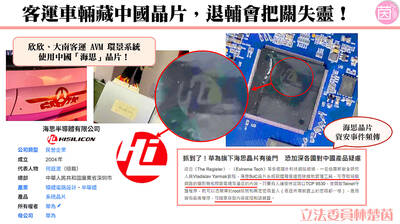
BREACH OF CONTRACT: The bus operators would seek compensation and have demanded that the manufacturer replace the chips with ones that meet regulations Two bus operators found to be using buses with China-made chips are to demand that the original manufacturers replace the systems and provide compensation for breach of contract, the Veterans Affairs Council said yesterday. Democratic Progressive Party Legislator Michelle Lin (林楚茵) yesterday said that Da Nan Bus Co and Shin-Shin Bus Co Ltd have fielded a total of 82 buses that are using Chinese chips. The bus models were made by Tron-E, while the systems provider was CYE Electronics, Lin said. Lin alleged that the buses were using chips manufactured by Huawei subsidiary HiSilicon Co, which presents a national security risk if the

The National Immigration Agency has banned two Chinese from returning to Taiwan, after they published social media content it described as disrespectful to national sovereignty. The agency imposed a two-month ban on a Chinese man surnamed Liang (梁) and a permanent ban on a woman surnamed Yang (楊), an influencer with 23 million followers, in October last year and last week respectively. Minister of the Interior Liu Shyh-fang (劉世芳) yesterday said on the sidelines of a legislative meeting that Chinese visitors to Taiwan are required to comply with the rules and regulations governing their entry permits. The government has handled the ban and


 RSS
RSS