


A total of 165 babies have died of sudden infant death syndrome (SIDS) over the past five years, although placing a sleeping baby on their back can reduce the risk, the Health Promotion Administration (HPA) said yesterday.
SIDS, also known as “crib death,” is the death of a seemingly healthy baby of 12 months or younger that remains unexplained even after a thorough autopsy and detailed investigation of the death scene have been conducted.
The syndrome has been among the top 10 causes of infant death in Taiwan since 2008, the administration said, adding that there were 165 SIDS cases from 2013 to last year — about one to two babies out of every 10,000 live births — with 23 cases reported last year alone.
According to the American Academy of Pediatrics, SIDS is the third-leading cause of child mortality in the US, with about 1,900 cases a year, the HPA said.
A literature review of studies published on JAMA Pediatrics in 2016 suggested that placing a sleeping baby on their stomach led to a higher risk of SIDS than placing a baby on their back.
The Taiwan Pediatric Association also suggested that sleeping babies of 12 months or younger be placed on their back to prevent SIDS.
Parents and caregivers should always place sleeping babies on their back and remove extra items such as pillows and stuffed animals from the crib, because babies cannot remove soft items that might cover their nose and mouth, risking suffocation, HPA Director-General Wang Ying-wei (王英偉) said.
Babies can sleep in the same room as parents or siblings, but not in the same bed, the administration said, adding that the baby’s blankets should be lightweight and breathable, and tucked no higher than the shoulders.
Babies can also sleep in a fitted baby sleeping bag that rests on a flat, firm mattress with a fitted sheet, the administration said.
Never place a sleeping baby on a sofa, chair or cushion — or on their stomach on top of the parent’s body, it added.
The air quality of the room should be good, without cigarette smoke, and the room’s temperature should be adjusted so that the baby will feel neither too hot nor too cold, the administration said.

Taiwanese can file complaints with the Tourism Administration to report travel agencies if their activities caused termination of a person’s citizenship, Mainland Affairs Council Minister Chiu Chui-cheng (邱垂正) said yesterday, after a podcaster highlighted a case in which a person’s citizenship was canceled for receiving a single-use Chinese passport to enter Russia. The council is aware of incidents in which people who signed up through Chinese travel agencies for tours of Russia were told they could obtain Russian visas and fast-track border clearance, Chiu told reporters on the sidelines of an event in Taipei. However, the travel agencies actually applied
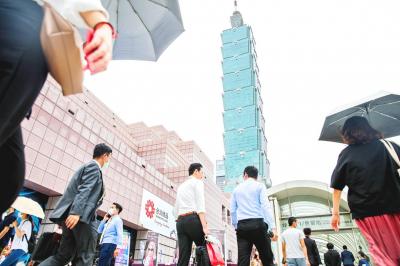
Japanese footwear brand Onitsuka Tiger today issued a public apology and said it has suspended an employee amid allegations that the staff member discriminated against a Vietnamese customer at its Taipei 101 store. Posting on the social media platform Threads yesterday, a user said that an employee at the store said that “those shoes are very expensive” when her friend, who is a migrant worker from Vietnam, asked for assistance. The employee then ignored her until she asked again, to which she replied: "We don't have a size 37." The post had amassed nearly 26,000 likes and 916 comments as of this

New measures aimed at making Taiwan more attractive to foreign professionals came into effect this month, the National Development Council said yesterday. Among the changes, international students at Taiwanese universities would be able to work in Taiwan without a work permit in the two years after they graduate, explainer materials provided by the council said. In addition, foreign nationals who graduated from one of the world’s top 200 universities within the past five years can also apply for a two-year open work permit. Previously, those graduates would have needed to apply for a work permit using point-based criteria or have a Taiwanese company
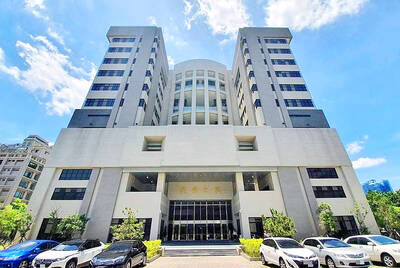
The Shilin District Prosecutors’ Office yesterday indicted two Taiwanese and issued a wanted notice for Pete Liu (劉作虎), founder of Shenzhen-based smartphone manufacturer OnePlus Technology Co (萬普拉斯科技), for allegedly contravening the Act Governing Relations Between the People of the Taiwan Area and the Mainland Area (臺灣地區與大陸地區人民關係條例) by poaching 70 engineers in Taiwan. Liu allegedly traveled to Taiwan at the end of 2014 and met with a Taiwanese man surnamed Lin (林) to discuss establishing a mobile software research and development (R&D) team in Taiwan, prosecutors said. Without approval from the government, Lin, following Liu’s instructions, recruited more than 70 software


 RSS
RSS