


Chunghwa Telecom offers the fastest mobile Internet download speed in 22 cities and counties, a report published yesterday by the National Communications Commission showed.
The telecom’s mobile Internet service on the 4G network is also the fastest among the nation’s providers when tested along the routes of the Taiwan Railways Administration and Taiwan High Speed Rail Corp, as well as most MRT lines, the report said.
The commission said that it tasked the Telecom Technology Center with measuring the transmission speeds of 4G service providers from June to October last year at fixed locations, as well as on the move.
Although testers measured both mobile Internet download and upload speeds, people tend to focus more on how fast content can be downloaded.
Technicians tested transmissions in outdoor areas near the offices of 7,851 village and borough wardens, the commission said.
The average download speed on the nation’s 4G network at fixed locations was 95.42 megabits per second (Mbps) last year, up 68.25 percent from 2017, the report said.
The average upload speed also rose from 21.54Mbps to 26.43Mbps, while the average download speed for cloud content at fixed locations was 82.93Mbps, the report said.
Technicians also measured Internet transmission speeds on local roads, expressways, freeways and along railway lines, the commission said.
The average download speed on national freeways ranged between 39.09Mbps and 78.5Mbps, while on railway systems it was between 28Mbps and 104.48Mbps, the report said.
Miaoli County had the fastest 4G network download speeds, reaching up to 125.64Mbps, followed by Nantou County (115.99Mbps) and Kinmen County (115.48Mbps), the report found.
All three counties are relatively less populated.
Of the six special municipalities, Tainan had the slowest download speed at 83.89Mbps, while Taichung had the fastest at 102.69Mbps, followed by Taipei (100.28Mbps), New Taipei City (93.64Mbps), Taoyuan (86.87Mbps) and Kaohsiung (86.68Mbps), the report said.
Keelung led other cities and counties in upload speed with 31.69Mbps, followed by Chiayi (30.5Mbps) and Taipei (29.8Mbps), while Chiayi County was the slowest at 20.79Mbps, it said.
Technicians found that the average times needed to open the front pages of Google, Facebook and YouTube were all less than 1.5 seconds nationwide, it added.
In previous tests, Chunghwa Telecom was criticized for being behind other carriers in terms of Internet speeds.
However, last year’s measurement showed that the firm has improved greatly by surpassing all other local telecoms at fixed locations, with download speeds nationwide exceeding 100Mbps, the report said.
Chunghwa Telecom also fared better in terms of download speeds along railway lines (50.26Mbps) and the high-speed rail network (37.6Mbps), as well as on the Taipei MRT’s Brown (69.24Mbps), Red (78.92Mbps) and Yellow (122.51Mbps) lines, and on the Kaohsiung MRT system’s Red (96.69Mbps) and Orange (146.58Mbps) lines, the report said.
The firm also dominated in terms of download speeds measured on national freeways and the majority of local roads, it added.
Meanwhile, Taiwan Mobile excelled in download speeds measured on the Taipei MRT’s Blue (103.42Mbps) and Green (116.57Mbps) lines, as well as the Taoyuan International Airport MRT Line (70.43Mbps), the report said.
Far Eastone Telecommunications performed better in more than half of the nation’s cities and counties in terms of upload speeds, it said.
Asia-Pacific Telecom and Taiwan Star were mostly ranked fourth or fifth in all measurement categories, it added.
Measurements were also taken at 749 villages in 84 remote towns, as the government has encouraged carriers to build telecommunications infrastructure in remote areas, commission spokesman Wong Po-tsung (翁柏宗) said.
The commission has lowered frequency usage fees and made funding available through the Forward-looking Infrastructure Development Program to assist in such development, he said.
The number of users on the nation’s 4G network vastly increased from 21.93 million in September 2017 to 26.9 million last year, commission data showed.

Taiwanese can file complaints with the Tourism Administration to report travel agencies if their activities caused termination of a person’s citizenship, Mainland Affairs Council Minister Chiu Chui-cheng (邱垂正) said yesterday, after a podcaster highlighted a case in which a person’s citizenship was canceled for receiving a single-use Chinese passport to enter Russia. The council is aware of incidents in which people who signed up through Chinese travel agencies for tours of Russia were told they could obtain Russian visas and fast-track border clearance, Chiu told reporters on the sidelines of an event in Taipei. However, the travel agencies actually applied

Japanese footwear brand Onitsuka Tiger today issued a public apology and said it has suspended an employee amid allegations that the staff member discriminated against a Vietnamese customer at its Taipei 101 store. Posting on the social media platform Threads yesterday, a user said that an employee at the store said that “those shoes are very expensive” when her friend, who is a migrant worker from Vietnam, asked for assistance. The employee then ignored her until she asked again, to which she replied: "We don't have a size 37." The post had amassed nearly 26,000 likes and 916 comments as of this

New measures aimed at making Taiwan more attractive to foreign professionals came into effect this month, the National Development Council said yesterday. Among the changes, international students at Taiwanese universities would be able to work in Taiwan without a work permit in the two years after they graduate, explainer materials provided by the council said. In addition, foreign nationals who graduated from one of the world’s top 200 universities within the past five years can also apply for a two-year open work permit. Previously, those graduates would have needed to apply for a work permit using point-based criteria or have a Taiwanese company
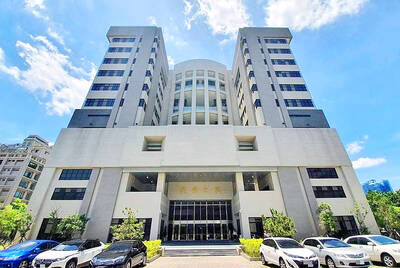
The Shilin District Prosecutors’ Office yesterday indicted two Taiwanese and issued a wanted notice for Pete Liu (劉作虎), founder of Shenzhen-based smartphone manufacturer OnePlus Technology Co (萬普拉斯科技), for allegedly contravening the Act Governing Relations Between the People of the Taiwan Area and the Mainland Area (臺灣地區與大陸地區人民關係條例) by poaching 70 engineers in Taiwan. Liu allegedly traveled to Taiwan at the end of 2014 and met with a Taiwanese man surnamed Lin (林) to discuss establishing a mobile software research and development (R&D) team in Taiwan, prosecutors said. Without approval from the government, Lin, following Liu’s instructions, recruited more than 70 software


 RSS
RSS