


The convictions of about 1,000 people tried during the White Terror era are to be annulled by next month, the Transitional Justice Commission said yesterday.
Prisoners of conscience and other White Terror victims who have already received compensation from the state would have their convictions struck from records of the Judicial Yuan, the ministries of justice and national defense, and the National Police Agency, commission Deputy Chairman Chang Tien-chin (張天欽) said.
However, the convictions in 96 cases, where the commission deemed the evidence of espionage was credible, would not be overturned, he said.
The commission’s decisions were made according the Act Governing the Recovery of Damage of Individual Rights During the Period of Martial Law (戒嚴時期人民受損權利回復條例) and the Compensation Act for Wrongful Trials on Charges of Sedition and Espionage During the Martial Law Period (戒嚴時期不當叛亂暨匪諜審判案件補償條例), he said.
Cases that did not involve political crimes would be reviewed at a later time, the commission said.
That was a disappointment to the family of Voyue Tosku (杜孝生), the first Tsou to become doctor of Western medicine, sources said.
A military tribunal convicted him and sentenced him to 17 years in prison. He served three.
His surviving family members have appealed to the commission to reconsider its decision, they said.
The commission is going to reopen several cases — including that of Voyue Tosku and the Wuhan Hotel (武漢旅社) incident — where an unfair sentence not covered by the above laws could have been made, Chang said, citing Article 6 of the Act on Promoting Transitional Justice (促進轉型正義條例).
However, his case has to be reviewed before a determination can be made about whether his conviction was a miscarriage of justice, the commission said.
Voyue Tosku studied at Taihoku Imperial University — which became National Taiwan University in November 1945 — and after World War II became a public sanitation official in the then-Wufeng Township (吳鳳), Chiayi County.
He became embroiled in the 1952 treason case of another Tsou, Uyongu Yatauyanguna (湯守仁), a proponent of Aboriginal autonomy, and was charged with corruption in connection to his position as head of an Aboriginal agricultural commune.
In addition to being sentenced to prison, his property was confiscated, while Uyongu Yatauyanguna and two other defendants convicted in the case were executed by firing squad in 1953.
In 1997, Voyue Tosku applied to the Memorial Foundation of 228 for state compensation for his conviction, but his request was rejected on grounds that he had not been convicted of a political crime.
He died in 2001.

Taiwanese can file complaints with the Tourism Administration to report travel agencies if their activities caused termination of a person’s citizenship, Mainland Affairs Council Minister Chiu Chui-cheng (邱垂正) said yesterday, after a podcaster highlighted a case in which a person’s citizenship was canceled for receiving a single-use Chinese passport to enter Russia. The council is aware of incidents in which people who signed up through Chinese travel agencies for tours of Russia were told they could obtain Russian visas and fast-track border clearance, Chiu told reporters on the sidelines of an event in Taipei. However, the travel agencies actually applied
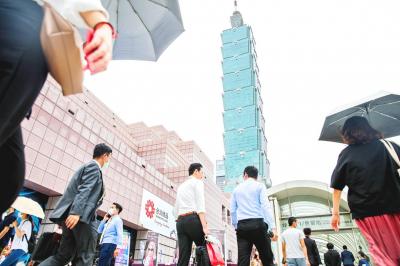
Japanese footwear brand Onitsuka Tiger today issued a public apology and said it has suspended an employee amid allegations that the staff member discriminated against a Vietnamese customer at its Taipei 101 store. Posting on the social media platform Threads yesterday, a user said that an employee at the store said that “those shoes are very expensive” when her friend, who is a migrant worker from Vietnam, asked for assistance. The employee then ignored her until she asked again, to which she replied: "We don't have a size 37." The post had amassed nearly 26,000 likes and 916 comments as of this

New measures aimed at making Taiwan more attractive to foreign professionals came into effect this month, the National Development Council said yesterday. Among the changes, international students at Taiwanese universities would be able to work in Taiwan without a work permit in the two years after they graduate, explainer materials provided by the council said. In addition, foreign nationals who graduated from one of the world’s top 200 universities within the past five years can also apply for a two-year open work permit. Previously, those graduates would have needed to apply for a work permit using point-based criteria or have a Taiwanese company
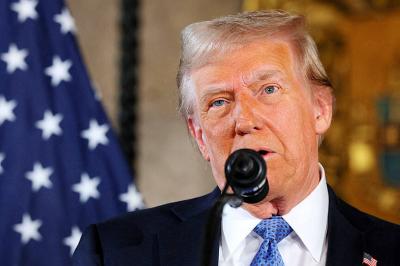
US President Donald Trump said "it’s up to" Chinese President Xi Jinping (習近平) what China does on Taiwan, but that he would be "very unhappy" with a change in the "status quo," the New York Times said in an interview published yesterday. Xi "considers it to be a part of China, and that’s up to him what he’s going to be doing," Trump told the newspaper on Wednesday. "But I’ve expressed to him that I would be very unhappy if he did that, and I don’t think he’ll do that," he added. "I hope he doesn’t do that." Trump made the comments in


 RSS
RSS