


Thirteen Maxim Trader Group executives and employees yesterday were found guilty by the New Taipei District Court of defrauding investors in Taiwan of about NT$13.9 billion (US$453 million at the current exchange rate) between 2013 and 2015.
Maxim Trader executives and its promoters touted the firm’s forex trading, mutual funds and other investment opportunities with a promised monthly return on investment (ROI) of between 3 and 8 percent and as much as 98 percent within a year.
However, an investigation determined the company was operating a Ponzi scheme, in which the main operators were Singaporeans who had registered the company in Malaysia and New Zealand.
About 50,000 people from Taiwan, Southeast Asia, Hong Kong, China, Japan, South Korea and Australia invested with the company before it collapsed in 2015.
Maxim Trader’s Taiwan chief executive Chang Chin-su (張金素) was sentenced to 11 years in prison and fined NT$100 million, while his chief assistant, Chia Hsiang-chieh (賈翔傑), was sentenced to nine years and fined NT$50 million.
Other local employees found guilty of contravening the Banking Act (銀行法), financial fraud and related charges included Chang’s sister, Chang Mu-tan (張牡丹), financial advisers and course instructors.
Chang Mu-tan was given a five-year sentence, while the others received terms ranging from three to eight years, and fines of up to NT$50 million.
Yesterday’s ruling was the first in the case and can be appealed.
A woman surnamed Ho (何) who attended the sentencing hearing said she had lost her life savings of NT$2.84 million.
“Some defendants changed their names and continue to deceive people with investment scams,” Ho said. “The sentences are too lenient. As a member of the victims’ group, I want to appeal for them to receive a sentence of at least 14 or 15 years. Only then can society deter such fraudsters.”
The defendants gained the trust of investors by claiming Maxim Trader was an affiliate of Royale Globe Holding, a NASDAQ-listed company.
However, investigators found they had simply registered shell entities in Taiwan and transferred investors’ money into bank accounts overseas.
Judicial authorities said Maxim Trader offices around the region held seminars and “financial investment courses” to attract investors, and encouraged investors to recruit other people.
The Ministry of Justice Investigation Bureau in 2015 raided 16 locations linked to the company, seizing about NT$75.96 million in cash, along with jewelry, luxury watches, brand-name handbags and luxury cars, including Maseratis, Bentleys and BMWs.
The company began operations in Malaysia, with ties to shell companies incorporated in the Seychelles and New Zealand.
Malaysian authorities earlier this year indicted three Singaporeans, New Zealand-incorporated Maxim Capital chief executive Andrew Lim Ann Hoe, and company executives Chin Ming Kam and Goh Seow Mooi on charges of promoting a pyramid selling scheme known as the Maxim Trader Compensation Plan.
Malaysian investigators estimated that 50,000 investors around Asia had lost a total of US$5 billion.
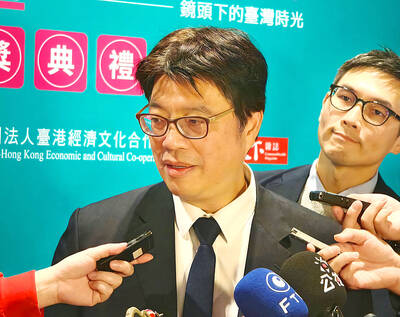
Taiwanese can file complaints with the Tourism Administration to report travel agencies if their activities caused termination of a person’s citizenship, Mainland Affairs Council Minister Chiu Chui-cheng (邱垂正) said yesterday, after a podcaster highlighted a case in which a person’s citizenship was canceled for receiving a single-use Chinese passport to enter Russia. The council is aware of incidents in which people who signed up through Chinese travel agencies for tours of Russia were told they could obtain Russian visas and fast-track border clearance, Chiu told reporters on the sidelines of an event in Taipei. However, the travel agencies actually applied
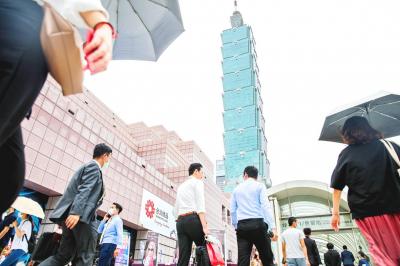
Japanese footwear brand Onitsuka Tiger today issued a public apology and said it has suspended an employee amid allegations that the staff member discriminated against a Vietnamese customer at its Taipei 101 store. Posting on the social media platform Threads yesterday, a user said that an employee at the store said that “those shoes are very expensive” when her friend, who is a migrant worker from Vietnam, asked for assistance. The employee then ignored her until she asked again, to which she replied: "We don't have a size 37." The post had amassed nearly 26,000 likes and 916 comments as of this

New measures aimed at making Taiwan more attractive to foreign professionals came into effect this month, the National Development Council said yesterday. Among the changes, international students at Taiwanese universities would be able to work in Taiwan without a work permit in the two years after they graduate, explainer materials provided by the council said. In addition, foreign nationals who graduated from one of the world’s top 200 universities within the past five years can also apply for a two-year open work permit. Previously, those graduates would have needed to apply for a work permit using point-based criteria or have a Taiwanese company
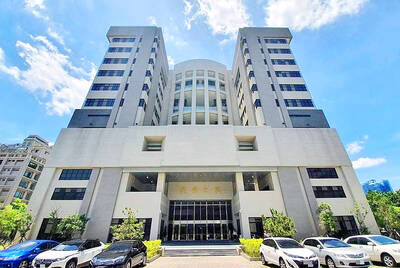
The Shilin District Prosecutors’ Office yesterday indicted two Taiwanese and issued a wanted notice for Pete Liu (劉作虎), founder of Shenzhen-based smartphone manufacturer OnePlus Technology Co (萬普拉斯科技), for allegedly contravening the Act Governing Relations Between the People of the Taiwan Area and the Mainland Area (臺灣地區與大陸地區人民關係條例) by poaching 70 engineers in Taiwan. Liu allegedly traveled to Taiwan at the end of 2014 and met with a Taiwanese man surnamed Lin (林) to discuss establishing a mobile software research and development (R&D) team in Taiwan, prosecutors said. Without approval from the government, Lin, following Liu’s instructions, recruited more than 70 software


 RSS
RSS