


Mainland Affairs Council (MAC) Minister Chen Ming-tong (陳明通) yesterday departed on a nine-day visit to the US to boost policy communication between the two nations and garner greater US support for Taiwan’s cross-strait policy.
From today to Monday next week, Chen is to meet with US officials and Heritage Foundation members, including giving a keynote speech on cross-strait ties at a seminar cosponsored by the council and the think tank.
It is to be the ninth seminar jointly held by the council and the Washington-based think tank. It comes at a time when tensions between the US and China are escalating and Beijing is increasingly flexing its muscles at Taiwan.
Against such a background, the US needs a better understanding of Taiwan’s policy direction and Chen’s visit is intended to improve communication between the two sides, while gaining US support for Taiwan’s cross-strait policy, council officials told reporters.
Chinese President Xi Jinping (習近平) recently talked about cross-strait relations during a closed-door meeting with visiting former vice president Lien Chan (連戰) in Beijing, saying that the peaceful unification of China and Taiwan is ultimately to be achieved as long as the correct direction is maintained.
China’s Taiwan Affairs Office Minister Liu Jieyi (劉結一) has several times accused the US of playing the “Taiwan card” against China after the US signed into law the Taiwan Travel Act, which promotes meetings and visits between high-ranking US and Taiwanese officials.
China was also critical of the US Congress’ approval of the 2019 National Defense Authorization Act in June, which includes provisions to help strengthen Taiwan’s military capabilities.

Trips for more than 100,000 international and domestic air travelers could be disrupted as China launches a military exercise around Taiwan today, Taiwan’s Civil Aviation Administration (CAA) said yesterday. The exercise could affect nearly 900 flights scheduled to enter the Taipei Flight Information Region (FIR) during the exercise window, it added. A notice issued by the Chinese Civil Aviation Administration showed there would be seven temporary zones around the Taiwan Strait which would be used for live-fire exercises, lasting from 8am to 6pm today. All aircraft are prohibited from entering during exercise, it says. Taipei FIR has 14 international air routes and
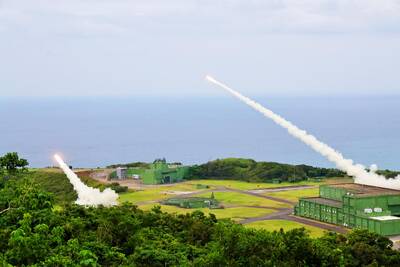
Taiwan lacks effective and cost-efficient armaments to intercept rockets, making the planned “T-Dome” interception system necessary, two experts said on Tuesday. The concerns were raised after China’s military fired two waves of rockets during live-fire drills around Taiwan on Tuesday, part of two-day exercises code-named “Justice Mission 2025.” The first wave involved 17 rockets launched at 9am from Pingtan in China’s Fujian Province, according to Lieutenant General Hsieh Jih-sheng (謝日升) of the Office of the Deputy Chief of the General Staff for Intelligence at the Ministry of National Defense. Those rockets landed 70 nautical miles (129.6km) northeast of Keelung without flying over Taiwan,
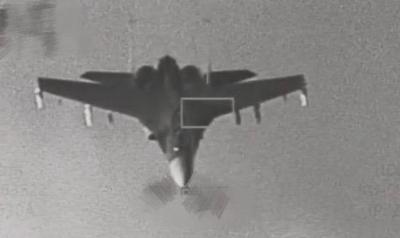
The Ministry of National Defense (MND) today released images of the military tracking China’s People's Liberation Army (PLA) movements during the latest round of Chinese drills around Taiwan. The PLA began "Justice Mission 2025" drills today, carrying out live-fire drills, simulated strikes on land and maritime targets, and exercises to blockade the nation's main ports. The exercises are to continue tomorrow, with the PLA announcing sea and air space restrictions for five zones around Taiwan for 10 hours starting from 8:30am. The ministry today released images showing a Chinese J-16 fighter jet tracked by a F-16V Block 20 jet and the
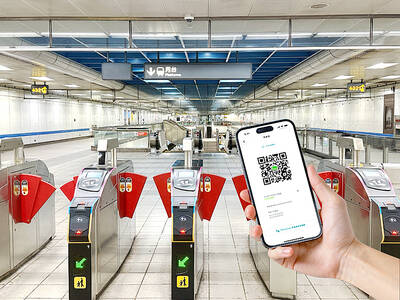
City buses in Taipei and New Taipei City, as well as the Taipei MRT, would on Saturday begin accepting QR code payments from five electronic payment providers, the Taipei Department of Transportation said yesterday. The new option would allow passengers to use the “transportation QR code” feature from EasyWallet, iPass Money, iCash Pay, Jkopay or PXPay Plus. Passengers should open their preferred electronic payment app, select the “transportation code” — not the regular payment code — unlock it, and scan the code at ticket readers or gates, General Planning Division Director-General Liu Kuo-chu (劉國著) said. People should move through the


 RSS
RSS