


Taipei Mayor Ko Wen-je’s (柯文哲) team yesterday interviewed 42 shortlisted candidates who applied to work for Ko’s re-election campaign ahead of the Nov. 24 Taipei mayoral election.
The candidates were selected from 1,839 applicants who responded to an open call by Ko’s team and were interviewed in groups and individually yesterday.
The team initially received about 900 applications, but that number increased to 1,839 after the team released an online short film titled A Day in the Life of the Mayor’s Aide on Thursday last week, Ko campaign office employee Ke Yu-an (柯昱安) said.

Photo: CNA
Ke attributed the increase in the number of applicants to the film, saying it induced more people to identify with the mayor’s ideals.
Ko, an independent, has said that he took a NT$20 million (US$655,000) mortgage on his house as collateral for his campaign fund and that he would not cap the number of campaign office employees as long as the fund could pay their salaries.
An interviewee surnamed Yeh (葉), who is a travel writer, said he applied for a job managing Ko’s social media because he shared the mayor’s visions.
“Ko is a down-to-earth politician who would not let nepotism interfere with his decisionmaking,” Yeh said. “He takes a scientific approach when making policy — he looks at numbers.”
Chen Yu-an (陳俞安), a media worker, said that she applied for the position of campaign office spokesperson.
It is important to reinvent politics and the media, Chen said, adding that Ko’s team seemed vibrant and less concerned with formalities, which fits her personality.
Ko yesterday reiterated that there are no rules to the application process.
The hiring is being conducted in line with his ideals of establishing an open government that allows greater public participation, he said.
Ko said he has always viewed elections as social campaigns to change the culture of Taiwanese politics and would welcome applicants who contribute to society in different ways.
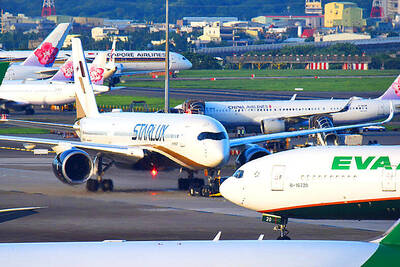
Trips for more than 100,000 international and domestic air travelers could be disrupted as China launches a military exercise around Taiwan today, Taiwan’s Civil Aviation Administration (CAA) said yesterday. The exercise could affect nearly 900 flights scheduled to enter the Taipei Flight Information Region (FIR) during the exercise window, it added. A notice issued by the Chinese Civil Aviation Administration showed there would be seven temporary zones around the Taiwan Strait which would be used for live-fire exercises, lasting from 8am to 6pm today. All aircraft are prohibited from entering during exercise, it says. Taipei FIR has 14 international air routes and
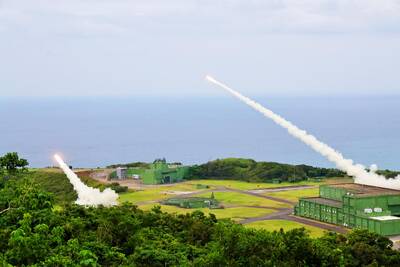
Taiwan lacks effective and cost-efficient armaments to intercept rockets, making the planned “T-Dome” interception system necessary, two experts said on Tuesday. The concerns were raised after China’s military fired two waves of rockets during live-fire drills around Taiwan on Tuesday, part of two-day exercises code-named “Justice Mission 2025.” The first wave involved 17 rockets launched at 9am from Pingtan in China’s Fujian Province, according to Lieutenant General Hsieh Jih-sheng (謝日升) of the Office of the Deputy Chief of the General Staff for Intelligence at the Ministry of National Defense. Those rockets landed 70 nautical miles (129.6km) northeast of Keelung without flying over Taiwan,
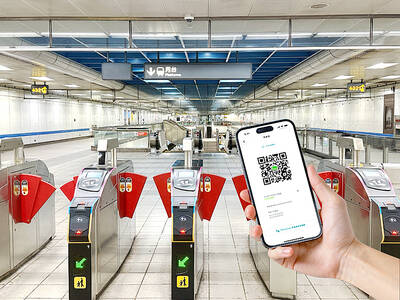
City buses in Taipei and New Taipei City, as well as the Taipei MRT, would on Saturday begin accepting QR code payments from five electronic payment providers, the Taipei Department of Transportation said yesterday. The new option would allow passengers to use the “transportation QR code” feature from EasyWallet, iPass Money, iCash Pay, Jkopay or PXPay Plus. Passengers should open their preferred electronic payment app, select the “transportation code” — not the regular payment code — unlock it, and scan the code at ticket readers or gates, General Planning Division Director-General Liu Kuo-chu (劉國著) said. People should move through the
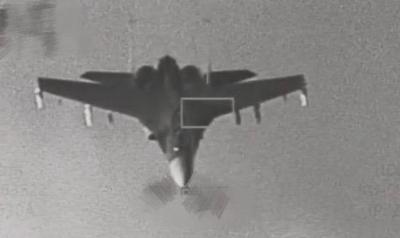
The Ministry of National Defense (MND) today released images of the military tracking China’s People's Liberation Army (PLA) movements during the latest round of Chinese drills around Taiwan. The PLA began "Justice Mission 2025" drills today, carrying out live-fire drills, simulated strikes on land and maritime targets, and exercises to blockade the nation's main ports. The exercises are to continue tomorrow, with the PLA announcing sea and air space restrictions for five zones around Taiwan for 10 hours starting from 8:30am. The ministry today released images showing a Chinese J-16 fighter jet tracked by a F-16V Block 20 jet and the


 RSS
RSS