


Taipei yesterday blasted China for endangering the health of Taiwanese and compromising global epidemic prevention by blocking it from the WHO, as it hopes to attend a major meeting next month.
The Ministry of Foreign Affairs yesterday accused China of having a “secret arrangement” with the WHO, granting Beijing power to veto its attendance even at smaller technical briefings.
Out of the 154 WHO briefings that Taiwan applied for from 2009 to last year, only 46 were approved, the ministry said in a statement.
It also said China had delayed timely notification of health information to Taiwan.
“The unilateral arrangement between China and the WHO not only poses a threat to the health of the Taiwanese people, but it also causes a loophole in global epidemic prevention,” it said.
The comments came in response to a statement on Wednesday from China’s Taiwan Affairs Office (TAO), which said that Taiwanese experts were free to attend WHO conferences aside from the World Health Assembly (WHA) and were still receiving timely information on disease prevention.
The ministry said the TAO statement was “untrue.”
Despite intensified lobbying efforts this year, the ministry earlier this week said it was not optimistic that it would receive an invitation to the WHA meeting scheduled for May 21 to May 26.
“The WHO faces a lot of pressure and we are all very clear where that pressure comes from,” Department of International Organizations Director-General Michael Hsu (徐佩勇) said.
A number of Taiwan’s diplomatic allies have written to the WHO urging the nation’s admittance, while US senators this month called on the US secretary of state to develop a strategy to help Taiwan regain “observer” status.
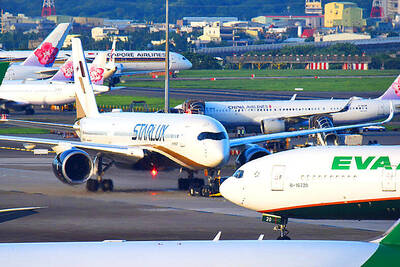
Trips for more than 100,000 international and domestic air travelers could be disrupted as China launches a military exercise around Taiwan today, Taiwan’s Civil Aviation Administration (CAA) said yesterday. The exercise could affect nearly 900 flights scheduled to enter the Taipei Flight Information Region (FIR) during the exercise window, it added. A notice issued by the Chinese Civil Aviation Administration showed there would be seven temporary zones around the Taiwan Strait which would be used for live-fire exercises, lasting from 8am to 6pm today. All aircraft are prohibited from entering during exercise, it says. Taipei FIR has 14 international air routes and
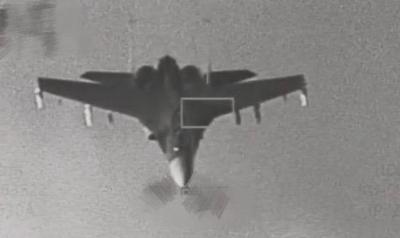
The Ministry of National Defense (MND) today released images of the military tracking China’s People's Liberation Army (PLA) movements during the latest round of Chinese drills around Taiwan. The PLA began "Justice Mission 2025" drills today, carrying out live-fire drills, simulated strikes on land and maritime targets, and exercises to blockade the nation's main ports. The exercises are to continue tomorrow, with the PLA announcing sea and air space restrictions for five zones around Taiwan for 10 hours starting from 8:30am. The ministry today released images showing a Chinese J-16 fighter jet tracked by a F-16V Block 20 jet and the

Snow fell on Yushan (Jade Mountain, 玉山) yesterday morning as a continental cold air mass sent temperatures below freezing on Taiwan’s tallest peak, the Central Weather Administration (CWA) said. Snowflakes were seen on Yushan’s north peak from 6:28am to 6:38am, but they did not fully cover the ground and no accumulation was recorded, the CWA said. As of 7:42am, the lowest temperature recorded across Taiwan was minus-5.5°C at Yushan’s Fengkou observatory and minus-4.7°C at the Yushan observatory, CWA data showed. On Hehuanshan (合歡山) in Nantou County, a low of 1.3°C was recorded at 6:39pm, when ice pellets fell at Songsyue Lodge (松雪樓), a
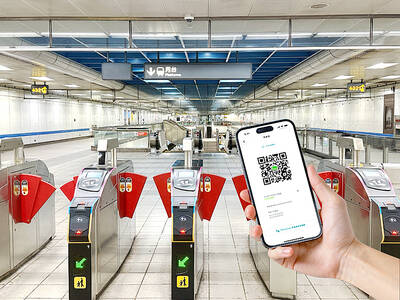
City buses in Taipei and New Taipei City, as well as the Taipei MRT, would on Saturday begin accepting QR code payments from five electronic payment providers, the Taipei Department of Transportation said yesterday. The new option would allow passengers to use the “transportation QR code” feature from EasyWallet, iPass Money, iCash Pay, Jkopay or PXPay Plus. Passengers should open their preferred electronic payment app, select the “transportation code” — not the regular payment code — unlock it, and scan the code at ticket readers or gates, General Planning Division Director-General Liu Kuo-chu (劉國著) said. People should move through the


 RSS
RSS