


President Tsai Ing-wen (蔡英文) yesterday touted Taiwanese talent, technology and supporting policies to keep the nation competitive in the coming artificial intelligence and Internet of things (IoT) era.
Speaking at the opening of the 2018 Smart City Summit and Expo in Taipei, Tsai cited the proliferation of Wi-Fi services, including on all Taiwan High Speed Rail cabins, as an example of the small changes that demonstrate Taiwan’s efforts in pushing “smart” cities.
“Taiwan plays an indispensable role in the global supply chain of the information and communication technology [ICT] industry,” she said. “In addition to having a solid technical foundation, domestic companies have proactively invested in developing AIoT [artificial intelligence of things], while the government pushes the Asia Silicon Valley Development Agency [ASVDA] project and other programs to create test fields.”
In keeping up with the development of smart cities, Taiwan last year passed the Financial Technology Innovation and Experiment Act (金融科技發展與創新實驗條例) and financial technology firms can start applying to use the regulatory sandbox in May, she said, adding that regulations for experimenting with uncrewed vehicles are being drafted.
“Taiwan has been a leader in the ICT era, and we will definitely keep up with the AIoT era,” Tsai said.
More than 120 city government heads leading about 300 delegations from 33 nations and territories are expected to take part in the exhibition, and exchange ideas about smart city development, the Taipei Department of Information Technology said.
The exhibition is forecast to attract more than 30,000 experts in related fields over the four-day period, the department said.
The Taipei City Government has set up 42 booths this year, based on the theme “Smart Taipei, International Connecting,” to exhibit Taipei’s smart city efforts in seven aspects — transportation, public housing, healthcare, education, innovation, ecological community and security, Taipei Deputy Mayor Charles Lin (林欽榮) said.
Besides Taipei, eight local governments have also set up their own booths at the expo, while the ASVDA project has booths to showcase seven other cities and counties, Lin said.
With the support of major domestic technology firms, Taipei has teamed up with the five other special municipalities and several major cities around the world to form the Global Organization of Smart Cities, Department of Information Technology Director Lee Wei-bin (李維斌) said.
The exposition, organized by the Taipei City Government, the Taipei Computer Association and Taiwan Smart City Solutions Alliance, is being held at the Taipei Nangang Exhibition Center.

Kenting National Park service technician Yang Jien-fon (楊政峰) won a silver award in World Grand Prix Photography Awards Spring Season for his photograph of two male rat snakes intertwined in combat. Yang’s colleagues at Kenting National Park said he is a master of nature photography who has been held back by his job in civil service. The awards accept entries in all four seasons across six categories: architectural and urban photography, black-and-white and fine art photography, commercial and fashion photography, documentary and people photography, nature and experimental photography, and mobile photography. Awards are ranked according to scores and divided into platinum, gold and

SPACE VETERAN: Kjell N. Lindgren, who helps lead NASA’s human spaceflight missions, has been on two expeditions on the ISS and has spent 311 days in space Taiwan-born US astronaut Kjell N. Lindgren is to visit Taiwan to promote technological partnerships through one of the programs organized by the US for its 250th national anniversary. Lindgren would be in Taiwan from Tuesday to Saturday next week as part of the US Bureau of Educational and Cultural Affairs’ US Speaker Program, organized to celebrate the 250th anniversary of the signing of the Declaration of Independence, the American Institute in Taiwan (AIT) said in a statement yesterday. Lindgren plans to engage with key leaders across the nation “to advance cutting-edge technological partnerships and inspire the next generation of scientists and engineers,”

The Chinese Nationalist Party (KMT) caucus yesterday said it opposes the introduction of migrant workers from India until a mechanism is in place to prevent workers from absconding. Minister of Labor Hung Sun-han (洪申翰) on Thursday told the Legislative Yuan that the first group of migrant workers from India could be introduced as early as this year, as part of a government program. The caucus’ opposition to the policy is based on the assessment that “the risk is too high,” KMT caucus secretary-general Lin Pei-hsiang (林沛祥) said. Taiwan has a serious and long-standing problem of migrant workers absconding from their contracts, indicating that
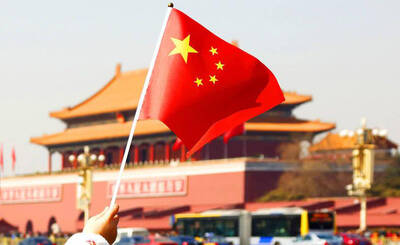
TRADE-OFF: Beijing seeks to trade a bowl of tempura for a Chinese delicacy, an official said, while another said its promises were attempts to interfere in the polls The government must carefully consider the national security implications of building a bridge connecting Kinmen County and Xiamen, China, the Public Construction Commission (PCC) said yesterday. PCC Commissioner Derek Chen (陳金德), who is also a minister without portfolio, made the remarks in a meeting of the legislature’s Transportation Committee, after Democratic Progressive Party Legislator Hsu Fu-kuei (徐富癸) asked about China’s proposal of new infrastructure projects to further connect Kinmen and Lienchiang (Matsu) counties with Xiamen. China unveiled the bridge plan, along with nine other policies for Taiwan, on Sunday, the last day of Chinese Nationalist Party (KMT) Chairwoman Cheng Li-wun’s (鄭麗文) visit


 RSS
RSS