


China has destroyed several shipments of imported Taiwanese food products after companies failed to label them as produced in “Taiwan Area (台灣地區)” or “Taiwan Area, China (中國台灣地區),” as required by Chinese officials, businesses said.
Hwa Mei Food Co (樺美食品) chairman Lu Ming-yen (呂明炎) said he has personal knowledge of three cases in which Taiwanese import products were destroyed because their label did not use the word “area.”
Lu learned of those incidents after he last year became the president of a Changhua-based trade and export association, he said.
“In each case, Taiwanese manufacturers who were unaware of the rule had labeled their product’s place of origin as Chinese Taiwan and the Chinese customs office destroyed all their merchandise,” he said.
Chinese officials started to insist on the word “area” after the Democratic Progressive Party (DPP) government took office, Lu said.
Customs officials at the ports of Pingtan, Xiamen and Dadeng in China’s Fujian Province are responsible for the majority of cases in which Taiwanese food imports were destroyed or delayed, he said.
The loss of a shipment usually costs businesses between NT$3 million and NT$4 million (US$101,550 and US$135,400), Lu said.
“Although there are inherent risks in doing business with China, it is preposterous that businesspeople now stand to lose millions over a word,” he said.
Former president Ma Ying-jeou’s (馬英九) administration created excessive risks by developing too many trade ties with China, Democratic Progressive Party Legislator Lee Chun-yi (李俊俋) said on Sunday.
“It is high time for Taiwan to diversify its markets and develop bilateral or multilateral ties with other countries and regions,” Lee said “The New Southbound Policy and enhancing our economic exchanges with EU countries are important steps toward addressing the issue, and we should stay the course.”
Although China has stepped up economic coercion to influence Taiwanese politics, its obsession with phrasing and gestures would prove counterproductive, Lee said.
“Those little tricks will only push Taiwan away and harm the interests of Taiwanese businesses,” he said. “The government should respond to this development by taking steps to protect our businesses and do so quickly.”

Yangmingshan National Park authorities yesterday urged visitors to respect public spaces and obey the law after a couple was caught on a camera livestream having sex at the park’s Qingtiangang (擎天崗) earlier in the day. The Shilin Police Precinct in Taipei said it has identified a suspect and his vehicle registration number, and would summon him for questioning. The case would be handled in accordance with public indecency charges, it added. The couple entered the park at about 11pm on Thursday and began fooling around by 1am yesterday, the police said, adding that the two were unaware of the park’s all-day live

A former soldier and an active-duty army officer were yesterday indicted for allegedly selling classified military training materials to a Chinese intelligence operative for a total of NT$79,440. The Taipei District Prosecutors’ Office indicted Chen Tai-yin (陳泰尹) and Lee Chun-ta (李俊達) for contravening the National Security Act (國家安全法) and the Anti-Corruption Act (貪污治罪條例). Chen left the military in September 2013 after serving alongside then-staff sergeant Lee, now an army lieutenant, at the 21st Artillery Command of the army’s Sixth Corps from 2011 to 2013, according to the indictment. Chen met a Chinese intelligence operative identified as “Wang” (王) through a friend in November

Minister of Digital Affairs Lin Yi-ching (林宜敬) yesterday cited regulatory issues and national security concerns as an expert said that Taiwan is among the few Asian regions without Starlink. Lin made the remarks on Facebook after funP Innovation Group chief executive officer Nathan Chiu (邱繼弘) on Friday said Taiwan and four other countries in Asia — China, North Korea, Afghanistan and Syria — have no access to Starlink. Starlink has become available in 166 countries worldwide, including Ukraine, Malaysia, the Philippines and Vietnam, in the six years since it became commercial, he said. While China and North Korea block Starlink, Syria is not
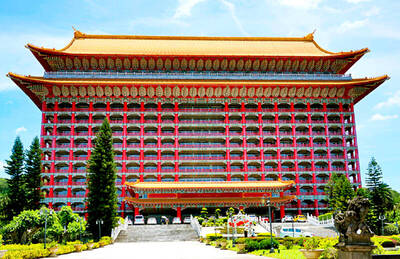
The Grand Hotel Taipei has rejected media reports claiming that the hotel had prevented CBS from broadcasting coverage of the Beijing summit between U.S. President Donald Trump and Chinese President Xi Jinping (習近平) on its premises. Media reports alleging that the hotel owner, dissatisfied with CBS’s coverage, prohibited the network from broadcasting political content on the hotel premises, are not true, the hotel said in a statement issued last night. The reports were “inconsistent with how the hotel actually handled the matter,” it said. The hotel said it received a refund request from a


 RSS
RSS