


New Power Party Executive Chairman Huang Kuo-chang (黃國昌) yesterday said that former Financial Supervisory Commission (FSC) chairman Lee Ruey-tsang (李瑞倉) colluded with Ching Fu Shipbuilding Co to help the shipbuilder skirt its obligations to creditors.
When in office, Lee pressured First Commercial Bank — Ching Fu’s chief creditor — to alter the shipbuilder’s credit conditions, Huang told a news conference in Taipei.
The Taipei District Prosecutors’ Office should open an investigation of Lee and other FSC officials for possible malfeasance “with the greatest possible urgency,” he said.
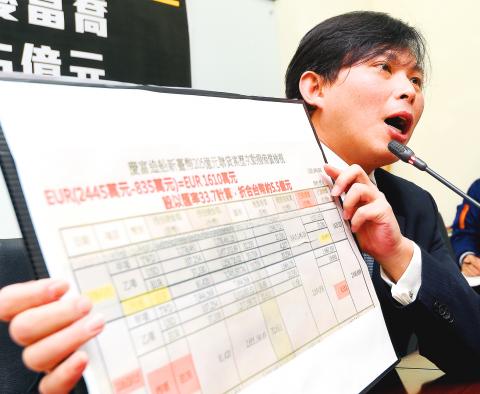
Photo: Chu Pei-hsiung, Taipei Times
Lee denied the allegations.
According to the original credit conditions, Ching Fu should have deposited into an escrow account 20 percent, or NT$3.4 billion (US$113 million), of the NT$15.4 billion it has received from a NT$20.5 billion syndicated loan from First Commercial Bank and other state-owned lenders, Huang said.
However, Ching Fu’s escrow account holds only NT$2.91 billion, which is NT$550 million less than the stipulated amount, he said.
Ching Fu was able to withdraw NT$550 million from the escrow account because the First Commercial Bank-headed consortium in January altered the conditions, Huang said.
After reviewing FSC documents, Huang said he discovered that Lee, FSC Deputy Director of Banking Sherri Chuang (莊秀媛) and other high-ranking officials on Jan. 3 met with Ching Fu executives, including Ching Fu deputy chairman Chen Wei-chih (陳偉志).
During the meeting, Chen Wei-chih told the FSC that the military had delayed a payment to Ching Fu, resulting in a NT$2.7 billion liquidity shortage for the shipbuilder, Huang cited the meeting transcript as saying.
After Chen Wei-chih asked the FSC to alleviate its problems by convincing the banking consortium to change the conditions on the loan, the FSC promised to liaise with First Commercial Bank about the issue, Huang said.
Shortly after the meeting, the consortium altered Ching Fu’s contractual obligations from having NT$3.4 billion of escrow in hand at the letter of credit’s issuance to having that amount at the letter’s presentation, Huang said.
The FSC’s alleged lobbying was inappropriate and possibly criminal, and the NT$550 million might well become bad debt, Huang said.
Lee rejected Huang’s accusations, saying that the lawmaker had omitted to show the second page of the two-page transcript.
Huang “deliberately took my comments out of context,” Lee said.
The FSC had to meet with Ching Fu’s representatives after the company complained that red tape was obstructing the government’s vessel renewal program, but the FSC did not lobby the consortium for the shipbuilder, Lee said.
“I told them on the spot that the FSC cannot and will not intervene and that they should speak to the banks themselves,” Lee said, adding that his refusal to have anything to do with the issue is a matter of record and can be found in the full transcript.
First Commercial Bank was informed of the incident as a matter of routine, but he explicitly told the commission that it need not discuss the issue with the bank, Lee said.
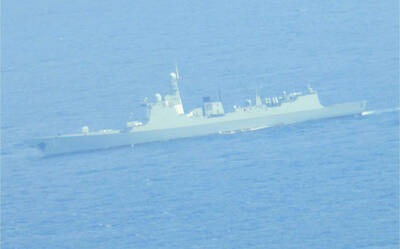
The military has spotted two Chinese warships operating in waters near Penghu County in the Taiwan Strait and sent its own naval and air forces to monitor the vessels, the Ministry of National Defense (MND) said. Beijing sends warships and warplanes into the waters and skies around Taiwan on an almost daily basis, drawing condemnation from Taipei. While the ministry offers daily updates on the locations of Chinese military aircraft, it only rarely gives details of where Chinese warships are operating, generally only when it detects aircraft carriers, as happened last week. A Chinese destroyer and a frigate entered waters to the southwest
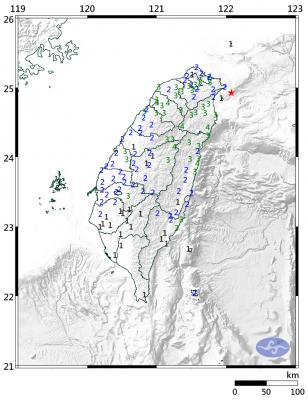
A magnitude 6.1 earthquake struck off the coast of Yilan County at 8:39pm tonight, the Central Weather Administration (CWA) said, with no immediate reports of damage or injuries. The epicenter was 38.7km east-northeast of Yilan County Hall at a focal depth of 98.3km, the CWA’s Seismological Center said. The quake’s maximum intensity, which gauges the actual physical effect of a seismic event, was a level 4 on Taiwan’s 7-tier intensity scale, the center said. That intensity level was recorded in Yilan County’s Nanao Township (南澳), Hsinchu County’s Guansi Township (關西), Nantou County’s Hehuanshan (合歡山) and Hualien County’s Yanliao (鹽寮). An intensity of 3 was

Japanese Prime Minister Sanae Takaichi’s comment last year on Tokyo’s potential reaction to a Taiwan-China conflict has forced Beijing to rewrite its invasion plans, a retired Japanese general said. Takaichi told the Diet on Nov. 7 last year that a Chinese naval blockade or military attack on Taiwan could constitute a “survival-threatening situation” for Japan, potentially allowing Tokyo to exercise its right to collective self-defense. Former Japan Ground Self-Defense Force general Kiyofumi Ogawa said in a recent speech that the remark has been interpreted as meaning Japan could intervene in the early stages of a Taiwan Strait conflict, undermining China’s previous assumptions
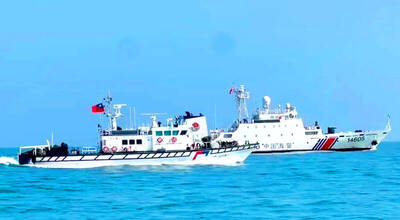
Instead of focusing solely on the threat of a full-scale military invasion, the US and its allies must prepare for a potential Chinese “quarantine” of Taiwan enforced through customs inspections, Stanford University Hoover fellow Eyck Freymann said in a Foreign Affairs article published on Wednesday. China could use various “gray zone” tactics in “reconfiguring the regional and ultimately the global economic order without a war,” said Freymann, who is also a nonresident research fellow at the US Naval War College. China might seize control of Taiwan’s links to the outside world by requiring all flights and ships entering or leaving Taiwan


 RSS
RSS