


A former senior US defense official on Wednesday said that he is “very confident” in the US military’s ability to respond to a crisis on a similar scale to that of the Third Taiwan Strait Crisis in 1996.
Former US deputy assistant secretary of defense for East Asia Abraham Denmark made the remark at a conference held by the Washington-based Jamestown Foundation on Chinese defense and international security.
Asked about the challenges Taiwan and the US would face should a similar crisis take place involving today’s significantly modernized Chinese People’s Liberation Army (PLA), Denmark said that Washington is legally obligated to ensure that the US military maintains the capability to defend Taiwan from attack or aggression.
However, it would be up to the US president to decide whether the US should intervene if there is another crisis in the Taiwan Strait, Denmark said, but added that he is confident that the US continues to possess the military capabilities to do so.
While the US is not legally required to intervene, Washington understands that its friends and allies would be observing its response to such a challenge, Denmark said, when asked whether US interests would be impaired if China annexed Taiwan.
Washington’s policy on cross-strait affairs is to find a peaceful solution that is acceptable to the people on both sides of the Taiwan Strait, while preventing conflicts or attempts at coercion, he added.
As an unstable Taiwan Strait could negatively impact Japan, cross-strait peace and stability is also in Tokyo’s national interest, Denmark said, adding that there is much room for improvement in Taiwan-Japan ties.
Global Taiwan Institute senior researcher David An (安大維), who previously served at the US Department of State, said that while China has made great progress in improving its anti-access/area denial capabilities, he remains confident in the US military’s ability to prevail in a conflict with China.
An said the institute has been studying the defense capabilities of Taiwan, which a quarterly defense report published earlier this year by the Ministry of National Defense said has the ability to domestically produce three-quarters of the arms and equipment it needs, while depending on foreign sources for the remainder.
Taoyuan-based National Defense University professor Ma Chen-kun (馬振坤), an expert on the Chinese military, said the Third Taiwan Strait Crisis was initiated by the PLA’s top brass, who forced then-Chinese president Jiang Zemin (江澤民) into action.
“A similar crisis occurring today would show that Beijing is becoming more confident of its chance to successfully launch military attacks against Taiwan,” Ma said, adding that it is Taipei’s first and foremost priority to avoid such a situation.
In addition to obtaining advanced weapons, Taiwan should develop asymmetrical warfare strategies and innovative technologies, such as artificial intelligence, which could neutralize the PLA’s numerical advantage, he added.
The government should focus on recruiting more talent from the private sector, Ma said.
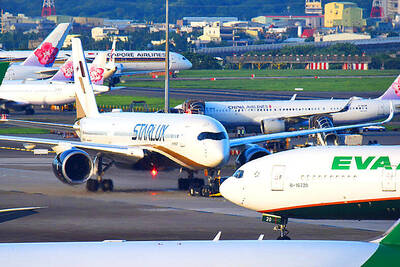
Trips for more than 100,000 international and domestic air travelers could be disrupted as China launches a military exercise around Taiwan today, Taiwan’s Civil Aviation Administration (CAA) said yesterday. The exercise could affect nearly 900 flights scheduled to enter the Taipei Flight Information Region (FIR) during the exercise window, it added. A notice issued by the Chinese Civil Aviation Administration showed there would be seven temporary zones around the Taiwan Strait which would be used for live-fire exercises, lasting from 8am to 6pm today. All aircraft are prohibited from entering during exercise, it says. Taipei FIR has 14 international air routes and
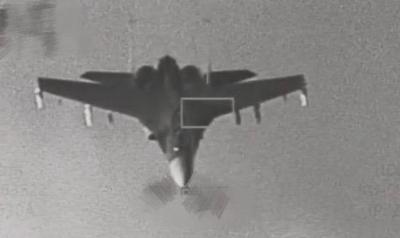
The Ministry of National Defense (MND) today released images of the military tracking China’s People's Liberation Army (PLA) movements during the latest round of Chinese drills around Taiwan. The PLA began "Justice Mission 2025" drills today, carrying out live-fire drills, simulated strikes on land and maritime targets, and exercises to blockade the nation's main ports. The exercises are to continue tomorrow, with the PLA announcing sea and air space restrictions for five zones around Taiwan for 10 hours starting from 8:30am. The ministry today released images showing a Chinese J-16 fighter jet tracked by a F-16V Block 20 jet and the

Snow fell on Yushan (Jade Mountain, 玉山) yesterday morning as a continental cold air mass sent temperatures below freezing on Taiwan’s tallest peak, the Central Weather Administration (CWA) said. Snowflakes were seen on Yushan’s north peak from 6:28am to 6:38am, but they did not fully cover the ground and no accumulation was recorded, the CWA said. As of 7:42am, the lowest temperature recorded across Taiwan was minus-5.5°C at Yushan’s Fengkou observatory and minus-4.7°C at the Yushan observatory, CWA data showed. On Hehuanshan (合歡山) in Nantou County, a low of 1.3°C was recorded at 6:39pm, when ice pellets fell at Songsyue Lodge (松雪樓), a
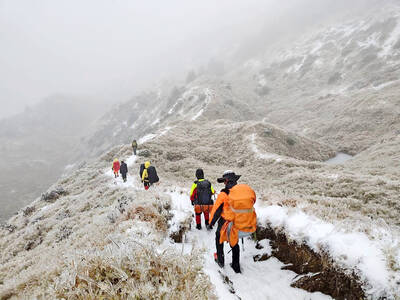
NO SHAME IN RETREAT: Hikers should consider turning back if the weather turns bad or if they do not have sufficient equipment, the Taroko park headquarters said Two people died of hypothermia over the weekend while hiking on Hsuehshan (雪山), prompting park authorities to remind hikers to bring proper equipment and consider their physical condition before setting out in the cold weather. Temperatures dropped over the weekend, bringing snow to high altitudes in Shei-pa National Park. One hiker, surnamed Lin (林), who on Friday was traveling with a group of six along the Hsuehshan west ridge trail, lost consciousness due to hypothermia and died, the Shei-pa National Park Headquarters said. On Saturday, another hiker, surnamed Tien (田), in a group of five on the southeast of the west


 RSS
RSS