


The Chinese Nationalist Party (KMT) yesterday held an event marking the 80th anniversary of the Marco Polo Bridge Incident.
The incident refers to a battle between KMT forces and the Imperial Japanese Army that started on July 7, 1937, which sparked the Second Sino-Japanese War.
Former president Ma Ying-jeou (馬英九), who was at a hearing at the Taipei District Court in a trial that involves the leaking state secrets, sent a pre-recorded video that was shown at a symposium at National Chengchi University in Taipei.
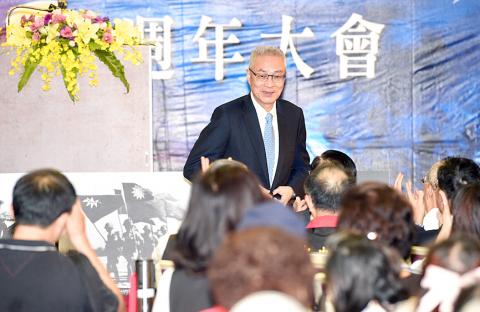
Photo: Peter Lo, Taipei Times
Ma started the video by thanking KMT chairman-elect Wu Den-yih (吳敦義) for granting his request to hold the event.
The event was attended by Wu, as well as former vice president Lien Chan (連戰) and former KMT chairman Wu Po-hsiung (吳伯雄).
The war “not only caused the most fatalities among the wars fought by the Zhonghua minzu [Chinese ethnic group, 中華民族], but it also had the most profound effect,” Ma said.
The Nationalist government of the Republic of China, led by Chiang Kai-shek (蔣介石), made an “enormous contribution” to the Allies in their war against fascism, but people nowadays are not familiar with the nation’s contribution, he added.
Ma said the ROC’s contribution is explained in detail in the book Forgotten Ally: China’s World War II, 1937-1945, written by Oxford University professor Rana Mitter, which gives accounts of ROC citizens’ and troops’ feats during the Second Sino-Japanese War, which made him feel “sad and proud” at the same time.
Referring to the ROC as “China” and its people as “Chinese,” Ma said that China’s efforts that tied down the Japanese forces helped Taiwan shed its colonial status and become a permanent member of the UN Security Council.
“This is an achievement all Chinese should be proud of,” he said.
Ma also talked about Taiwanese resistance against Japanese colonization and how Taiwanese fought “valiantly” against Japan’s “intrusion” that incurred a “brutal retaliation.”
“Commemorating the Marco Polo Bridge Incident is not to incite hatred or elicit antipathy toward Japan. It is to express gratitude for our ancestors who made contributions and sacrificed their lives,” he said.
“Here is to hoping that Chinese and Japanese will reconcile and not repeat history’s mistakes, so they can unite in their efforts to pursue peace and stability,” Ma added.
Wu Den-yih said the war was significant in that it saw Taiwan’s retrocession, and that it removed China’s shame when it was forced to cede Taiwan to Japan in the Treaty of Shimonoseki in 1895.
The incident must never be forgotten, Wu Den-yih said, expressing hope that people will remember the discipline, integrity and strength in unity seen during the war and promote the values of democracy and freedom, thereby ensuring peace and stability across the Taiwan Strait.
Following the contentious KMT chairmanship election, Wu Den-yih appeared eager to use the incident’s anniversary as an opportunity to project an image of party unity.
At an event held by the Chong Shing Elites of the Kuomintang last month, Wu Den-yih said the anniversary of the incident should mark “a new beginning for the KMT.”
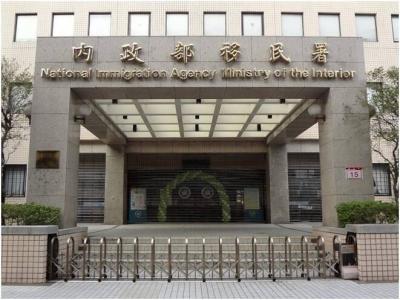
A small number of Taiwanese this year lost their citizenship rights after traveling in China and obtaining a one-time Chinese passport to cross the border into Russia, a source said today. The people signed up through Chinese travel agencies for tours of neighboring Russia with companies claiming they could obtain Russian visas and fast-track border clearance, the source said on condition of anonymity. The travelers were actually issued one-time-use Chinese passports, they said. Taiwanese are prohibited from holding a Chinese passport or household registration. If found to have a Chinese ID, they may lose their resident status under Article 9-1
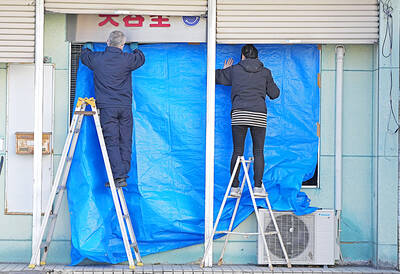
Taiwanese were praised for their composure after a video filmed by Taiwanese tourists capturing the moment a magnitude 7.5 earthquake struck Japan’s Aomori Prefecture went viral on social media. The video shows a hotel room shaking violently amid Monday’s quake, with objects falling to the ground. Two Taiwanese began filming with their mobile phones, while two others held the sides of a TV to prevent it from falling. When the shaking stopped, the pair calmly took down the TV and laid it flat on a tatami mat, the video shows. The video also captured the group talking about the safety of their companions bathing

PROBLEMATIC APP: Citing more than 1,000 fraud cases, the government is taking the app down for a year, but opposition voices are calling it censorship Chinese Nationalist Party (KMT) Chairwoman Cheng Li-wun (鄭麗文) yesterday decried a government plan to suspend access to Chinese social media platform Xiaohongshu (小紅書) for one year as censorship, while the Presidential Office backed the plan. The Ministry of the Interior on Thursday cited security risks and accusations that the Instagram-like app, known as Rednote in English, had figured in more than 1,700 fraud cases since last year. The company, which has about 3 million users in Taiwan, has not yet responded to requests for comment. “Many people online are already asking ‘How to climb over the firewall to access Xiaohongshu,’” Cheng posted on
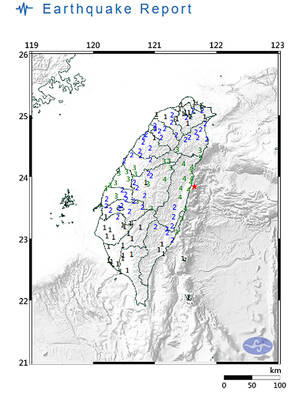
A magnitude 5.7 earthquake yesterday struck off the coast of Hualien, causing brief transportation disruptions in northern and eastern Taiwan, as authorities said that aftershocks of magnitude 5 or higher could occur over the next three days. The quake, which hit at 7:24pm at a depth of 24.5km, registered an intensity of 4 in Hualien and Nantou counties, the Central Weather Administration (CWA) said. There were no immediate reports of damage or injuries. In Taipei, the MRT railway’s operations control center received an earthquake alert and initiated standard safety procedures, briefly halting trains on the Bannan (blue) line for about a minute.


 RSS
RSS