


The Executive Yuan yesterday vowed to legislate on Aboriginal domains and languages, adding that it would help to reclaim Aboriginal lands illegitimately occupied by the Chinese Nationalist Party (KMT) during the authoritarian White Terror era.
Speaking to reporters at a post-meeting news conference yesterday, Cabinet spokesman Tung Chen-yuan (童振源) said that the Executive Yuan has rubber-stamped a transitional justice plan for the nation’s Aborigines drafted by the Council of Indigenous Peoples that would deal with their land, languages and cultural issues.
“President Tsai Ing-wen (蔡英文) will formally apologize to the nation’s Aborigines in her capacity as president and Premier Lin Chuan (林全) said during the meeting that bills on Aboriginal traditional domains and languages should be passed within three years,” Tung said.

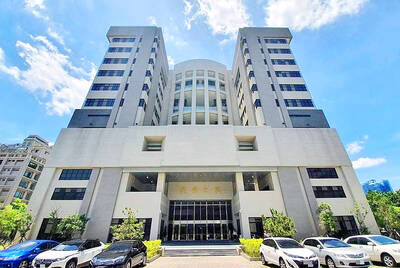
Photo: Tsai Tsung-hsien, Taipei Times
Briefing the media, Council of Indigenous Peoples Minister Icyang Parod said that, after the Aboriginal Basic Act (原住民族基本法) was passed in 2005 to set a framework for the protection of Aboriginal rights, other laws on the details — including a draft bill on Aboriginal land and water, as well as the development of Aboriginal languages — were never passed by the legislature when the KMT had a majority.
Although the act stipulates that any development projects within traditional Aboriginal domains should receive prior consent from the local Aborigines, since the law defining Aboriginal domains was never passed, such articles in the act have been ineffective.
“For example, the construction of a resort on a beach in Taitung County’s Beinan Township (卑南), the mining issue in Taroko National Park and Taiwan Power Co’s selection of a permanent nuclear storage site should all have consulted local Aborigines in advance,” Icyang said. “However, without the legislation on Aboriginal land, the council had no legal basis to intervene.”
In addition, Icyang defended the Democratic Progressive Party’s draft bill on transitional justice, which has been criticized by some Aboriginal rights advocates as excluding Aborigines, since it would deal with what happened during the Martial Law era.
“We never excluded Aborigines, because the bill would also deal with Aboriginal victims of political persecution during the 228 Incident and the White Terror era,” Icyang said.
“Meanwhile, the draft bills on transitional justice and on the KMT’s ill-gotten party assets would also help reclaim Aboriginal land illegally seized by the KMT, such as the KMT’s office in Pingtung County’s Laiyi Township (來義) and the China Youth Corps’ office in Nantou County’s Yuchi Township (魚池), which were both built on Aboriginal land,” he said.

Taiwanese can file complaints with the Tourism Administration to report travel agencies if their activities caused termination of a person’s citizenship, Mainland Affairs Council Minister Chiu Chui-cheng (邱垂正) said yesterday, after a podcaster highlighted a case in which a person’s citizenship was canceled for receiving a single-use Chinese passport to enter Russia. The council is aware of incidents in which people who signed up through Chinese travel agencies for tours of Russia were told they could obtain Russian visas and fast-track border clearance, Chiu told reporters on the sidelines of an event in Taipei. However, the travel agencies actually applied

Japanese footwear brand Onitsuka Tiger today issued a public apology and said it has suspended an employee amid allegations that the staff member discriminated against a Vietnamese customer at its Taipei 101 store. Posting on the social media platform Threads yesterday, a user said that an employee at the store said that “those shoes are very expensive” when her friend, who is a migrant worker from Vietnam, asked for assistance. The employee then ignored her until she asked again, to which she replied: "We don't have a size 37." The post had amassed nearly 26,000 likes and 916 comments as of this

New measures aimed at making Taiwan more attractive to foreign professionals came into effect this month, the National Development Council said yesterday. Among the changes, international students at Taiwanese universities would be able to work in Taiwan without a work permit in the two years after they graduate, explainer materials provided by the council said. In addition, foreign nationals who graduated from one of the world’s top 200 universities within the past five years can also apply for a two-year open work permit. Previously, those graduates would have needed to apply for a work permit using point-based criteria or have a Taiwanese company
The Shilin District Prosecutors’ Office yesterday indicted two Taiwanese and issued a wanted notice for Pete Liu (劉作虎), founder of Shenzhen-based smartphone manufacturer OnePlus Technology Co (萬普拉斯科技), for allegedly contravening the Act Governing Relations Between the People of the Taiwan Area and the Mainland Area (臺灣地區與大陸地區人民關係條例) by poaching 70 engineers in Taiwan. Liu allegedly traveled to Taiwan at the end of 2014 and met with a Taiwanese man surnamed Lin (林) to discuss establishing a mobile software research and development (R&D) team in Taiwan, prosecutors said. Without approval from the government, Lin, following Liu’s instructions, recruited more than 70 software


 RSS
RSS