


Taipei Chang Gung Memorial Hospital doctors yesterday said that they have prepared 200 Zika prevention packs for Taiwanese athletes and staff attending the Olympic Games in Rio de Janeiro next month.
Although the Games are to begin in less than a month, the mosquito-borne Zika virus is still spreading in Brazil, the hospital’s sports medicine team said, adding that it has placed personal hygiene items and mosquito repellant in the packs.
Lin Yin-chou (林瀛洲), a physician and coordinator of the medical team that is to accompany Taiwanese athletes to Brazil, said that each pack contains a thermometer to be used to measure an athlete’s temperature every day and a facial mask to wear in crowded public spaces, as well as alcohol swabs, a bottle of hand disinfectant and a bottle of mosquito repellent.
Chen Nan-yu (楊政道), a physician in the hospital’s Division of Infectious Diseases, said the mosquito repellent is for preventing Zika infection, while face masks can protect the athletes from other airborne diseases, such as influenza.
The team said Zika’s main route of transmission is almost the same as dengue fever, as both can be transmitted by Aedes albopictus and Aedes aegypti mosquitoes, with symptoms including fever, headache, muscle pain, joint pain and conjunctivitis.
“Fever is a common symptom of infection, so if the athletes find their body temperature rising above 38oC, they should seek medical treatment as soon as possible,” Chen said.

Yangmingshan National Park authorities yesterday urged visitors to respect public spaces and obey the law after a couple was caught on a camera livestream having sex at the park’s Qingtiangang (擎天崗) earlier in the day. The Shilin Police Precinct in Taipei said it has identified a suspect and his vehicle registration number, and would summon him for questioning. The case would be handled in accordance with public indecency charges, it added. The couple entered the park at about 11pm on Thursday and began fooling around by 1am yesterday, the police said, adding that the two were unaware of the park’s all-day live

A former soldier and an active-duty army officer were yesterday indicted for allegedly selling classified military training materials to a Chinese intelligence operative for a total of NT$79,440. The Taipei District Prosecutors’ Office indicted Chen Tai-yin (陳泰尹) and Lee Chun-ta (李俊達) for contravening the National Security Act (國家安全法) and the Anti-Corruption Act (貪污治罪條例). Chen left the military in September 2013 after serving alongside then-staff sergeant Lee, now an army lieutenant, at the 21st Artillery Command of the army’s Sixth Corps from 2011 to 2013, according to the indictment. Chen met a Chinese intelligence operative identified as “Wang” (王) through a friend in November

Minister of Digital Affairs Lin Yi-ching (林宜敬) yesterday cited regulatory issues and national security concerns as an expert said that Taiwan is among the few Asian regions without Starlink. Lin made the remarks on Facebook after funP Innovation Group chief executive officer Nathan Chiu (邱繼弘) on Friday said Taiwan and four other countries in Asia — China, North Korea, Afghanistan and Syria — have no access to Starlink. Starlink has become available in 166 countries worldwide, including Ukraine, Malaysia, the Philippines and Vietnam, in the six years since it became commercial, he said. While China and North Korea block Starlink, Syria is not
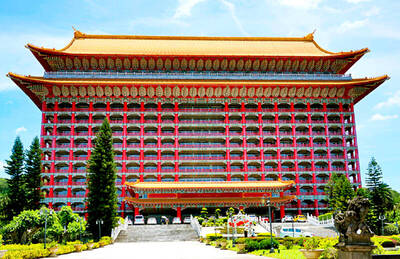
The Grand Hotel Taipei has rejected media reports claiming that the hotel had prevented CBS from broadcasting coverage of the Beijing summit between U.S. President Donald Trump and Chinese President Xi Jinping (習近平) on its premises. Media reports alleging that the hotel owner, dissatisfied with CBS’s coverage, prohibited the network from broadcasting political content on the hotel premises, are not true, the hotel said in a statement issued last night. The reports were “inconsistent with how the hotel actually handled the matter,” it said. The hotel said it received a refund request from a


 RSS
RSS