


Early presidential power transitions should be negotiated to shorten the interregnum between administrations, New Power Party (NPP) legislators said yesterday.
At a press conference presenting the party’s version of a proposed presidential transition act, NPP caucus whip Hsu Yung-ming (徐永明) called on the Democratic Progressive Party (DPP) and Chinese Nationalist Party (KMT) to cooperate to shorten the current four-month transition period.
“The proposed ‘transition act’ should not become a tool for parties to attack each other,” he said, adding that the DPP and KMT had switched stances since the last transition of power in 2008.
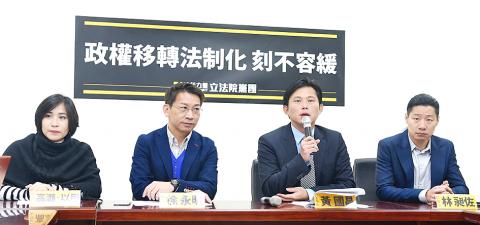
Photo: George Tsorng, Taipei Times
In 2008, then-president Chen Shui-bian (陳水扁) of the DPP handed over power to incoming president Ma Ying-jeou (馬英九) of the KMT.
DPP president-elect Tsai Ing-wen (蔡英文), elected in the Jan. 16 presidential election, is slated to take office on May 20.
“In 2008, the KMT could not wait to pass [a transition act], but it is fighting against it today — even though the DPP’s proposed bill is not substantially different [from the KMT’s version in 2008],” he said.
He said that the DPP had also flip-flopped, with its current bill allowing the incoming president-elect to veto the implementation of “controversial” policies, despite its previous opposition to a similar KMT-sponsored article in 2008.
The NPP draft bill would invest a president-elect’s transition team with the power to demand funding, manpower, office space and information on major policies and national security issues from the outgoing administration.
NPP Executive Chairman and Legislator Huang Kuo-chang (黃國昌) said the bill’s major difference from the DPP draft is its establishment of a Legislative Yuan committee to arbitrate any disagreements between the presidential-elect and the outgoing administration, also investing the committee with the right to review any new executive orders.
The bill also allows the outgoing president and president-elect to agree to an early power transition, providing it receives approval from a two-thirds majority vote in the Legislative Yuan.
“Only shortening the transition period will get to the root of the legal and political controversy,” Huang said.
While presidential and legislative elections have been held simultaneously over the past two cycles, presidential and legislative terms are currently out of sync by more than three months.
Hsu said that while the Constitution mandates new legislators to take office on Feb. 1, it only mandates that the president have a four-year term of office.
The interregnum period could be cut if parties agree to move the presidential inauguration date, he said.

LOUD AND PROUD Taiwan might have taken a drubbing against Australia and Japan, but you might not know it from the enthusiasm and numbers of the fans Taiwan might not be expected to win the World Baseball Classic (WBC) but their fans are making their presence felt in Tokyo, with tens of thousands decked out in the team’s blue, blowing horns and singing songs. Taiwanese fans have packed out the Tokyo Dome for all three of their games so far and even threatened to drown out home team supporters when their team played Japan on Friday. They blew trumpets, chanted for their favorite players and had their own cheerleading squad who dance on a stage during the game. The team struggled to match that exuberance on the field, with
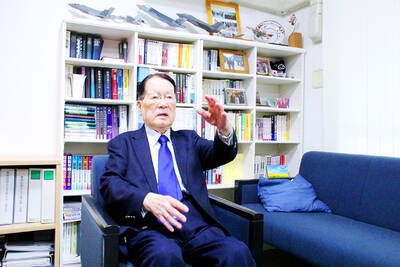
Whether Japan would help defend Taiwan in case of a cross-strait conflict would depend on the US and the extent to which Japan would be allowed to act under the US-Japan Security Treaty, former Japanese minister of defense Satoshi Morimoto said. As China has not given up on the idea of invading Taiwan by force, to what extent Japan could support US military action would hinge on Washington’s intention and its negotiation with Tokyo, Morimoto said in an interview with the Liberty Times (sister paper of the Taipei Times) yesterday. There has to be sufficient mutual recognition of how Japan could provide
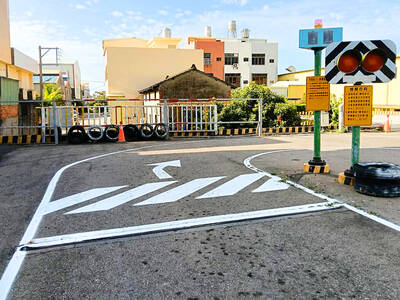
UPDATED TEST: The new rules aim to assess drivers’ awareness of risky behaviors and how they respond under certain circumstances, the Highway Bureau said Driver’s license applicants who fail to yield to pedestrians at intersections or to check blind spots, or omit pointing-and-calling procedures would fail the driving test, the Highway Bureau said yesterday. The change is set to be implemented at the end of the month, and is part of the bureau’s reform of the driving portion of the test, which has been criticized for failing to assess whether drivers can operate vehicles safely. Sedan drivers would be tested regarding yielding to pedestrians and turning their heads to check blind spots, while drivers of large vehicles would be tested on their familiarity with pointing-and-calling

A Taiwanese man apologized on Friday after saying in a social media post that he worked with Australia to provide scouting reports on Taiwan’s team, enabling Australia’s victory in this year’s World Baseball Classic (WBC), saying it was a joke and that he did not hold any position with foreign teams or Taiwan’s sports training center. Chen Po-hao (陳柏豪) drew the rage of many Taiwan baseball fans when he posted online on Thursday night, claiming credit for Australia’s 3-0 win over Taiwan in the opening game for Pool C, saying he worked as a physical therapist with the national team and


 RSS
RSS