


Eslite Spectrum Corp (誠品生活), which runs one of the nation’s largest bookstore chains, yesterday denied that it would soon end operations of its 24-hour bookstore on Dunhua S Road in Taipei amid preparations for an urban planning project.
“We thank everyone for their concern for the bookstore. The lease for the bookstore expires in 2020. We will continue to operate based on the terms of the lease,” the company said in a statement issued yesterday afternoon.
Eslite’s Dunnan store attracts many tourists to the world’s first 24-hour bookstore.
The bookstore is the company’s first and began operating 24 hours in 1999.
The store was chosen by CNN as one of the world’s “coolest” stores and drew interest from other international news agencies.
The Eslite branch occupies the first and second floors of the Dunhua Financial Building (敦南金融大樓), as well as three underground floors.
Media reports said the floors have been purchased by the Lin Yuan Group (霖園集團), which the reports said wants to convert them for mixed-use commercial purposes through an urban planning project that is to include a five-star hotel.
This led to speculation that the bookstore might cease to exist.
Cathay Life Insurance (國泰人壽), a subsiduary of Lin Yuan Group, issued a statement saying that the company has never owned the floors used by the bookstore.
Cathay Life Insurance said it owns no titles in the Dunnan Financial Building, having sold ownership of the third to 10th floors of the building, as well as parking lots on the fourth and fifth underground floors.
Exiled Chinese dissident Wang Dan (王丹) said the bookstore is a “cultural landmark of Taipei.”
He wrote on Facebook that he would forever condemn Cathay Life Insurance if it were to close the bookstore to make way for a five-star hotel.
Additional reporting by CNA
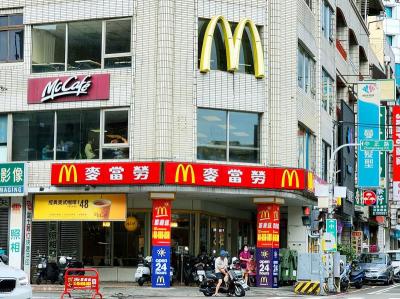
Fast food chain McDonald's is to raise prices by up to NT$5 on some products at its restaurants across Taiwan, starting on Wednesday next week, the company announced today. The prices of all extra value meals and sharing boxes are to increase by NT$5, while breakfast combos and creamy corn soup would go up by NT$3, the company said in a statement. The price of the main items of those meals, if ordered individually, would remain the same. Meanwhile, the price of a medium-sized lemon iced tea and hot cappuccino would rise by NT$3, extra dipping sauces for chicken nuggets would go up

FUKUOKA SITUATION: Japanese media reported that the pathogen is expected to be identified by the summer, while the CDC downplayed the idea that it was hMPV A “mysterious cold-like illness” reported in Japan’s Fukuoka Prefecture does not seem to be a new disease, but Japanese authorities have been asked about the situation, the Centers for Disease Control (CDC) said yesterday. The Fukuoka Prefectural Medical Association on Wednesday told a news conference that a “mystery cold” that has become a hot topic on social media is “highly likely to be caused by some kind of viral infection,” Japan’s KBC News reported. “Many people are experiencing symptoms starting with a sore throat, followed by a runny nose, phlegm and a severe cough,” KBC News reported, citing association officials. Health authorities are

Nvidia Corp CEO Jensen Huang (黃仁勳) arrived in Taiwan yesterday ahead of upcoming AI and technology events, saying he plans to meet with clients and Taiwan Semiconductor Manufacturing Co Chairman C.C. Wei (魏哲家) during his visit. After landing at Taipei Songshan Airport, Huang posed for photos with fans and handed out Yakult drinks to reporters and supporters waiting at the scene, saying he has “a lot to do” during the trip. Asked about reports that Nvidia’s planned headquarters site in Taipei’s Beitou Shilin Technology Park could break ground on May 27, Huang said that if the company holds an event, he would

Carrefour Taiwan is to begin using a new name from the start of July, but it cannot divulge the name until then, the chairman of the supermarket chain's parent company said today. President Chain Store Co chairman Lo Chih-hsien (羅智先) was asked by reporters after a shareholders' meeting to confirm whether the company has settled on a new name for the supermarket brand. In March, the government-registered name of two Carrefour Taiwan branches was quietly changed to "Le Chia Kang" (樂家康) in Chinese, raising speculation that has been selected as the name. Lo said that because of local regulations and contractual obligations, the


 RSS
RSS