


Academia Sinica researchers received an international award for an archeological project conducted at the Tainan Science Park, which led to the discovery of “the first millet in Taiwan” and furthered understanding of the origin of Austronesian people.
The project, hosted by Academia Sinica research fellows Tsang Cheng-hwa (臧振華) and Li Kuang-ti (李匡悌), won the Field Discovery Award at the Second Shanghai Archeology Forum last month for preserving archeological heritage, the researchers said at a news conference on Tuesday.
“It is an honorable award and our nomination means Taiwanese archeology has been internationally recognized. More archeologists should be nurtured to prevent a talent gap in Taiwan’s academia,” Tsang said.

Photo provided by Tsang Cheng-hwa
The team have been conducting archeological investigations at the park since 1996 and 58 archeological sites have been discovered with an excavation area of 120,000m2, Tsang said, adding that those sites date back to 300 BC to 5000 BC and have been chronologically divided into six cultural strata.
More than 2,000 burials and 2,500 pieces of human skeletons have been discovered in addition to millions of artifacts and ecofacts, including pottery, stone tools, jade, bone and antler objects, iron objects, bronze and glassware, as well as plant seeds, animal bones and other items, he said.
In August last year, the team announced the discovery of millet thought to be 5,000 years old, which was described by the media as “the first millet in Taiwan,” he said.
Thousands of burned grains of millet have been preserved due to their carbonized state, which shows that ancient people knew how to cook and burn agricultural waste, he said.
Bones discovered at the site are assumed to be related to the Atayal people, but no DNA evidence has been gathered, as it is difficult to extract DNA from fossilized bones, but the team has sent temporal bones, where DNA is more likely to be found, for testing to determine whether the ancient humans were related to Aborigines.
The team’s findings might help determine an answer to the two main theories pertaining to the origins of the Austronesian people — the Southeastern Asia origin and the southeastern China origin, Tsang said.
Remains of stilt houses dating back 5,000 years were found in coastal areas in Tainan, which resemble houses found in southeastern China that can be traced back 6,000 years.
That, coupled with the similarity between pottery and stone tools found in Tainan and southeastern China, indicates that Austronesian people originated from coastal areas in southeastern China instead of Southeastern Asia, he said.

Taiwanese can file complaints with the Tourism Administration to report travel agencies if their activities caused termination of a person’s citizenship, Mainland Affairs Council Minister Chiu Chui-cheng (邱垂正) said yesterday, after a podcaster highlighted a case in which a person’s citizenship was canceled for receiving a single-use Chinese passport to enter Russia. The council is aware of incidents in which people who signed up through Chinese travel agencies for tours of Russia were told they could obtain Russian visas and fast-track border clearance, Chiu told reporters on the sidelines of an event in Taipei. However, the travel agencies actually applied

Japanese footwear brand Onitsuka Tiger today issued a public apology and said it has suspended an employee amid allegations that the staff member discriminated against a Vietnamese customer at its Taipei 101 store. Posting on the social media platform Threads yesterday, a user said that an employee at the store said that “those shoes are very expensive” when her friend, who is a migrant worker from Vietnam, asked for assistance. The employee then ignored her until she asked again, to which she replied: "We don't have a size 37." The post had amassed nearly 26,000 likes and 916 comments as of this

New measures aimed at making Taiwan more attractive to foreign professionals came into effect this month, the National Development Council said yesterday. Among the changes, international students at Taiwanese universities would be able to work in Taiwan without a work permit in the two years after they graduate, explainer materials provided by the council said. In addition, foreign nationals who graduated from one of the world’s top 200 universities within the past five years can also apply for a two-year open work permit. Previously, those graduates would have needed to apply for a work permit using point-based criteria or have a Taiwanese company
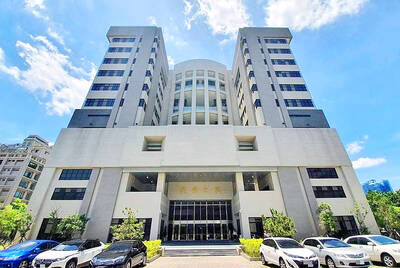
The Shilin District Prosecutors’ Office yesterday indicted two Taiwanese and issued a wanted notice for Pete Liu (劉作虎), founder of Shenzhen-based smartphone manufacturer OnePlus Technology Co (萬普拉斯科技), for allegedly contravening the Act Governing Relations Between the People of the Taiwan Area and the Mainland Area (臺灣地區與大陸地區人民關係條例) by poaching 70 engineers in Taiwan. Liu allegedly traveled to Taiwan at the end of 2014 and met with a Taiwanese man surnamed Lin (林) to discuss establishing a mobile software research and development (R&D) team in Taiwan, prosecutors said. Without approval from the government, Lin, following Liu’s instructions, recruited more than 70 software


 RSS
RSS