


Representatives from more than 30 civic groups yesterday urged voters to support “third force” parties in the legislative elections on Saturday next week.
Members of the Anti-Poverty Alliance, Taiwan Environmental Protection Union, Garden of Hope Foundation and other groups stood outside the Legislative Yuan shouting slogans calling for voters to support “third force” parties with “ideals” and “civic consciousness,” which they said represented the “hope of the nation” in a crucial election.
The groups endorsed the New Power Party (NPP), the Green Party-Social Democratic Party Alliance and the Trees Party (樹黨), with numerous representatives urging undecided voters to vote for the Alliance. The parties all have close ties with civic groups, whose members comprise the majority of their candidates and leadership.
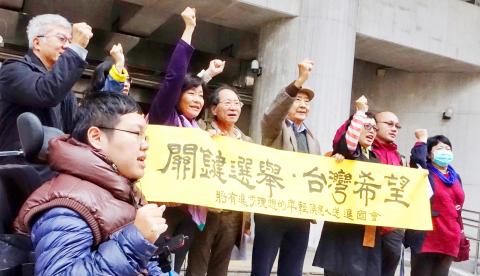
Photo: Liu Hsin-de, Taipei Times
“We cannot see vision in any of the major parties and we know that during their governance over the last 16 years, they have backtracked on numerous promises they had made to the public,” Promotion Alliance for a Just and Ecological Society convener Chang Tse-chou (張則周) said. “If we are to hope that Taiwan becomes a more just and democratic nation, we have to have a vision, and we can clearly see that the new political forces have such a vision and deserve our support.”
The groups cited the unresponsiveness of the candidates from major parties as a reason for throwing their support behind “third force” parties.
“Many civic groups asked political parties to respond to questions on their policy stances or sign policy pledges during electoral campaigns, but unfortunately, we have seen that all of the presidential candidates are only willing to make oral commitments, refusing to put anything into writing,” animal rights activist Ho Tsung-hsun (何宗勳) said. “Although there are numerous parties participating in the election, their idealism is far less than it was in the past.”
The representatives said they welcomed the Democratic Progressive Party’s (DPP) nomination of numerous former civic group members on its at-large legislative list, but said that they would be able to play only a limited role without substantial independent voices on the outside.
“We approve the DPP’s large-scale recruitment from civic groups, but we have also discovered that because group members have to join the party when they enter the system, they cannot go against the party line on many issues. Because of this, they need to be there to voice different views from outside [the legislature] to act as a check [on the major parties] and give them strength,” he said, adding that at-large legislators can be stripped of their seats by party leadership.
“If we rely too much on political parties to nominate civic group members, they will lead us around by the nose,” he said.
Meanwhile, publisher Rex How (郝明義) also endorsed the Alliance and the NPP, introducing the parties’ 27 candidates at an event that saw the founder of Locus Publishing unveil a Web site to promote the parties, including an e-book containing interviews with each of the candidates.
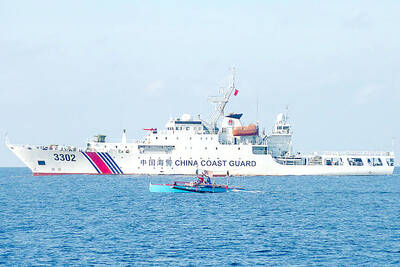
EXPANSIONIST: China deploys an average of 40 to 50 warships and coast guard vessels daily in the South China Sea, despite pledges not to militarize the region, an official said China is attempting to expand its influence across the First Island Chain and increase pressure on Japan by sending coast guard vessels into waters off of Taiwan under the pretext of maritime negotiations with Japan and the Philippines, a national security official said yesterday. China’s recent actions in the waters east of Taiwan and Japan and the Philippines’ exclusive economic zones (EEZ) are attempts to establish dominance in First Island Chain waters, said the official who declined to be named, adding that this is “expansion disguised as law enforcement.” Framing China’s actions solely as a cross-strait issue is a serious misjudgment that
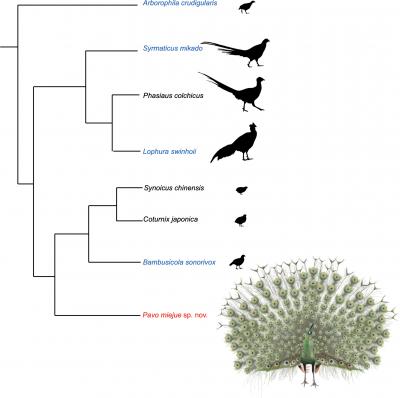
Through analyzing fossil evidence, a research team at National Taiwan University (NTU) discovered the largest endemic bird to have lived in Taiwan, naming it Pavo miejue, or extinct peafowl (滅絕孔雀). The Mikado pheasant, which is printed on the back of the NT$1,000 bank note, was previously believed to be the biggest endemic bird to Taiwan. The research team’s findings suggest that Pavo miejue lived during the Pleistocene epoch tens of thousands of years ago. It is the first endemic extinct bird species discovered and formally named in Taiwan. The study was coauthored by NTU Institute of Ecology and Evolutionary Biology professor Tsai Cheng-hsiu (蔡政修),
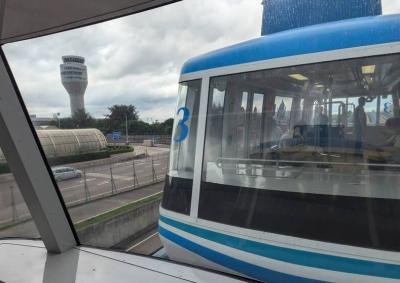
Taiwan Taoyuan International Airport is to suspend its automated Skytrain service connecting Terminal 1 and Terminal 2 starting on July 1 to facilitate connection works for the upcoming Terminal 3, the airport operator said today. Passengers and staff who need to travel between the two terminals after the suspension can instead use the Taoyuan MRT or the airport's 24-hour shuttle bus service, Taoyuan International Airport Corp said. The Taoyuan MRT Airport Line directly links the two terminals, while the shuttle buses are to operate around the clock, the company added. The Skytrain provides free transportation between the airport’s two terminals for travelers and
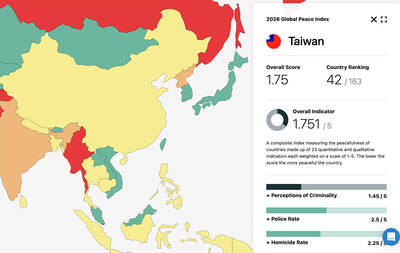
Taiwan ranked 42nd in terms of peacefulness among 163 countries, down five places from last year, according to this year’s Global Peace Index. With an overall score of 1.751, Taiwan dropped from 37th last year, the report published by the global Institute for Economics and Peace showed. The overall score measures a country’s level of peacefulness using 23 quantitative and qualitative indicators across three domains — ongoing domestic and international conflict, societal safety and security, and militarization. While Taiwan ranked 42nd worldwide, it was listed in ninth place among the 19 Asian-Pacific countries in the report, after New Zealand, Singapore, Japan, Malaysia,


 RSS
RSS