


The Civil Aeronautics Administration (CAA) is to present draft amendments regulating the use of unmanned aerial vehicles (UAVs) for legislative review next week, a Cabinet official said on Wednesday.
The draft amendments to the Civil Aviation Act (民用航空法) would also cover aerial photography, airspace and equipment after relevant rules are finalized this week, the official said.
The new measures are to serve as a regulatory framework and come in response to the rising number of UAVs and remote-controlled camera drones appearing in the skies over Taiwan. Th agency is imposing stricter regulations on camera drones weighing 15kg or more, including mandatory certification for the vehicle and operator.
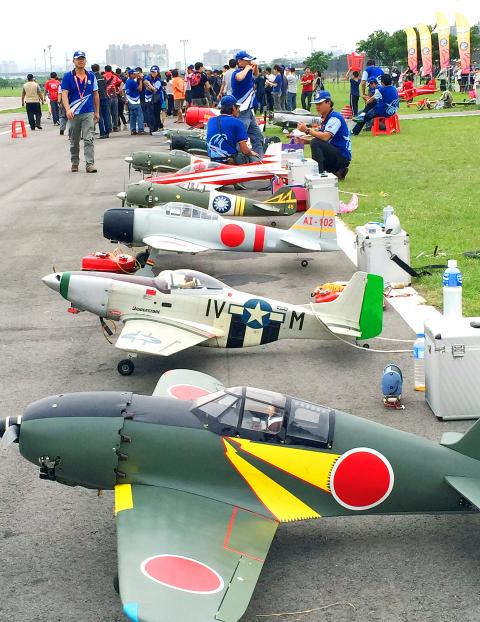
Photo: Lo Pei-der, Taipei Times
Under the proposed rules, the CAA will have authority over drones weighing 15kg and above, while local governments will have jurisdiction over those that weigh less than 15kg, the official said.
The amendments are to take effect next year if they are approved by the Legislative Yuan.
The government is revising the law to tighten drone regulations following a number of crashes that raised security concerns, the official said.
Given that Taiwan is small in area, but densely populated, the regulations will be more stringent than similar laws in the US and the EU, which categorize remote drones as those weighing 25kg and above, the official said.
According to CAA rules, drones must not be flown at an altitude of more than 121.92m and are prohibited from being used to take aerial photographs of important facilities such as the Presidential Office Building and the now-shuttered Fourth Nuclear Power Plant in Gongliao District (貢寮), New Taipei City.


China has reserved offshore airspace in the Yellow Sea and East China Sea from March 27 to May 6, issuing alerts usually used to warn of military exercises, although no such exercises have been announced, the Wall Street Journal (WSJ) reported yesterday. Reserving such a large area for 40 days without explanation is an “unusual step,” as military exercises normally only last a few days, the paper said. These alerts, known as Notice to Air Missions (Notams), “are intended to inform pilots and aviation authorities of temporary airspace hazards or restrictions,” the article said. The airspace reserved in the alert is
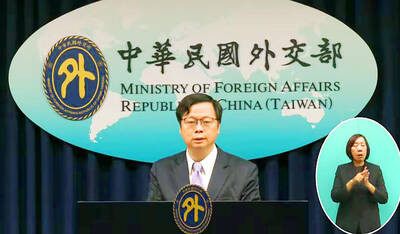
NAMING SPAT: The foreign ministry called on Denmark to propose an acceptable solution to the erroneous nationality used for Taiwanese on residence permits Taiwan has revoked some privileges for Danish diplomatic staff over a Danish permit that lists “Taiwan” as “China,” Eric Huang (黃鈞耀), head of the Ministry of Foreign Affairs’ Department of European Affairs, told a news conference in Taipei yesterday. Reporters asked Huang whether the Danish government had responded to the ministry’s request that it correct the nationality on Danish residence permits of Taiwanese, which has been listed as “China” since 2024. Taiwan’s representative office in Denmark continues to communicate with the Danish government, and the ministry has revoked some privileges previously granted to Danish representatives in Taiwan and would continue to review

More than 6,000 Taiwanese students have participated in exchange programs in China over the past two years, despite the Mainland Affairs Council’s (MAC) “orange light” travel advisory, government records showed. The MAC’s publicly available registry showed that Taiwanese college and university students who went on exchange programs across the Strait numbered 3,592 and 2,966 people respectively. The National Immigration Agency data revealed that 2,296 and 2,551 Chinese students visited Taiwan for study in the same two years. A review of the Web sites of publicly-run universities and colleges showed that Taiwanese higher education institutions continued to recruit students for Chinese educational programs without

A bipartisan group of US senators has introduced a bill to enhance cooperation with Taiwan on drone development and to reduce reliance on supply chains linked to China. The proposed Blue Skies for Taiwan Act of 2026 was introduced by Republican US senators Ted Cruz and John Curtis, and Democratic US senators Jeff Merkley and Andy Kim. The legislation seeks to ease constraints on Taiwan-US cooperation in uncrewed aerial systems (UAS), including dependence on China-sourced components, limited access to capital and regulatory barriers under US export controls, a news release issued by Cruz on Wednesday said. The bill would establish a "Blue UAS


 RSS
RSS