


Taiwan Solidarity Union Legislator Yeh Chin-ling (葉津鈴) yesterday said the government’s budget for next year’s presidential inauguration was wasteful and urged all presidential candidates to pledge to reduce the cost of the ceremony.
Yeh said the Presidential Office has earmarked a budget of NT$41.31 million (US$1.25 million) for the 14th presidential inauguration next year.
In light of the government’s fiscal difficulties, Yeh criticized the amount as excessive.
She also said that in 1996, when Lee Teng-hui (李登輝) was voted the nation’s first democratically elected president, he spent just NT$7.08 million on his presidential inauguration.
Yeh called on all the presidential candidates in January’s election to pledge to cut the cost of the ceremony to less than NT$10 million, noting that there is no reason they should do worse than Lee.
Yeh said the 14th presidential inauguration would be the second-most expensive in the nation’s history, with the location alone costing NT$11.5 million, NT$7.6 million budgeted for miscellaneous event costs, NT$5.6 million for memorabilia and NT$3.06 million on the presidential seals and photographs.
“The total expenses for the event represent a growth of five times compared with Lee’s inauguration in 1996,” Yeh said, adding that since then the most expensive presidential inauguration ever was President Ma Ying-jeou’s (馬英九) 2008 ceremony, which cost NT$50 million.
Yeh said that such expense is unwise when the budgets of central and local governments are unsound, citing as an example several mayors and county commissioners having to apply for relief from the national government to pay year-end bonuses to their employees.
Yeh said that the national deficit is estimated at NT$6.1 trillion, while the hidden deficit is as high as NT$17.9 trillion.
“On all levels, governments spend big money on events and activities. This is like slapping your own face until it is swollen to pretend that you are fat,” Yeh said.
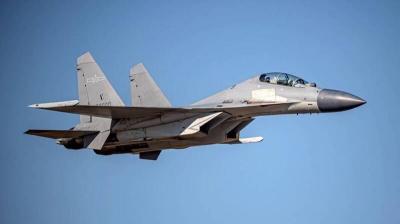
Eight Chinese naval vessels and 24 military aircraft were detected crossing the median line of the Taiwan Strait between 6am yesterday and 6am today, the Ministry of National Defense said this morning. The aircraft entered Taiwan’s northern, central, southwestern and eastern air defense identification zones, the ministry said. The armed forces responded with mission aircraft, naval vessels and shore-based missile systems to closely monitor the situation, it added. Eight naval vessels, one official ship and 36 aircraft sorties were spotted in total, the ministry said.
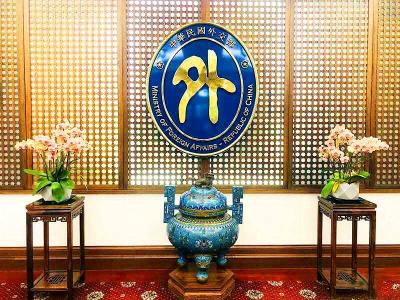
The Ministry of Foreign Affairs (MOFA) today said that if South Korea does not reply appropriately to its request to correct Taiwan’s name on its e-Arrival card system before March 31, it would take corresponding measures to alter how South Korea is labeled on the online Taiwan Arrival Card system. South Korea’s e-Arrival card system lists Taiwan as “China (Taiwan)” in the “point of departure” and “next destination” fields. The ministry said that it changed the nationality for South Koreans on Taiwan’s Alien Resident Certificates from “Korea” to “South Korea” on March 1, in a gesture of goodwill and based on the
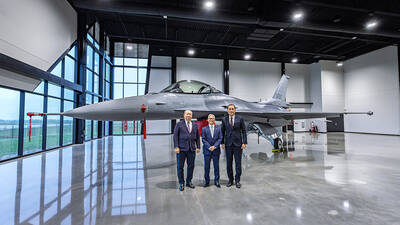
Taiwanese officials were shown the first of 66 F-16V fighter jets purchased by Taiwan from the United States, the Ministry of National Defense said yesterday, adding the aircraft has completed an initial flight test and is expected to be delivered later this year. A delegation led by Deputy Minister of National Defense Hsu Szu-chien (徐斯儉) visited Lockheed Martin’s F-16 C/D Block 70 (also known as F-16V) assembly line in South Carolina on March 16 to view the aircraft. The jet will undergo a final acceptance flight in the US before being delivered to Taiwan, the
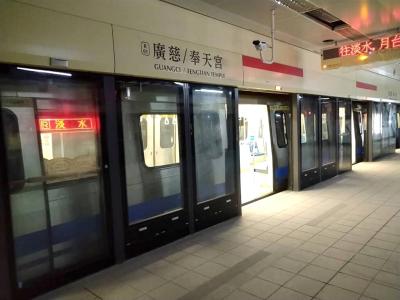
The New Taipei Metro's Sanyin Line and the eastern extension of the Taipei Metro's Tamsui-Xinyi Line (Red Line) are scheduled to begin operations in June, the National Development Council said today. The Red Line, which terminates at Xiangshan Station, would be connected by the 1.4km extension to a new eastern terminal, Guangci/Fengtian Temple Station, while the Sanyin Line would link New Taipei City's Tucheng and Yingge stations via Sanxia District (三峽). The council gave the updates at a council meeting reviewing progress on public construction projects for this year. Taiwan's annual public infrastructure budget would remain at NT$800 billion (US$25.08 billion), with NT$97.3


 RSS
RSS