

The National Health Insurance Administration yesterday announced that people can apply for new National Health Insurance (NHI) program cards at household registration offices in 19 cities and counties.
“Statistics show that approximately 440,000 identification cards and 660,000 NHI cards are lost each year, with about 300,000 people losing both yearly,” Underwriting Division official Wu Hsin (吳昕) said.
Wu said that in the past, people who lost both credentials had to go to a household registration office to get a replacement identification card and an agency office to get a new NHI card, which was a waste of time and money.
To address the problem, the agency and the Ministry of the Interior’s Department of Household Registration launched a cross-agency information platform, through which a household registration office can forward NHI card information to the administration.
“The new policy is expected to save an applicant 30 minutes and NT$50 in transportation expenses,” Wu said.
Meanwhile, a number of new policies drawn up by the Food and Drug Administration are to take effect today.
One of them targets genetically modified (GM) foods, requiring producers of food products with more than 3 percent GM ingredients to label the items either as “genetically modified” or “containing genetically modified content.”
Previously, the limit was 5 percent.
Sugar content notifications are to become mandatory from today. Food manufacturers have to display the total amount of sugar on labels of packaged food items.
They are also required to list each nutrient in the product and its percentage of the recommended daily intake.
Labels must also notify consumers of the possible presence of the six most serious types of food allergens.
The FDA also recommends that food producers notify consumers in the nutrition table if a product might contain goat milk, fish, shellfish, cephalopods, nuts, gluten-containing grains, soybean and kiwifruit.

A Hualien pomelo farmer refused to sell to China after the country announced it would permit more Taiwanese pomelo imports, prompting widespread support from Taiwanese consumers, who rallied to buy his fruit. China’s Taiwan Affairs Office last month said that China’s General Administration of Customs registered an additional 79 Taiwanese pomelo orchards and packing facilities in Hualien County, allowing more Taiwanese producers to export pomelos to China. “I am a Hualien fruit farmer and I refuse to sell to China,” Liu Tzu-hao (劉子豪) from Ruisui Township (瑞穗) said in an online post. Liu is a well-known farmer in the community and has served
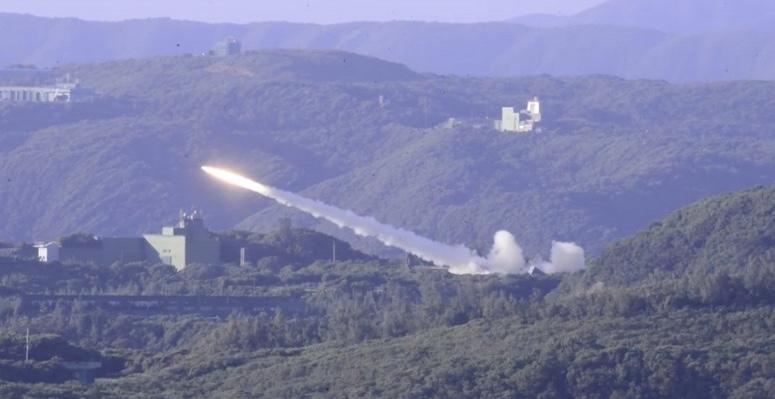
A Chinese military drone was spotted conducting reconnaissance off Taitung County as President William Lai (賴清德) visited Pingtung County this morning to inspect a drill of the armed forces’ precision-strike capabilities, prompting the military to closely monitor its actions. Today was the final day of a three-day military exercise at Jioupeng Base (九鵬基地) to test the joint combat capabilities of the armed forces and coast guard. The exercise began on Wednesday simulating air defense interception and yesterday tested long-range strike capabilities and new air defense weapons. This morning, the military conducted a final exercise involving air defense, anti-ship and drone operations. Military sources said

OCT. 31: The antiviral drugs Tamiflu and Eraflu have been distributed to about 4,000 medical facilities nationwide for people in seven groups who develop flu-like symptoms As the domestic influenza epidemic enters its peak season and continues to escalate, the Centers for Disease Control (CDC) yesterday announced that publicly funded influenza antiviral drugs for seven eligible groups have been extended to Oct. 31, allowing those who develop flu-like symptoms to receive the medication without undergoing a rapid influenza test. The CDC has extended the expanded use of flu antiviral drugs to seven groups: healthcare and influenza-prevention personnel; residents and staff at nursing homes, long-term care facilities and similar institutions; kindergarten and daycare workers and home-based caregivers; students from kindergarten through high school, vocational high school and the

Taiwanese Tsai Chin-shu (蔡金樹), who had been imprisoned in China for engaging in activity that “endangers national security,” said on Facebook on Friday that he has returned to Taiwan. Tsai, chairman of the Southern Taiwan Union of Cross-strait Relations Associations, had traveled frequently between Taiwan and China for years, and at one time ran a trading company in China’s Pingtan. In July 2018, he traveled to Quanzhou, Fujian Province, to attend a cross-strait food trade fair and stayed at a hotel in Xiamen. He checked out the following day and then disappeared. His family had made repeated appeals to the authorities


 RSS
RSS