


Members of the legislature’s Transportation Committee were divided along party lines regarding the necessity of enacting a specific law addressing the issues of cyberbullying, with Chinese Nationalist Party (KMT) legislators in favor of the move and the Democratic Progressive Party (DPP) opposing it.
The committee was scheduled to have National Communications Commission (NCC) Chairman Howard Shyr (石世豪) detail a plan on how to reduce the digital gap between urban and rural areas.
However, the focus quickly shifted to legislation on cyberbullying, as the nation was still reeling from the death of actress and model Peng Hsin-yi (彭馨逸), also known as Cindy Yang (楊又穎), who was reported to have killed herself after reading malicious comments about her on a Facebook page.
KMT Legislator Lee Hung-chun (李鴻鈞) said that prosecutors could only check the IP addresses of those making slanderous remarks online if the defendants face a primary penalty of three years in prison or longer, based on current regulations.
He said that victims of cyberbullying would have no way of knowing the IP addresses of cyberbullies or other such information.
Lee also said that people who are bullied are shy and less likely to fight back, adding that they can only be helped by having a specific law.
“The freedom of speech in Taiwan has a tendency to be applicable in everything. A solid legal basis can prevent cyberbullying by showing people that there are consequences for their deeds,” he said.
KMT Legislator Lo Shu-lei (羅淑蕾) said that the request for a specific law to tackle cyberbullying is a “slap in the face” for the NCC, because it shows that the commission has done nothing to curb cyberbullying and simply lets victims deal with problems themselves.
Shyr said that there should not be any law suppressing freedom of speech, particularly online.
“The nation has laws to regulate these comments,” Shyr said. “However, the point is whether the laws can be effectively enforced. We should not overreact to a single event by increasing the control on the Internet.”
DPP Legislators Lee Kun-tse (李昆澤) and Yeh Yi-jin (葉宜津) also opposed new legislation.
Lee said that the government should not intervene in cyberspace and limit speech freedom online.
Lee said that the commission should make sure Internet service providers can be self-disciplined and improve the counseling of the Institute of Watch Internet Network (iWIN), which accepts complaints over online comments on behalf of the government.
Yeh said legislating against cyberbulling is like saying that someone should stop eating because of his fear of being choked by food, adding that the government can still hold cyberbullies accountable through their IP addresses.

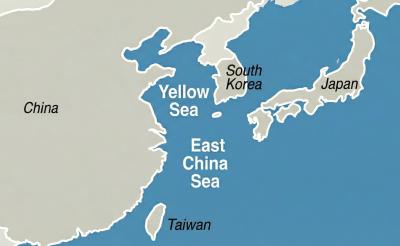
China has reserved offshore airspace in the Yellow Sea and East China Sea from March 27 to May 6, issuing alerts usually used to warn of military exercises, although no such exercises have been announced, the Wall Street Journal (WSJ) reported yesterday. Reserving such a large area for 40 days without explanation is an “unusual step,” as military exercises normally only last a few days, the paper said. These alerts, known as Notice to Air Missions (Notams), “are intended to inform pilots and aviation authorities of temporary airspace hazards or restrictions,” the article said. The airspace reserved in the alert is

South Korea is planning to revise its controversial electronic arrival card, a step Taiwanese officials said prompted them to hold off on planned retaliatory measures, a South Korean media report said yesterday. A Yonhap News Agency report said that the South Korean Ministry of Foreign Affairs is planning to remove the “previous departure place” and “next destination” fields from its e-arrival card system. The plan, reached after interagency consultations, is under review and aims to simplify entry procedures and align the electronic form with the paper version, a South Korean ministry official said. The fields — which appeared only on the electronic form

A bipartisan group of US senators has introduced a bill to enhance cooperation with Taiwan on drone development and to reduce reliance on supply chains linked to China. The proposed Blue Skies for Taiwan Act of 2026 was introduced by Republican US senators Ted Cruz and John Curtis, and Democratic US senators Jeff Merkley and Andy Kim. The legislation seeks to ease constraints on Taiwan-US cooperation in uncrewed aerial systems (UAS), including dependence on China-sourced components, limited access to capital and regulatory barriers under US export controls, a news release issued by Cruz on Wednesday said. The bill would establish a "Blue UAS

More than 6,000 Taiwanese students have participated in exchange programs in China over the past two years, despite the Mainland Affairs Council’s (MAC) “orange light” travel advisory, government records showed. The MAC’s publicly available registry showed that Taiwanese college and university students who went on exchange programs across the Strait numbered 3,592 and 2,966 people respectively. The National Immigration Agency data revealed that 2,296 and 2,551 Chinese students visited Taiwan for study in the same two years. A review of the Web sites of publicly-run universities and colleges showed that Taiwanese higher education institutions continued to recruit students for Chinese educational programs without


 RSS
RSS