


The postal savings fund will not be used to invest in Chinese markets, Minister of Transportation and Communications Yeh Kuang-shih (葉匡時) said yesterday.
“We have stopped considering this option. It will not happen during my term [as minister],” he said at a meeting of the legislature’s Transportation Committee, which was scheduled to review Chunghwa Post Co’s budget for next fiscal year.
Last month, the state-run postal company announced plans to amend the Management Measures for Investing Postal Savings in Bonds and Bills (郵政儲金投資債券票券管理辦法) as well as the Management Measures for Investing in Beneficiary Certificates and Public Offering Stocks (郵政儲金投資受益憑證及上市(櫃)股票管理辦法) to allow it to invest in Chinese stocks, bonds and other financial products.
With the postal savings fund topping NT$5 trillion (US$158.3 billion), Chunghwa Post has proposed that it be permitted to invest up to three-fifths of its net asset value.
However, the proposal has drawn public criticism, with some netizens threatening to withdraw all their postal savings.
Democratic Progressive Party Legislator Lee Kun-tse (李昆澤) said that the Financial Supervisory Commission and international credit institutions have warned about the high risks of investing in China.
Noting that some state-owned Chinese banks are floundering because of their large credit exposure, Lee asked if the postal firm wanted to risk losing the funds of 20 million postal savings account holders.
In response, Chunghwa Post chairman Philip Weng (翁文祺) said the company has stopped pushing the proposed amendments after taking the risks and the opinions of experts into consideration.
In related news, about 4,000 entry-level postal service workers can soon expect a pay raise of about 7 percent following negotiations with the postal workers’ union, Weng said.
Entry-level workers at the Taiwan Railways Administration will also enjoy a salary increase of 3 to 6 percent, the railway operator said.
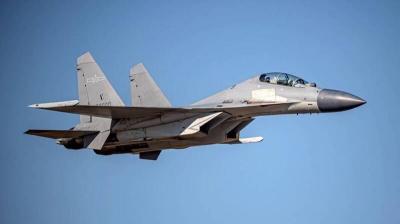
Eight Chinese naval vessels and 24 military aircraft were detected crossing the median line of the Taiwan Strait between 6am yesterday and 6am today, the Ministry of National Defense said this morning. The aircraft entered Taiwan’s northern, central, southwestern and eastern air defense identification zones, the ministry said. The armed forces responded with mission aircraft, naval vessels and shore-based missile systems to closely monitor the situation, it added. Eight naval vessels, one official ship and 36 aircraft sorties were spotted in total, the ministry said.
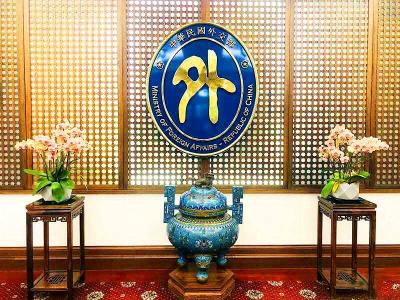
The Ministry of Foreign Affairs (MOFA) today said that if South Korea does not reply appropriately to its request to correct Taiwan’s name on its e-Arrival card system before March 31, it would take corresponding measures to alter how South Korea is labeled on the online Taiwan Arrival Card system. South Korea’s e-Arrival card system lists Taiwan as “China (Taiwan)” in the “point of departure” and “next destination” fields. The ministry said that it changed the nationality for South Koreans on Taiwan’s Alien Resident Certificates from “Korea” to “South Korea” on March 1, in a gesture of goodwill and based on the
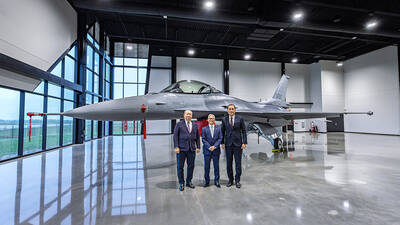
Taiwanese officials were shown the first of 66 F-16V fighter jets purchased by Taiwan from the United States, the Ministry of National Defense said yesterday, adding the aircraft has completed an initial flight test and is expected to be delivered later this year. A delegation led by Deputy Minister of National Defense Hsu Szu-chien (徐斯儉) visited Lockheed Martin’s F-16 C/D Block 70 (also known as F-16V) assembly line in South Carolina on March 16 to view the aircraft. The jet will undergo a final acceptance flight in the US before being delivered to Taiwan, the
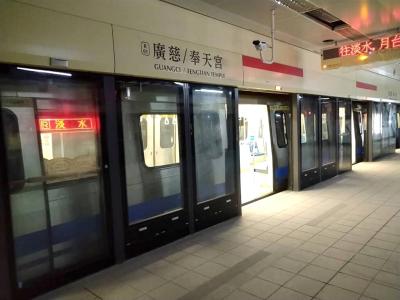
The New Taipei Metro's Sanyin Line and the eastern extension of the Taipei Metro's Tamsui-Xinyi Line (Red Line) are scheduled to begin operations in June, the National Development Council said today. The Red Line, which terminates at Xiangshan Station, would be connected by the 1.4km extension to a new eastern terminal, Guangci/Fengtian Temple Station, while the Sanyin Line would link New Taipei City's Tucheng and Yingge stations via Sanxia District (三峽). The council gave the updates at a council meeting reviewing progress on public construction projects for this year. Taiwan's annual public infrastructure budget would remain at NT$800 billion (US$25.08 billion), with NT$97.3


 RSS
RSS