


Major Republican victories in the US midterm congressional elections on Tuesday have increased support for Taiwan on Capitol Hill.
New Republican senators are expected to be more sympathetic to the nation than their Democratic counterparts.
And as Republicans take over Senate committee chairmanships in the new Congress next year, they will have much greater control over the legislative process.
There will be more pressure than ever on US President Barack Obama to take a harder line on China, and provide a warmer reception to Taiwan’s pleas for modern fighter planes and technical help for an indigenous submarine program.
With both houses of Congress in Republican hands, it is likely that new legislation will be introduced and passed next year calling for increased arms sales to Taipei.
While it was too early to gather in-depth reaction from members of the Taiwan caucus, a senior Republican staffer on the House of Representatives side predicted the Obama administration would also be pushed to offer more support for Taiwan’s entry into the nascent Trans-Pacific Partnership (TPP).
Gaining membership is a prime target for Taipei.
However, there is unlikely to be any immediate change in emphasis as the current Congress now enters its final session.
Obama has called a bipartisan meeting of congressional leaders for tomorrow at the White House to discuss cooperation before he leaves this weekend for Beijing and meetings with Chinese President Xi Jinping (習近平).
Sources say Obama will offer to work with the new Republican leadership and try to break the political deadlock that has gripped Washington for much of his term.
Obama’s trip to Beijing will ensure that China is high on the agenda, but US foreign policy is currently dominated by the Ebola crisis and Islamic State militants.
It remains unclear just how much influence and impact increased Republican pressure will have on the White House.
The Republicans still do not have enough votes in the Senate to overturn a presidential veto.
Any move to improve US ties with Taiwan would be certain to upset Beijing and result in increased strains in the US-China relationship, thus Obama may remain very reluctant to bend to congressional pressure on Taiwan.
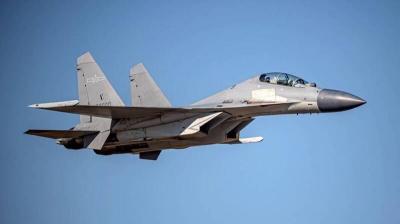
Eight Chinese naval vessels and 24 military aircraft were detected crossing the median line of the Taiwan Strait between 6am yesterday and 6am today, the Ministry of National Defense said this morning. The aircraft entered Taiwan’s northern, central, southwestern and eastern air defense identification zones, the ministry said. The armed forces responded with mission aircraft, naval vessels and shore-based missile systems to closely monitor the situation, it added. Eight naval vessels, one official ship and 36 aircraft sorties were spotted in total, the ministry said.
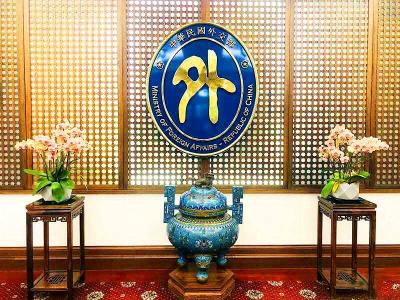
The Ministry of Foreign Affairs (MOFA) today said that if South Korea does not reply appropriately to its request to correct Taiwan’s name on its e-Arrival card system before March 31, it would take corresponding measures to alter how South Korea is labeled on the online Taiwan Arrival Card system. South Korea’s e-Arrival card system lists Taiwan as “China (Taiwan)” in the “point of departure” and “next destination” fields. The ministry said that it changed the nationality for South Koreans on Taiwan’s Alien Resident Certificates from “Korea” to “South Korea” on March 1, in a gesture of goodwill and based on the

Taiwanese officials were shown the first of 66 F-16V fighter jets purchased by Taiwan from the United States, the Ministry of National Defense said yesterday, adding the aircraft has completed an initial flight test and is expected to be delivered later this year. A delegation led by Deputy Minister of National Defense Hsu Szu-chien (徐斯儉) visited Lockheed Martin’s F-16 C/D Block 70 (also known as F-16V) assembly line in South Carolina on March 16 to view the aircraft. The jet will undergo a final acceptance flight in the US before being delivered to Taiwan, the
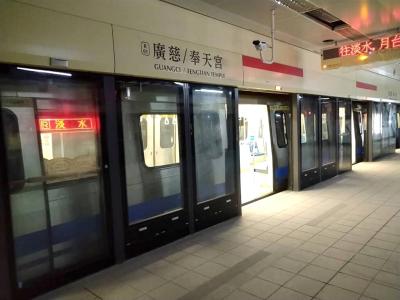
The New Taipei Metro's Sanyin Line and the eastern extension of the Taipei Metro's Tamsui-Xinyi Line (Red Line) are scheduled to begin operations in June, the National Development Council said today. The Red Line, which terminates at Xiangshan Station, would be connected by the 1.4km extension to a new eastern terminal, Guangci/Fengtian Temple Station, while the Sanyin Line would link New Taipei City's Tucheng and Yingge stations via Sanxia District (三峽). The council gave the updates at a council meeting reviewing progress on public construction projects for this year. Taiwan's annual public infrastructure budget would remain at NT$800 billion (US$25.08 billion), with NT$97.3


 RSS
RSS