


The Environmental Protection Administration (EPA) said yesterday that it has been able to track only half of the waste cooking oil that was produced in the nation in the past two years.
Amid a food scare over recycled oil, EPA Deputy Minister Chang Tzi-chin (張子敬) said the agency’s 2007 inventory, conducted in line with the Ministry of Economic Affairs’ biodiesel policy, found that between 70,000 tonnes and 80,000 tonnes of waste cooking oil is produced annually in the nation.
More recently, it said, the volume was about 28,000 tonnes last year and roughly 24,000 tonnes in the first eight months of this year. This amount, added to the 10,000 tonnes that were exported, means only half the total has been accounted for, Chang said.
He said that according to the existing regulations, waste cooking oil businesses that have a certain level of capital and revenue are required to file an online report on the flow of their products.
It is estimated that 20,000 to 30,000 tonnes of waste cooking oil is produced by vendors and small shops that do not fall under that regulation, he added.
Chang said he hopes to obtain information within a week about the flow of waste cooking oil from night markets.
Meanwhile, Minister of Economic Affairs Woody Duh (杜紫軍) said that the recent food safety issue of lard-based cooking oil being adulterated with recycled oil has caused “incalculable” damage to the reputation of the nation’s food industry. In addition, the industry has suffered estimated losses of NT$5 billion (US$166 million) in revenue as a result of the food scare, he said.
However, Hsu Chih-chiang (徐之強), a professor at National Central University, said the food scare will have limited effects on the economy because the lard industry accounts for only a fraction of the nation’s GDP.
The impact on the upstream and downstream supply chain will also be minimal, he added.
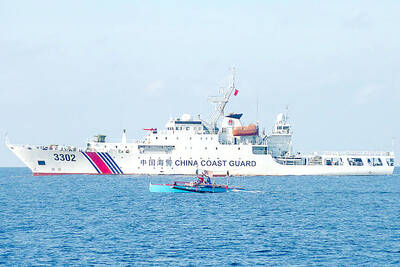
EXPANSIONIST: China deploys an average of 40 to 50 warships and coast guard vessels daily in the South China Sea, despite pledges not to militarize the region, an official said China is attempting to expand its influence across the First Island Chain and increase pressure on Japan by sending coast guard vessels into waters off of Taiwan under the pretext of maritime negotiations with Japan and the Philippines, a national security official said yesterday. China’s recent actions in the waters east of Taiwan and Japan and the Philippines’ exclusive economic zones (EEZ) are attempts to establish dominance in First Island Chain waters, said the official who declined to be named, adding that this is “expansion disguised as law enforcement.” Framing China’s actions solely as a cross-strait issue is a serious misjudgment that
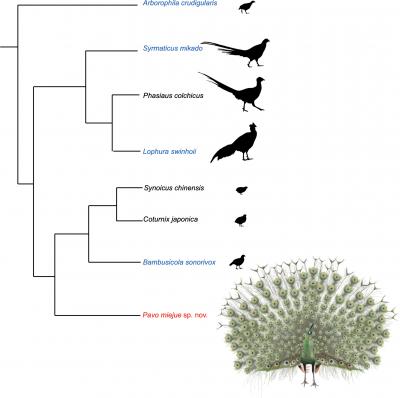
Through analyzing fossil evidence, a research team at National Taiwan University (NTU) discovered the largest endemic bird to have lived in Taiwan, naming it Pavo miejue, or extinct peafowl (滅絕孔雀). The Mikado pheasant, which is printed on the back of the NT$1,000 bank note, was previously believed to be the biggest endemic bird to Taiwan. The research team’s findings suggest that Pavo miejue lived during the Pleistocene epoch tens of thousands of years ago. It is the first endemic extinct bird species discovered and formally named in Taiwan. The study was coauthored by NTU Institute of Ecology and Evolutionary Biology professor Tsai Cheng-hsiu (蔡政修),

Taiwan Taoyuan International Airport is to suspend its automated Skytrain service connecting Terminal 1 and Terminal 2 starting on July 1 to facilitate connection works for the upcoming Terminal 3, the airport operator said today. Passengers and staff who need to travel between the two terminals after the suspension can instead use the Taoyuan MRT or the airport's 24-hour shuttle bus service, Taoyuan International Airport Corp said. The Taoyuan MRT Airport Line directly links the two terminals, while the shuttle buses are to operate around the clock, the company added. The Skytrain provides free transportation between the airport’s two terminals for travelers and
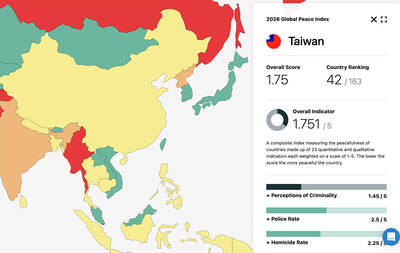
Taiwan ranked 42nd in terms of peacefulness among 163 countries, down five places from last year, according to this year’s Global Peace Index. With an overall score of 1.751, Taiwan dropped from 37th last year, the report published by the global Institute for Economics and Peace showed. The overall score measures a country’s level of peacefulness using 23 quantitative and qualitative indicators across three domains — ongoing domestic and international conflict, societal safety and security, and militarization. While Taiwan ranked 42nd worldwide, it was listed in ninth place among the 19 Asian-Pacific countries in the report, after New Zealand, Singapore, Japan, Malaysia,


 RSS
RSS