


The Directorate-General of Highways said yesterday that all imported cars that are to be driven in Taiwan for a short period will not be able to display license plates issued by the country where they are registered, adding that the foreign plates will be returned to owners after they give back the temporary license plates issued by the agency.
The policy was announced after Chinese license plates were spotted on streets of Taiwan.
Some have suggested that the cars might be driven by Chinese spies to gather sensitive information, generating a national security issue.
The agency said that previously, any car registered in China or any other country must apply for a temporary set of plates, which are made of paper. The paper plates are to be glued over the original plate at the front and the back of the vehicle, the agency said.
The original license plates might be revealed if the paper ones are blown off by wind or other means, it added.
To prevent foreign plates from being accidentally displayed, the highways authority said that it will require the owners of overseas-registered cars to remove the original plates before they will be allowed to drive the cars in Taiwan.
The plates will be held by the agency and returned to the owners when they give back the temporary plates, it said.
People wanting to import vehicles from China must file for permission from the Ministry of Economic Affairs’ Bureau of Foreign Trade.
In the past 10 years, 109 owners of cars registered overseas have applied for temporary plates, the agency said. The majority of the vehicles were imported from Japan, Germany and the US.
Only eight vehicles were from China, including three imported in 2009 by Far EasTone Communications to support mobile communication networks in areas devastated by Typhoon Marakot, four semi-trailers imported under the Maritime and Port Bureau’s trial program for roll-on, roll-off ships and one by a private association in Greater Tainan.
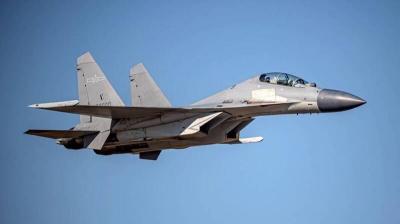
Eight Chinese naval vessels and 24 military aircraft were detected crossing the median line of the Taiwan Strait between 6am yesterday and 6am today, the Ministry of National Defense said this morning. The aircraft entered Taiwan’s northern, central, southwestern and eastern air defense identification zones, the ministry said. The armed forces responded with mission aircraft, naval vessels and shore-based missile systems to closely monitor the situation, it added. Eight naval vessels, one official ship and 36 aircraft sorties were spotted in total, the ministry said.
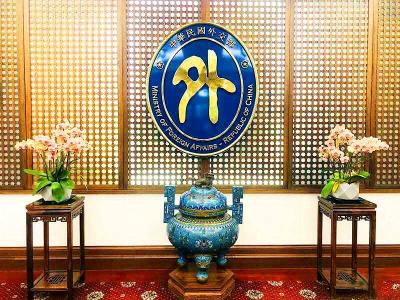
The Ministry of Foreign Affairs (MOFA) today said that if South Korea does not reply appropriately to its request to correct Taiwan’s name on its e-Arrival card system before March 31, it would take corresponding measures to alter how South Korea is labeled on the online Taiwan Arrival Card system. South Korea’s e-Arrival card system lists Taiwan as “China (Taiwan)” in the “point of departure” and “next destination” fields. The ministry said that it changed the nationality for South Koreans on Taiwan’s Alien Resident Certificates from “Korea” to “South Korea” on March 1, in a gesture of goodwill and based on the

Taiwanese officials were shown the first of 66 F-16V fighter jets purchased by Taiwan from the United States, the Ministry of National Defense said yesterday, adding the aircraft has completed an initial flight test and is expected to be delivered later this year. A delegation led by Deputy Minister of National Defense Hsu Szu-chien (徐斯儉) visited Lockheed Martin’s F-16 C/D Block 70 (also known as F-16V) assembly line in South Carolina on March 16 to view the aircraft. The jet will undergo a final acceptance flight in the US before being delivered to Taiwan, the
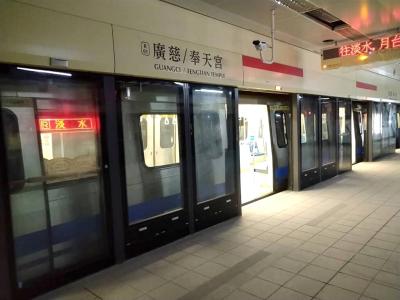
The New Taipei Metro's Sanyin Line and the eastern extension of the Taipei Metro's Tamsui-Xinyi Line (Red Line) are scheduled to begin operations in June, the National Development Council said today. The Red Line, which terminates at Xiangshan Station, would be connected by the 1.4km extension to a new eastern terminal, Guangci/Fengtian Temple Station, while the Sanyin Line would link New Taipei City's Tucheng and Yingge stations via Sanxia District (三峽). The council gave the updates at a council meeting reviewing progress on public construction projects for this year. Taiwan's annual public infrastructure budget would remain at NT$800 billion (US$25.08 billion), with NT$97.3


 RSS
RSS