


People looking for ways to increase their life expectancy should start by exercising regularly, the Health Promotion Administration said yesterday, citing a study showing that exercising for 15 minutes per day can add an average of three years to a person’s life.
Health Promotion Administration Director-General Chiu Shu-ti (邱淑媞) made the remarks at a press conference in Taipei, as the agency released a new version of an exercise guidebook to promote the benefits of regular exercise.
“Most people have difficulty adhering to the widely adopted physical guidelines for adults, which require them to exercise for at least 30 minutes a day, five days a week,” Chiu said.
However, under the agency’s new exercise guideline, people only have to work out 15 minutes a day or 90 minutes a week to get healthier and see their risk of dying from a variety of diseases greatly reduced, Chiu said.
The new guidelines are based on the results of a 2011 study conducted by National Health Research Institutes researcher Wen Chi-pang (溫啟邦).
The study monitored the health of about 416,000 Taiwanese who participated in a standard medical screening program from 1996 to 2008 for an average of eight years, and who were divided into five groups: inactive, low, medium, high or very high exercise activity.
Compared with inactive participants, the study found that people in the low activity group who speed-walked 15 minutes every day over eight years enjoyed a three-year longer life expectancy, a 14 percent reduced risk of all-cause mortality and a 10 percent lowered chance of dying from cancer.
Those who exercised for an additional 15 minutes per day saw their lifespan further increased by one year, the study showed.
“Not only can people who keep doing this [speed-walking] everyday, for about 90 minutes a week, live three years longer, but they can also greatly lower their risk of dying or developing cancer, heart disease, diabetes and many other diseases,” Wen said.
However, Wen added that only physical activities that were done “on purpose” could achieve such effects.
Chiu said that exercise is a great equalizer because everyone receives the same health benefits regardless of their financial status.
“Those who are willing to exercise are rewarded with the most valuable asset — health. On the other hand, those who do not do so increase their chances of developing breast or colorectal cancer by 25 percent, diabetes by 27 percent and ischemic heart disease by 30 percent,” Chiu said.
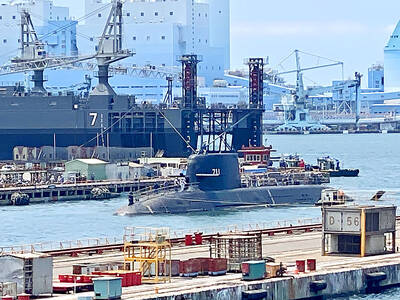
AGING: While Japan has 22 submarines, Taiwan only operates four, two of which were commissioned by the US in 1945 and 1946, and transferred to Taiwan in 1973 Taiwan would need at least 12 submarines to reach modern fleet capabilities, CSBC Corp, Taiwan chairman Chen Cheng-hung (陳政宏) said in an interview broadcast on Friday, citing a US assessment. CSBC is testing the nation’s first indigenous defense submarine, the Hai Kun (海鯤, Narwhal), which is scheduled to be delivered to the navy next month or in July. The Hai Kun has completed torpedo-firing tests and is scheduled to undergo overnight sea trials, Chen said on an SET TV military affairs program. Taiwan would require at least 12 submarines to establish a modern submarine force after assessing the nation’s operational environment and defense

A white king snake that frightened passengers and caused a stir on a Taipei MRT train on Friday evening has been claimed by its owner, who would be fined, Taipei Rapid Transit Corp (TRTC) said yesterday. A person on Threads posted that he thought he was lucky to find an empty row of seats on Friday after boarding a train on the Bannan (Blue) Line, only to spot a white snake with black stripes after sitting down. Startled, he jumped up, he wrote, describing the encounter as “terrifying.” “Taipei’s rat control plan: Release snakes on the metro,” one person wrote in reply, referring

The coast guard today said that it had disrupted "illegal" operations by a Chinese research ship in waters close to the nation and driven it away, part of what Taipei sees a provocative pattern of China's stepped up maritime activities. The coast guard said that it on Thursday last week detected the Chinese ship Tongji (同濟號), which was commissioned only last year, 29 nautical miles (54km) southeast of the southern tip of Taiwan, although just outside restricted waters. The ship was observed lowering ropes into the water, suspected to be the deployment of scientific instruments for "illegal" survey operations, and the coast

Yangmingshan National Park authorities yesterday urged visitors to respect public spaces and obey the law after a couple was caught on a camera livestream having sex at the park’s Qingtiangang (擎天崗) earlier in the day. The Shilin Police Precinct in Taipei said it has identified a suspect and his vehicle registration number, and would summon him for questioning. The case would be handled in accordance with public indecency charges, it added. The couple entered the park at about 11pm on Thursday and began fooling around by 1am yesterday, the police said, adding that the two were unaware of the park’s all-day live


 RSS
RSS