

The Taiwan Coalition Against Violence yesterday urged voters to use their ballots to pressure local governments into putting more resources toward the prevention and handling of domestic violence and sexual assaults, as social workers nationwide are overwhelmed by heavy workloads caused by budget and personnel shortages.
“The number of domestic violence and sexual assault cases has been on the rise in recent years, yet the government has been cutting its budget for the prevention of such incidents and for social work,” coalition director-general Chang Ching-li (張錦麗) told a press conference in Taipei.
Government statistics show that nearly 130,000 cases of domestic violence were reported last year, involving 110,103 victims, up from 38,238 victims in 2002, while the number of people who reported sexual assaults increased from 5,638 in 2006 to 10,901 last year, Chang said.
The Taipei City Government allocated NT$300 million (US$10 million) to its Center for Prevention of Domestic Violence and Sexual Assault last year, yet that works out to just NT$2,975 per case per month, Chang said.
“The monthly average funding per case in Changhua County was NT$661, followed by NT$639 for Yunlin County and NT$540 in Chiayi County,” Chang said.
Every local government had failed to keep social worker’s workloads below the statutory standard of 40 cases, with those in Yunlin, Chiayi and Greater Taichung being put in charge of an average of 108.81, 100.3 and 98.91 cases per person respectively.
“Such enormous workloads have taken a toll on the quality of service provided by the social workers, putting people at greater risk of domestic violence and sexual assault,” Chang said.
“We urge electorates in these constituencies to use their ballots in the Nov. 29 elections to pressure mayors and commissioners into making some real changes,” Chang said.

A Straits Exchange Foundation official today warned that yielding to political pressure in exchange for access to China’s entertainment industry rarely ends well, amid rumors that China is seeking to lure Taiwanese K-pop star Chou Tzu-yu (周子瑜). Chou, more commonly known as Tzuyu, is the only Taiwanese member of the girl group Twice. Her contract with JYP Entertainment is set to expire at the end of this year, and there have been widespread reports that she would not renew it. She is reportedly planning to pursue solo activities under her parents’ agency, Yu Hai Entertainment (瑜海娛樂), although China has also reportedly offered
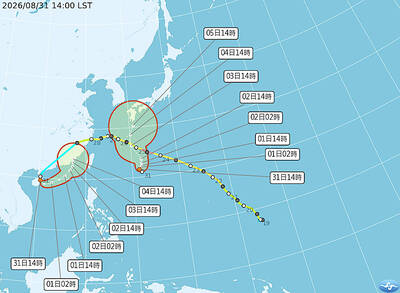
A tropical depression near Hainan that was once Typhoon Saudel may once again strengthen into a tropical storm, the Central Weather Administration (CWA) said yesterday, but a sea warning for waters around Taiwan is unlikely. CWA forecaster Huang En-hung (黃恩鴻) said that Saudel would return to being a weak tropical storm by late yesterday or early this morning. However, as the storm is to gradually weaken again and would head toward China’s Guangdong Province away from Taiwan, the chances that it would affect Taiwan enough for the CWA to issue a sea warning are relatively low,

Yielding to political pressure in exchange for access to China’s entertainment industry rarely ends well, a Straits Exchange Foundation official said yesterday amid rumors that China is seeking to lure Taiwanese K-pop star Chou Tzu-yu (周子瑜). Chou, who goes by Tzuyu, is the only Taiwanese member of the girl group Twice. Her contract with JYP Entertainment is set to expire at the end of this year, and there have been widespread rumors that she would not renew it. She is reportedly planning to pursue a solo career under her parents’ agency, Yu Hai Entertainment, although China has also reportedly offered to help Tzuyu
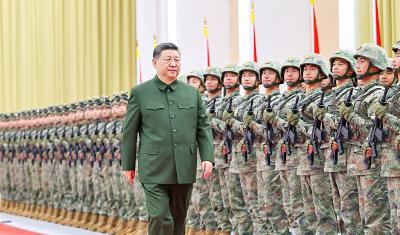
China has revised its National Defense Mobilization Law to prepare for a rapid transition to wartime, with an official today saying the measures are aimed at helping Chinese President Xi Jinping (習近平) fulfill his “historic mission of national unification.” The revised version of the mobilization law is to take effect on Oct. 1, marking the first major revision since the law was enacted in 2010. The amendments define national defense mobilization as measures taken in response to threats to national sovereignty, unification, territorial integrity, security and development interests, including efforts to ensure rapid transition between peacetime and wartime and convert economic and


 RSS
RSS