


The highway that goes through Taroko Gorge in eastern Taiwan was recently named one of the world’s most dangerous roads by a UK-based Web site.
The Web site, DrivingExperiences.com, said that although Taroko means “magnificent and splendid” in the Aboriginal Truku language, the road that runs through the gorge is deadly for drivers because of blind corners, narrow sections and huge drops alongside it.
“There are pedestrians, scooters, cars and massive tour buses all vying for the tight space,” the Web site said.
The Taroko Gorge Road, a section of Provisional Highway No. 8, runs through Hualien and into the mountains of central Taiwan.
On an interactive map, DrivingExperiences.com rated the Taroko Highway as a “high risk” on its list of 22 dangerous roads around the world.
Heavy rain from typhoons often dislodges soil and rocks, which make sections of the highway impassable, the Web site said.
“The area is prone to seismic activity, which can have disastrous effect on the highway,” it added, giving the Taroko Gorge Road a seven out of 10 rating in terms of “overall road fear factor.”
Directorate-General of Highways official Lin Wen-hsiung (林文雄) said yesterday that the government has allocated NT$1 billion (US$32.94 million) this year to improve the safety of the Taroko highway.
Work has been done to stabilize the embankment at more than 20 places along the road over the past two years, Lin said.
DrivingExperiences.com said its interactive map was created based on the WHO’s Global Status Report on Road Safety 2013, as well as media reports, blogs and other online sources.
According to the Web site, the world’s most dangerous highway is the North Yungas road in Bolivia, in light of the hundreds of deaths “caused by vehicles plunging off the road while trying risky overtaking maneuvers” every year.
The Bolivian highway received 10 out of 10 on the Web site’s “fear factor” rating.
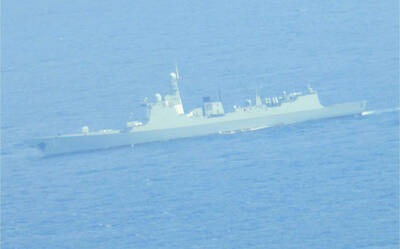
The military has spotted two Chinese warships operating in waters near Penghu County in the Taiwan Strait and sent its own naval and air forces to monitor the vessels, the Ministry of National Defense (MND) said. Beijing sends warships and warplanes into the waters and skies around Taiwan on an almost daily basis, drawing condemnation from Taipei. While the ministry offers daily updates on the locations of Chinese military aircraft, it only rarely gives details of where Chinese warships are operating, generally only when it detects aircraft carriers, as happened last week. A Chinese destroyer and a frigate entered waters to the southwest
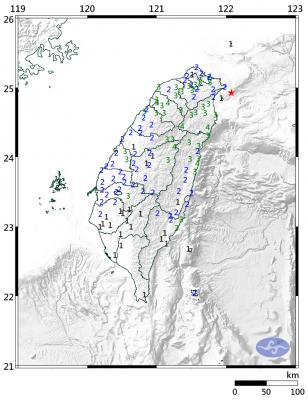
A magnitude 6.1 earthquake struck off the coast of Yilan County at 8:39pm tonight, the Central Weather Administration (CWA) said, with no immediate reports of damage or injuries. The epicenter was 38.7km east-northeast of Yilan County Hall at a focal depth of 98.3km, the CWA’s Seismological Center said. The quake’s maximum intensity, which gauges the actual physical effect of a seismic event, was a level 4 on Taiwan’s 7-tier intensity scale, the center said. That intensity level was recorded in Yilan County’s Nanao Township (南澳), Hsinchu County’s Guansi Township (關西), Nantou County’s Hehuanshan (合歡山) and Hualien County’s Yanliao (鹽寮). An intensity of 3 was
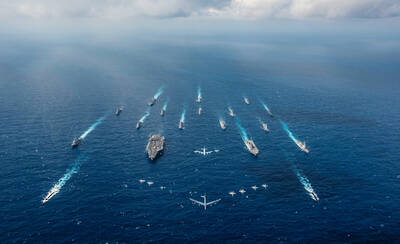
Japanese Prime Minister Sanae Takaichi’s comment last year on Tokyo’s potential reaction to a Taiwan-China conflict has forced Beijing to rewrite its invasion plans, a retired Japanese general said. Takaichi told the Diet on Nov. 7 last year that a Chinese naval blockade or military attack on Taiwan could constitute a “survival-threatening situation” for Japan, potentially allowing Tokyo to exercise its right to collective self-defense. Former Japan Ground Self-Defense Force general Kiyofumi Ogawa said in a recent speech that the remark has been interpreted as meaning Japan could intervene in the early stages of a Taiwan Strait conflict, undermining China’s previous assumptions
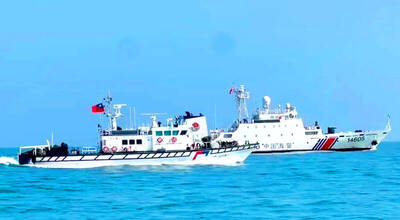
Instead of focusing solely on the threat of a full-scale military invasion, the US and its allies must prepare for a potential Chinese “quarantine” of Taiwan enforced through customs inspections, Stanford University Hoover fellow Eyck Freymann said in a Foreign Affairs article published on Wednesday. China could use various “gray zone” tactics in “reconfiguring the regional and ultimately the global economic order without a war,” said Freymann, who is also a nonresident research fellow at the US Naval War College. China might seize control of Taiwan’s links to the outside world by requiring all flights and ships entering or leaving Taiwan


 RSS
RSS