


While it is increasingly rare, the odd temple still features a few life-like figurines or busts of mythical figures, deities or animals called kansheng (看生) during the Chungyuan Festival (中元節), also known as the Ghost Festival.
The Ghost Festival falls on the 15th day of the seventh lunar month (today), when people prepare food to honor the dead with the traditional pudu (普渡) ceremonies.
The artisans who craft the figurines worry that the technique may soon be lost.
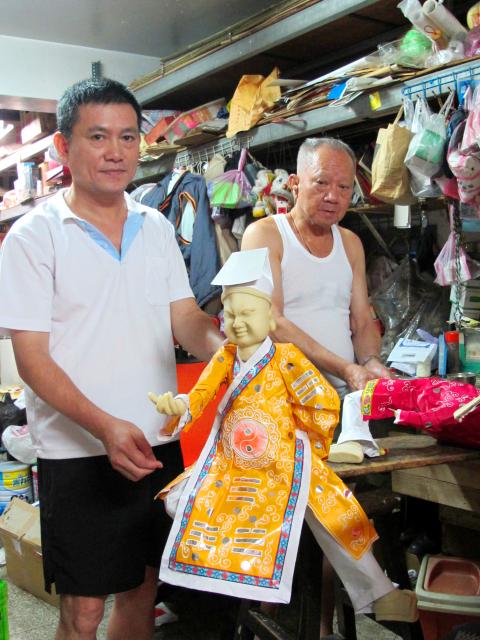
Photo: Hsieh Chia-chun, Taipei Times
The Wu (吳) family, who live in New Taipei City’s (新北市) Banciao District (板橋), said the demand for kansheng has waned year after year, adding that demand only spikes during the Ghost Festival.
The Wu family’s eldest son, Wu Hsiang-hui (吳祥輝), said there were many stories as to the origins of kansheng, but he felt one was more believable than others.
The word sheng is a homonym for sheng (牲), meaning cattle or livestock, and represents sacrifice.
In ancient times, some of the richer people would hire troupes of actors to perform plays for the spirits during the Ghost Festival, but common people were unable to afford such expenses, he said.
Instead, they made figurines to appease the spirits who might have become used to watching plays. People traditionally made figurines in the likeness of characters from classic novels, such as The Romance of the Three Kingdoms (三國演義) and The Journey to the West (西遊記), and the habit became a tradition, Wu said.
Due to the time-consuming process of making kansheng, Wu said that many in the business had turned to materials such as paper clay and ready-made paper clothes for the figurines to cut down the manufacturing time.
Wu said his family still adhered to the traditional methods of making kansheng, using flour, glutinous rice and salt, adding that it usually takes three days to complete one figurine.
After lumping all the ingredients together, mixing them and kneading them into a ball, the ball is sliced into pieces and boiled, Wu said. After the rice and flour have cooled, the family begins to sculpt it into shape.
“After we’ve molded the rice and flour into the figure we have in our mind, we paint it,” Wu said.
Wu added that this was only the process used in making the head and the limbs of the figurine if it is humanoid.
“We then need to craft the body of the figurine with straw, and cover it with colored paper, before dressing it in hand-made, hand-painted clothes,” Wu said.
Wu said the family needs an average of between 100kg and 200kg of flour to craft enough figurines for the Ghost Festival, and the process begins two or three months before the festival.
Declining demand has also lowered interest in learning the traditional art, Wu said, adding that although he and his brother had taken over the family business and continued to make kansheng, the third generation in the Wu family to do so, if there is no new blood in the sector, the art may well be lost.

Taiwanese can file complaints with the Tourism Administration to report travel agencies if their activities caused termination of a person’s citizenship, Mainland Affairs Council Minister Chiu Chui-cheng (邱垂正) said yesterday, after a podcaster highlighted a case in which a person’s citizenship was canceled for receiving a single-use Chinese passport to enter Russia. The council is aware of incidents in which people who signed up through Chinese travel agencies for tours of Russia were told they could obtain Russian visas and fast-track border clearance, Chiu told reporters on the sidelines of an event in Taipei. However, the travel agencies actually applied
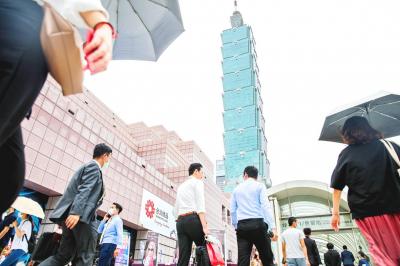
Japanese footwear brand Onitsuka Tiger today issued a public apology and said it has suspended an employee amid allegations that the staff member discriminated against a Vietnamese customer at its Taipei 101 store. Posting on the social media platform Threads yesterday, a user said that an employee at the store said that “those shoes are very expensive” when her friend, who is a migrant worker from Vietnam, asked for assistance. The employee then ignored her until she asked again, to which she replied: "We don't have a size 37." The post had amassed nearly 26,000 likes and 916 comments as of this

New measures aimed at making Taiwan more attractive to foreign professionals came into effect this month, the National Development Council said yesterday. Among the changes, international students at Taiwanese universities would be able to work in Taiwan without a work permit in the two years after they graduate, explainer materials provided by the council said. In addition, foreign nationals who graduated from one of the world’s top 200 universities within the past five years can also apply for a two-year open work permit. Previously, those graduates would have needed to apply for a work permit using point-based criteria or have a Taiwanese company
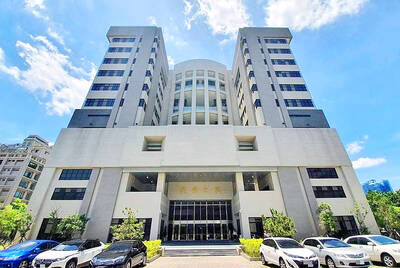
The Shilin District Prosecutors’ Office yesterday indicted two Taiwanese and issued a wanted notice for Pete Liu (劉作虎), founder of Shenzhen-based smartphone manufacturer OnePlus Technology Co (萬普拉斯科技), for allegedly contravening the Act Governing Relations Between the People of the Taiwan Area and the Mainland Area (臺灣地區與大陸地區人民關係條例) by poaching 70 engineers in Taiwan. Liu allegedly traveled to Taiwan at the end of 2014 and met with a Taiwanese man surnamed Lin (林) to discuss establishing a mobile software research and development (R&D) team in Taiwan, prosecutors said. Without approval from the government, Lin, following Liu’s instructions, recruited more than 70 software


 RSS
RSS