


Representative to the US King Pu-tsung (金溥聰) said on Monday that Washington’s stance toward Taiwan remains unchanged following US President Barack Obama’s meeting with Chinese President Xi Jinping (習近平) this month.
King said the US remains committed to providing Taiwan with defensive weapons as stipulated in the Taiwan Relations Act, enacted in 1979 when Washington and Taipei severed diplomatic ties.
According to a briefing on the meeting by US officials, the Chinese side raised the issue of Taiwan as it often does, King said. However, the US stance on the matter was firm, and Obama stated clearly from the beginning that the US would provide Taiwan with defensive weapons where necessary.

Photo: CNA
The US also said it was happy to see the two sides of the Taiwan Strait continue to engage in peaceful dialogue and move toward mutually beneficial development. It also hoped that the Taiwan issue could be decided by both sides, especially by the 23 million people on Taiwan, King said. He said the most important aspect of the summit was that it did not change Washington’s stance on Taiwan.
King was also asked about China’s advocacy of building “a new model of major country relationship” with the US.
“As long as it does not undermine the interests of the Republic of China, we are happy to see them further develop better relations,” King said on the sidelines of a ceremony at which Taiwan and Maryland agreed to mutually recognize each other’s driver’s licenses.
Effective immediately, Taiwanese license holders who have legal resident status in Maryland can obtain a Maryland driver’s license without taking the requisite tests. Americans who have a Maryland driver’s license can enjoy reciprocal treatment in Taiwan.
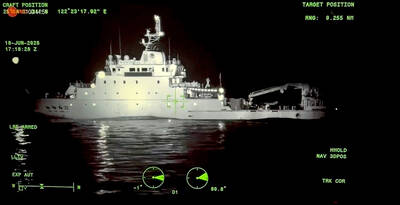
EXCUSES: Beijing is using government and research vessels as a pretext to harass the nation and enter its EEZ, and engage in ‘hegemonic expansion,’ the coast guard said The Coast Guard Administration yesterday said it drove away Chinese oceanographic research vessel Xiang Yang Hong 22 (向陽紅33) from restricted waters after warning it that it was in Taiwan’s exclusive economic zone (EEZ). The Chinese vessel entered restricted waters off the coast of Yilan County’s Suao (蘇澳) at 11:35pm on Thursday, the coast guard said, adding that it dispatched the Lanyu patrol vessel and the boat PP-10077 to shadow the Chinese ship and issue radio warnings ordering it to leave. China has no sovereignty over waters off Taiwan’s east coast, Lanyu’s crew told Xiang Yang Hong 22 over the radio, and demanded
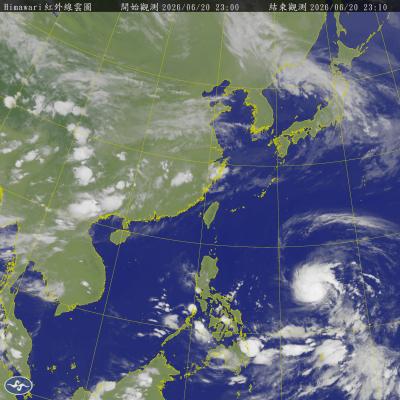
Tropical Storm Mekkhala is forecast to strengthen into a typhoon tomorrow and could come close enough to Taiwan later in the week to prompt a sea warning, the Central Weather Administration (CWA) said yesterday. As of 2 pm, the storm was located 1,870 kilometers southeast of Taiwan's southern tip and moving west- northwest at 23 km per hour. CWA forecaster Cheng Chieh-jen (鄭傑仁) said Mekkhala is expected to continue moving west-northwest through Tuesday under the influence of the Pacific high- pressure system before gradually turning north toward waters east of Taiwan or south of the Ryukyu Islands. The timing and angle of the
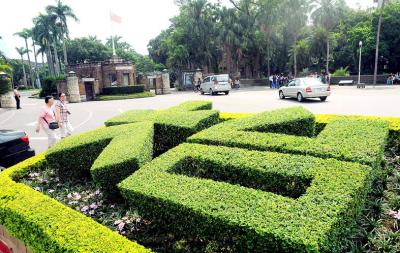
Four Taiwanese universities have been ranked among the world's top 200 institutions in the Quacquarelli Symonds (QS) World University Rankings for next year, the highest Taiwan has ever placed in the category, with National Taiwan University (NTU) achieving its best performance at 54th globally and 17th in Asia. The four Taiwanese institutions in the global top 200 are NTU (54th), National Tsing Hua University (142nd), National Yang Ming Chiao Tung University (177th) and National Cheng Kung University (191st), the rankings showed. All four universities achieved their highest-ever global rankings this year, QS data showed. National Cheng Kung University entered the top 200 for

RISING POPULARITY: Enhanced flight connectivity and a visa waiver trial program are among the motivations that have boosted travel to Taiwan by Filipinos, the agency said The Tourism Administration said yesterday that it is stepping up efforts to attract tourists from the Philippines following strong growth during the first quarter. The agency’s data showed the nation welcomed 210,000 Filipino visitors from January to March, marking a 43 percent increase compared with the same period last year. The Philippines is Taiwan’s top source of inbound tourists among the Southeast Asian nations, data showed. With a population of 116 million and national median age of 26, the Philippines boasts a young demographic with strong travel potential, the Tourism Administration said. Outbound travel demand in the Philippines continues to rise amid robust


 RSS
RSS