


Legislators urged government agencies to limit commercial advertising of alcoholic fruit drinks targeting young people and to consider amending regulations on the sale and promotion of alcoholic beverages to underage groups.
Chinese Nationalist Party (KMT) Legislator Alicia Wang (王育敏) said on Tuesday that while people under the age of 18 are prohibited from drinking alcohol, there has been a proliferation of advertising aimed at minors.
“These ads use entertainers and other celebrities as spokespeople to promote alcoholic beverages. The alcohol companies’ ads are brainwashing young consumers,” she said.
“Fruit-punch drinks and bubbly wines are packaged with images of fruit and emphasize the addition of fruit juice content. They are passed off as healthy drinks and are becoming the entry point for minors to start drinking alcohol,” Wang said.
According to information from the Department of Health’s Bureau of Health Promotion, one in four young people between the ages of 12 and 17 has tried alcoholic drinks, with 23 percent purchasing the beverages on their own.
“This shows the store owners are derelict in their duty [to follow the law and deter underage drinking]. We will propose amendments to the Tobacco and Alcohol Administration Act (菸酒管理法),” she said.
The amendment would require stores to set up specific demarcated sections for alcohol products to avoid confusing minors, and the packaging of alcoholic drinks must have clear warnings with distinguishing colors stating: “Alcohol consumption by an underage person is prohibited.”
Wang accused government agencies of negligence, as more companies use popular entertainers to promote alcohol among the young, creating an impression of a fun and happy lifestyle, similar to adverts by soft-drink companies.
She also pointed to the promotion of alcohol as embedded marketing in television shows such as soap operas, which she said government agencies have done nothing to regulate.
KMT Legislator Liao Kuo-tung (廖國棟) has proposed a draft act aimed at the prevention of the harmful effects of alcoholic beverages, which has been forwarded to a legislative committee for assessment and review.
The draft act includes a “health tax” on alcohol and would ban alcohol ads on the radio and television, in newspapers and in other forms of media.
It would also ban entertainers and sports personalities from appearing in advertising and promotional campaigns by alcoholic product companies.
According to articles in the draft act, the health tax on alcohol would be 20 percent of the sale price.
Proceeds from the tax would go to a safety preparation fund for the National Health Insurance Program, cancer prevention and awareness, treatment of alcoholics, subsidies for areas with inadequate health clinic resources, public education on the harmful effects of alcohol and support for victims of drunk drivers.
Hsieh Chih-hua (謝志華), head of the Ministry of Finance’s National Treasury Agency’s Fifth Division, said that all alcohol products should conform to the Tobacco and Alcohol Administration Act (菸酒管理法).
He said that if legislators want to have new guidelines for the sale and advertising of alcohol, then the law must be amended.
Chien Hsu-cheng (簡旭徵), an official from the National Communications Commission’s Department of Content Affairs, said that in the past a commercial for an alcoholic drink incurred a fine for featuring grade-school and high-school students.
However, a number of advertisements currently target young people through promotion of a fun lifestyle associated with the drinking of alcoholic beverages, but no fines have been levied on those responsible for the adverts, he said.
Taiwan Tobacco and Liquor Corp chairman Hsu An-hsuan (徐安旋) said in most supermarkets and convenience stores, alcoholic drinks are placed together in one section, as there is no legal requirement for them to be placed in a specific area.
Regarding packaging and warnings labels, Hsu said that once policy is set, companies will comply and follow the rules.
On potentially prohibiting entertainers and athletes from promoting alcoholic drinks, he said that many international alcoholic beverage companies have famous stars and sports personalities promoting their products, and that there are already guidelines for this.
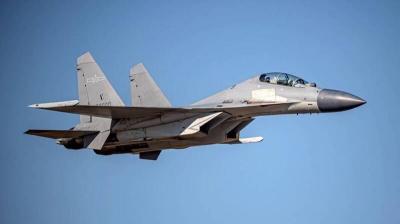
Eight Chinese naval vessels and 24 military aircraft were detected crossing the median line of the Taiwan Strait between 6am yesterday and 6am today, the Ministry of National Defense said this morning. The aircraft entered Taiwan’s northern, central, southwestern and eastern air defense identification zones, the ministry said. The armed forces responded with mission aircraft, naval vessels and shore-based missile systems to closely monitor the situation, it added. Eight naval vessels, one official ship and 36 aircraft sorties were spotted in total, the ministry said.
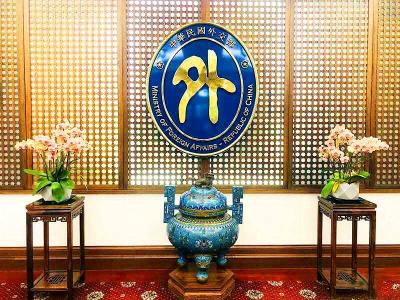
The Ministry of Foreign Affairs (MOFA) today said that if South Korea does not reply appropriately to its request to correct Taiwan’s name on its e-Arrival card system before March 31, it would take corresponding measures to alter how South Korea is labeled on the online Taiwan Arrival Card system. South Korea’s e-Arrival card system lists Taiwan as “China (Taiwan)” in the “point of departure” and “next destination” fields. The ministry said that it changed the nationality for South Koreans on Taiwan’s Alien Resident Certificates from “Korea” to “South Korea” on March 1, in a gesture of goodwill and based on the

Taiwanese officials were shown the first of 66 F-16V fighter jets purchased by Taiwan from the United States, the Ministry of National Defense said yesterday, adding the aircraft has completed an initial flight test and is expected to be delivered later this year. A delegation led by Deputy Minister of National Defense Hsu Szu-chien (徐斯儉) visited Lockheed Martin’s F-16 C/D Block 70 (also known as F-16V) assembly line in South Carolina on March 16 to view the aircraft. The jet will undergo a final acceptance flight in the US before being delivered to Taiwan, the
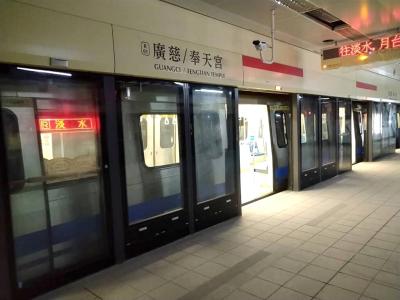
The New Taipei Metro's Sanyin Line and the eastern extension of the Taipei Metro's Tamsui-Xinyi Line (Red Line) are scheduled to begin operations in June, the National Development Council said today. The Red Line, which terminates at Xiangshan Station, would be connected by the 1.4km extension to a new eastern terminal, Guangci/Fengtian Temple Station, while the Sanyin Line would link New Taipei City's Tucheng and Yingge stations via Sanxia District (三峽). The council gave the updates at a council meeting reviewing progress on public construction projects for this year. Taiwan's annual public infrastructure budget would remain at NT$800 billion (US$25.08 billion), with NT$97.3


 RSS
RSS