


Opponents of the fourth-stage development project at the Central Taiwan Science Park say the government should immediately halt the project after the Taipei High Administrative Court revoked the development permit issued to Central Taiwan Science Park Administration yesterday.
The ruling from the High Administrative Court has made the project the first case in the country in which the development permit was revoked. It could potentially disrupt the government’s plan to turn the Erlin Science Park — the site reserved for the park’s fourth stage development project — into a precision-industry park as well.
Some may also see the ruling as a slap in the face for President Ma Ying-jeou (馬英九), because he used the development project at Central Taiwan Science Park in his National Day address as an example of how the government plans to lift investment barriers and balance development in different regions.
Farmers in Erlin Township (二林), Changhwa County, who filed the administrative lawsuit, were elated yesterday and said the development project should be stopped immediately following the court’s decision.
The High Administrative Court said in the verdict that the Ministry of the Interior, which issued the development permit, failed to consider that many science parks tend to be over-developed and that some of the nation’s industrial zones still have massive properties that have yet to be used. It is unnecessary for the government to spend enormous amounts of money to develop the Erlin Park, the court said.
“The development [in Erlin Park] will cause serious waste of the nation’s land and resources, compromise food safety and affect the nation’s sustainability,” the court said. “Revoking the permit will not contradict the public interest. Rather, the ruling would safeguard a major public interest.”
In response, the National Science Council, which supervises the operations of science parks around the nation, said it was surprised by the ruling yesterday.
“The High Administrative Court had twice overruled the residents’ petitions in its rulings on Aug. 23 and Dec. 30 in 2010, which were later finalized at the Supreme Administrative Court with its rulings on Oct. 22 and Dec. 29 of the same year,” the council said. “The High Administrative Court has made a completely different decision this time. We are seeking to understand the rationale behind the ruling.”
The council said it would appeal the case to the Supreme Administrative Court, adding that the ruling from the High Administrative Court would not have any bearing on the efficacy of the development permit at this point. Meanwhile, the council’s plan to turn Erlin Park into a low-water use, low carbon emission industrial zone remains unchanged.
Attorney Chang Yu-yin (張譽尹), who represented 85 farmers in the lawsuit, said the Ministry of the Interior had twice asked the Ministry of Justice about the legality of several issues during the lawsuit, including the fact that the interior ministry did not secure written approval from the Council of Agriculture about the use of the land and did not possess documentation proving ownership of the land and buildings.
The justice ministry had replied that the interior ministry had violated relevant regulations during its inquiries, but the interior ministry had deliberately hidden and ignored this crucial information, Chang said.
The Taiwan Farmers’ Union, said that the ruling serves as a good opportunity for the government to stop development, return the land to farmers and properly consider the issue of sustainability.
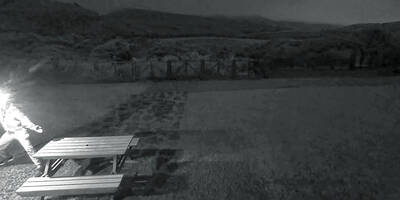
Yangmingshan National Park authorities yesterday urged visitors to respect public spaces and obey the law after a couple was caught on a camera livestream having sex at the park’s Qingtiangang (擎天崗) earlier in the day. The Shilin Police Precinct in Taipei said it has identified a suspect and his vehicle registration number, and would summon him for questioning. The case would be handled in accordance with public indecency charges, it added. The couple entered the park at about 11pm on Thursday and began fooling around by 1am yesterday, the police said, adding that the two were unaware of the park’s all-day live
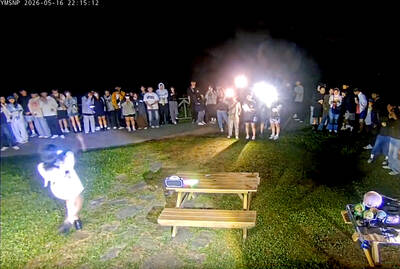
Yangmingshan National Park’s Qingtiangang (擎天崗) nature area has gone viral after a park livestream camera observed a couple in the throes of intimate congress, which was broadcast live on YouTube, drawing large late-night crowds and sparking a backlash over noise, bright lights and disruption to wildlife habitat. The area’s livestream footage appeared to show a couple engaging in sexual activity on a picnic table in the park on Friday last week, with the uncensored footage streamed publicly online. The footage quickly spread across social media, prompting a tide of visitors to travel to the site to “check in” and recreate the

Fast food chain McDonald's is to raise prices by up to NT$5 on some products at its restaurants across Taiwan, starting on Wednesday next week, the company announced today. The prices of all extra value meals and sharing boxes are to increase by NT$5, while breakfast combos and creamy corn soup would go up by NT$3, the company said in a statement. The price of the main items of those meals, if ordered individually, would remain the same. Meanwhile, the price of a medium-sized lemon iced tea and hot cappuccino would rise by NT$3, extra dipping sauces for chicken nuggets would go up

Minister of Digital Affairs Lin Yi-ching (林宜敬) yesterday cited regulatory issues and national security concerns as an expert said that Taiwan is among the few Asian regions without Starlink. Lin made the remarks on Facebook after funP Innovation Group chief executive officer Nathan Chiu (邱繼弘) on Friday said Taiwan and four other countries in Asia — China, North Korea, Afghanistan and Syria — have no access to Starlink. Starlink has become available in 166 countries worldwide, including Ukraine, Malaysia, the Philippines and Vietnam, in the six years since it became commercial, he said. While China and North Korea block Starlink, Syria is not


 RSS
RSS