


Premier Sean Chen (陳冲) will weigh in on a disagreement between the Environmental Protection Administration (EPA) and Ministry of Economic Affairs (MOEA) regarding a decision that could lead to Formosa Petrochemical Corp’s (台塑石化) withdrawal from an investment project.
Executive Yuan spokesperson Hu Yu-wei (胡幼偉) yesterday said that Chen was aware of the impact the EPA’s decision will have on the investment climate and will look carefully into the case.
Members of the EPA’s environmental impact assessment committee on Thursday voted 9 to 6 to reject the appeal filed by the corporation against an earlier decision it made on Aug. 3 that volatile organic compound (VOC) emissions generated from flares, water cooling tanks, and while painting, cleaning and performing annual maintenance on water storage tanks, are sources of pollutants subject to the VOC limit.
The Chinese-language Liberty Times (the Taipei Times’ sister paper) on Friday quoted Formosa Petrochemical chairman Chen Bao-lang (陳寶郎) as saying that the decision could cause the company to abandon the project to build a hydrogenated styrenic block copolymer (HSBC) plant, which would cost NT$6.2 billion (US$211.46 million) and be jointly funded by the US-based Kraton Polymers.
Chen Bao-lang was quoted as saying that he regretted the decision, but would respect it.
The project is known as the fourth-phase expansion of Formosa Plastics’naphtha cracker in Yunlin County’s Mailiao Township (麥寮), where many are worried about air quality being worsened by the petrochemical plant and the impact it has on residents’ health.
Minister of Economic Affairs Shih Yen-shiang (施顏祥) issued a press release on Friday saying that he was extremely worried about the consequences the EPA’s policy might have and urged the agency and members of environmental impact assessment committee to seriously consider how their decision would affect investors’ willingness to invest in Taiwan.
In response to Shih’s remarks, EPA Minister Stephen Shen (沈世宏) suggested that the EPA be stripped of its veto power over investment projects and that environmental impact assessments of construction projects be conducted by any regulatory agency whichever grants development permits, in this case the MOEA.
Hu yesterday said the Cabinet will have interagency meeting to discuss the issue when necessary.

FUKUOKA SITUATION: Japanese media reported that the pathogen is expected to be identified by the summer, while the CDC downplayed the idea that it was hMPV A “mysterious cold-like illness” reported in Japan’s Fukuoka Prefecture does not seem to be a new disease, but Japanese authorities have been asked about the situation, the Centers for Disease Control (CDC) said yesterday. The Fukuoka Prefectural Medical Association on Wednesday told a news conference that a “mystery cold” that has become a hot topic on social media is “highly likely to be caused by some kind of viral infection,” Japan’s KBC News reported. “Many people are experiencing symptoms starting with a sore throat, followed by a runny nose, phlegm and a severe cough,” KBC News reported, citing association officials. Health authorities are

Nvidia Corp CEO Jensen Huang (黃仁勳) arrived in Taiwan yesterday ahead of upcoming AI and technology events, saying he plans to meet with clients and Taiwan Semiconductor Manufacturing Co Chairman C.C. Wei (魏哲家) during his visit. After landing at Taipei Songshan Airport, Huang posed for photos with fans and handed out Yakult drinks to reporters and supporters waiting at the scene, saying he has “a lot to do” during the trip. Asked about reports that Nvidia’s planned headquarters site in Taipei’s Beitou Shilin Technology Park could break ground on May 27, Huang said that if the company holds an event, he would
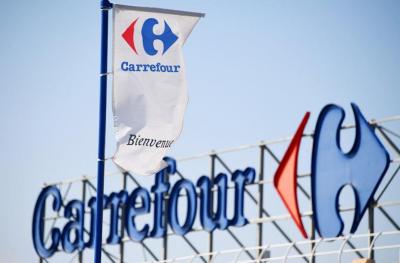
Carrefour Taiwan is to begin using a new name from the start of July, but it cannot divulge the name until then, the chairman of the supermarket chain's parent company said today. President Chain Store Co chairman Lo Chih-hsien (羅智先) was asked by reporters after a shareholders' meeting to confirm whether the company has settled on a new name for the supermarket brand. In March, the government-registered name of two Carrefour Taiwan branches was quietly changed to "Le Chia Kang" (樂家康) in Chinese, raising speculation that has been selected as the name. Lo said that because of local regulations and contractual obligations, the
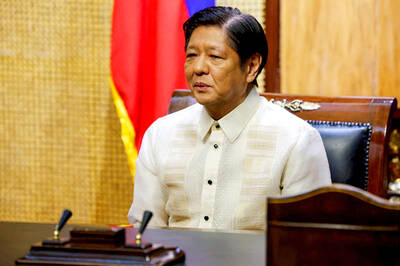
The Philippines would likely be involved in any conflict over Taiwan due to its proximity to the democracy claimed by China, President Ferdinand Marcos Jr said, reiterating a stance that risks angering Beijing. “In the Philippines, we do not have a choice because Taiwan is so close to the Philippines and we have almost 200,000 Filipino nationals living and working in Taiwan,” Marcos said in an interview with Japanese media in Manila on Monday. The Philippine leader’s comments come ahead of a state visit to Japan next week, where he is to meet with Japanese Prime Minister Sanae Takaichi to discuss security


 RSS
RSS