


Two major earthquakes that struck far apart from each other 13 years ago, have brought two distant countries — Taiwan and Turkey — together on the path of humanitarian aid.
“I was certain that my house was going to collapse,” Turkey-based Taiwanese businessman Faisal Hu (胡光中) said of the night of Aug. 17, 1999, when a magnitude 7.6 earthquake hit Turkey, claiming tens of thousands of lives.
Rescue teams from all over the world rushed to Turkey to help save those trapped under the rubble. However, Hu said a feeling of resentment began to grow in his heart when days passed and there were no reports of Taiwanese aid coming.
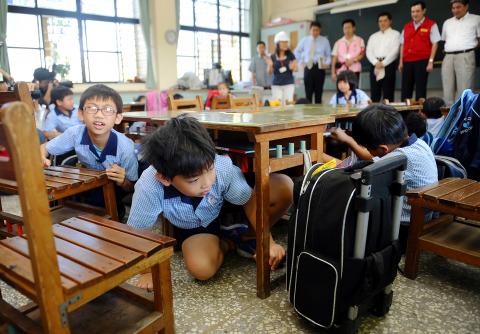
Chang Chia-ming, Taipei Times
Hu, a Muslim, said he later learned that the Buddhist Compassion Relief Tzu Chi Foundation, one of Taiwan’s largest charity groups, had sent a disaster assessment team from Kosovo to Turkey to assist with disaster relief on the day after the earthquake.
Tzu Chi had donated prefabricated houses and 200 tents to the earthquake victims in Turkey, said Ferhan Merter, a member of Turkish charity Kimse Yok Mu. Merter had assisted Tzu Chi in their earthquake relief at that time.
He said in a recent interview in Istanbul that the two charities had since enjoyed close ties, visiting and learning from each other.
Just close to one month after the earthquake in Turkey, Taiwan suffered one of its deadliest temblors on Sept. 21, which left more than 2,400 people dead.
The Taiwanese volunteers in Turkey faced a difficult decision — stay in Turkey or go back to Taiwan, but they eventually decided to stay, Hu said.
The news was covered by Turkish daily newspaper Zaman, which said the volunteers who stayed in Turkey despite their own disaster back home were carrying out “true humanitarian aid.”
Because of the experience it gained from the disaster relief work in Turkey, Tzu Chi was able to make a speedy entry into the disaster zones in Taiwan after the Sept. 21 quake and set up prefabricated houses in a short time, Hu said.
A rescue team composed of members of the Turkish government and volunteer search and rescue association AKUT also flew to Taiwan after the quake to assist with search and rescue work, he added, calling it “a circulation of goodwill.”
“It doesn’t matter if you come to Turkey, we go there [Taiwan], it’s like paying back to the community of the world,” said Cilasun Bayulgen, director of technical training at rescue group AKUT.
Bayulgen was in Taiwan as a rescuer after the Sept. 21 earthquake.
That bond continues. Years later, Merter said, Kimse Yok Mu donated US$50,000 to help the victims of the 2009 flooding in Taiwan caused by Typhoon Morakot.
Hu said 817 and 921 were two previously unrelated set of numbers, but they have now connected the people of Taiwan and Turkey.

FUKUOKA SITUATION: Japanese media reported that the pathogen is expected to be identified by the summer, while the CDC downplayed the idea that it was hMPV A “mysterious cold-like illness” reported in Japan’s Fukuoka Prefecture does not seem to be a new disease, but Japanese authorities have been asked about the situation, the Centers for Disease Control (CDC) said yesterday. The Fukuoka Prefectural Medical Association on Wednesday told a news conference that a “mystery cold” that has become a hot topic on social media is “highly likely to be caused by some kind of viral infection,” Japan’s KBC News reported. “Many people are experiencing symptoms starting with a sore throat, followed by a runny nose, phlegm and a severe cough,” KBC News reported, citing association officials. Health authorities are

Nvidia Corp CEO Jensen Huang (黃仁勳) arrived in Taiwan yesterday ahead of upcoming AI and technology events, saying he plans to meet with clients and Taiwan Semiconductor Manufacturing Co Chairman C.C. Wei (魏哲家) during his visit. After landing at Taipei Songshan Airport, Huang posed for photos with fans and handed out Yakult drinks to reporters and supporters waiting at the scene, saying he has “a lot to do” during the trip. Asked about reports that Nvidia’s planned headquarters site in Taipei’s Beitou Shilin Technology Park could break ground on May 27, Huang said that if the company holds an event, he would

The Ministry of Finance this afternoon announced the winning numbers for the March-April uniform invoice lottery. The winning number for the NT$10 million (US$318,060) special prize is 19531471, and the winning number for the NT$2 million grand prize is 85941329. Three numbers were drawn for the NT$200,000 first prize: 07225810, 20231230 and 83518781. Those with receipts matching the last seven digits of any of the first-prize numbers will win the NT$40,000 second prize, while those matching the last six digits will win the NT$10,000 third prize. Those whose receipts match the last five digits of the first-prize numbers can claim the NT$4,000 fourth prize,
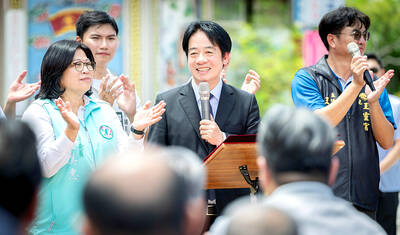
SIX SUBSIDIES: The monthly allowance for older farmers is to increase to NT$10,000, and NT$5,000 is to be given to homemakers under the national pension system, Lai said The government is to implement major welfare policies for disadvantaged groups, including raising the monthly allowance for older farmers to NT$10,000 and providing homemakers with NT$5,000 per month, President William Lai (賴清德) said yesterday. Lai made the remarks during a visit to Wangling Temple in Chiayi County, saying that the planned increases were being introduced amid economic growth and an increase in tax revenue. Touting a policy, in which the government plans to provide a monthly allowance of NT$5,000 for every child under the age of 18 in a bid to address Taiwan’s low birthrate, Lai said that if received for the


 RSS
RSS