


Taiwan Power Co (Taipower), the operator of the nation’s nuclear power plants, said yesterday it has finished replacing and repairing six anchor bolts after local media reported that seven anchor bolts of the first reactor at the Guosheng Nuclear Power Plant in Wanli District (萬里), New Taipei City (新北市), were found to be fractured or cracked during annual maintenance last month.
Because the seventh anchor bolt interferes with other devices on site, it will be necessary to use alternative means to repair it, and its replacement has been scheduled for inclusion in the next major rehabilitation project, Taipower said.
The first reactor, which began commercial operation in 1981, was temporarily shut down on March 16 for routine maintenance. Earlier this month local media revealed that one of the anchor bolts was broken, two fractured, and four cracked. The report was later confirmed by Taipower
Taipower said there are 120 anchor bolts in the first reactor that secure the bottom part of the reactor to the steel-reinforced concrete substrate, and that the weight of all the components in the reactor is supported by the substrate.
It said that according to reactor designer General Electric Co’s (GE) ultrasonic examination, the other 113 anchor bolts were good enough to ensure the reactor’s safe operation. GE said the reactor would be able to resume operation once repairs had been completed, Taipower added.
The fracturing of the anchor bolts could have been caused by defective materials, the manufacturing process, environmental influences or metal fatigue, Taipower said, adding that it was difficult to determine what caused the cracks. However, initial evaluation of the fractured surface appeared to show they were caused by long-term stress instead of sudden shearing.
Taipower said it would consult other related agencies to analyze and fix the problem and add vibration sensors near the supporting base of the reactor for continuous monitoring.
However, at a coordination meeting at the Legislative Yuan on Friday, an official from the Atomic Energy Council said this was the only case of fractured anchor bolts in GE BWR-6 boiling water reactors that had ever been recorded anywhere in the world.
The Chinese-language Liberty Times (the Taipei Times’ sister paper) yesterday quoted a Taipower official named Lin Te-fu (林德福) as saying GE charged US$3 million for the six newly replaced anchor bolts. The rehabilitation price was questioned by civil engineer Wang Wei-min (王偉民), who said the bolts were massively over-priced, and that as the fractures resulted from metal fatigue, all 120 anchor bolts should have been replaced to ensure safe operation.
In response to the media report, Taipower said the rehabilitation work was contracted to GE and included emergency treatment by its specialists, the bolt material, monitoring personnel, structural safety analysis and engineering design, so the price could not be compared with ordinary mechanical components.
The Green Citizens’ Action Alliance, a civic group, said it was concerned that ultrasonic examinations might not detect possible metal fatigue in the remaining 113 original anchor bolts until they cracked.

FUKUOKA SITUATION: Japanese media reported that the pathogen is expected to be identified by the summer, while the CDC downplayed the idea that it was hMPV A “mysterious cold-like illness” reported in Japan’s Fukuoka Prefecture does not seem to be a new disease, but Japanese authorities have been asked about the situation, the Centers for Disease Control (CDC) said yesterday. The Fukuoka Prefectural Medical Association on Wednesday told a news conference that a “mystery cold” that has become a hot topic on social media is “highly likely to be caused by some kind of viral infection,” Japan’s KBC News reported. “Many people are experiencing symptoms starting with a sore throat, followed by a runny nose, phlegm and a severe cough,” KBC News reported, citing association officials. Health authorities are

Nvidia Corp CEO Jensen Huang (黃仁勳) arrived in Taiwan yesterday ahead of upcoming AI and technology events, saying he plans to meet with clients and Taiwan Semiconductor Manufacturing Co Chairman C.C. Wei (魏哲家) during his visit. After landing at Taipei Songshan Airport, Huang posed for photos with fans and handed out Yakult drinks to reporters and supporters waiting at the scene, saying he has “a lot to do” during the trip. Asked about reports that Nvidia’s planned headquarters site in Taipei’s Beitou Shilin Technology Park could break ground on May 27, Huang said that if the company holds an event, he would

The Ministry of Finance this afternoon announced the winning numbers for the March-April uniform invoice lottery. The winning number for the NT$10 million (US$318,060) special prize is 19531471, and the winning number for the NT$2 million grand prize is 85941329. Three numbers were drawn for the NT$200,000 first prize: 07225810, 20231230 and 83518781. Those with receipts matching the last seven digits of any of the first-prize numbers will win the NT$40,000 second prize, while those matching the last six digits will win the NT$10,000 third prize. Those whose receipts match the last five digits of the first-prize numbers can claim the NT$4,000 fourth prize,
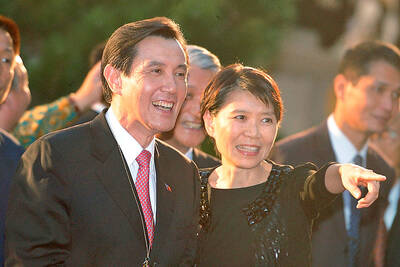
Former president Ma Ying-jeou (馬英九) yesterday expressed “shock and regret” over a statement issued by his wife without his consent, and rejected her assertion that his eldest sister, Ma Yi-nan (馬以南), would manage his medical care or act as his spokesperson amid an ongoing embezzlement probe into his foundation. Ma Ying-jeou in a statement said he was shocked by a statement by his wife, Chou Mei-ching (周美青), regarding his affairs. Ma Yi-nan “must not” be in charge of his healthcare and other personal affairs, nor can she be allowed to represent the Ma family, the former president said. He said he was also


 RSS
RSS