


The Taipei City Government’s Department of Environmental Protection yesterday said it would burn more than 6,700kg of US beef containing ractopamine residue tomorrow to ensure that confiscated beef would not reach consumers.
The confiscated US beef, totaling 6,771 kg, is the first batch of US beef containing the banned feed additive to be destroyed in Taipei in wake of recent inspections of beef products.
According to Kuo Kuo-shin (郭國鑫), a division chief at the department, the beef was confiscated from Taipei-based Shusen Corp, a major beef importer that provides beef to several steakhouse chains, including My Home Steak and Noble Family Steakhouses, and the beef products are now being stored by the city’s Department of Health.
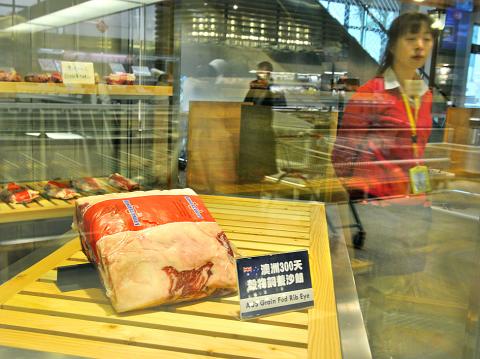
Photo: CNA
The Department of Environmental Protection will burn the beef products tomorrow morning at Muzha Refuse Incineration Plant.
“Some consumers are concerned about the whereabouts of the confiscated beef products and worried that the beef would somehow appear in the markets again. Destroying the beef products is aimed at easing their concerns,” he said.
The Taipei City Government will be the first local government to destroy US beef products confiscated for containing the feed additive. Kuo said the fee for destroying the beef products was about NT$12,400 (US$422), and the importers would foot the bill.
Local city governments began inspections of US beef last month in the wake of recent disputes over the administration of President Ma Ying-jeou’s (馬英九) plan to partially lift the ban on ractopamine in US beef products.
In Taipei, the Department of Health has conducted spot checks at 11 major hypermarkets and supermarkets since last month, and found beef containing ractopamine at the Neihu branches of RT Mart and Carrefour, after which the two hypermarkets immediately pulled all US beef products off the shelves.
Taipei Food and Drug Division Director Chen Li-chi (陳立奇) said the Department of Health had fined Shusen Corp NT$60,000 for importing and selling meat products containing the additive, and that it would continue spot checks on the company and other beef importers to implement the zero-tolerance policy on beef containing ractopamine until the government finalized its decision on the ban.
Under current regulations, local importers that import products containing ractopamine residue are subject to a fine of between NT$60,000 and NT$6 million.
Kuo said the Department of Environmental Protection would continue to assist importers with handling the confiscated beef products, with incinerators in Muzha, Neihu and Beitou available for the burning of meat products.
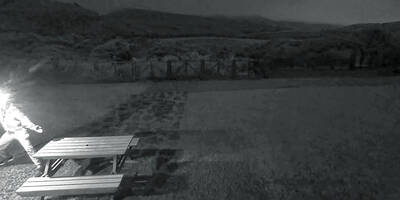
Yangmingshan National Park authorities yesterday urged visitors to respect public spaces and obey the law after a couple was caught on a camera livestream having sex at the park’s Qingtiangang (擎天崗) earlier in the day. The Shilin Police Precinct in Taipei said it has identified a suspect and his vehicle registration number, and would summon him for questioning. The case would be handled in accordance with public indecency charges, it added. The couple entered the park at about 11pm on Thursday and began fooling around by 1am yesterday, the police said, adding that the two were unaware of the park’s all-day live
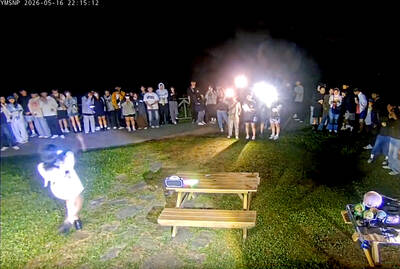
Yangmingshan National Park’s Qingtiangang (擎天崗) nature area has gone viral after a park livestream camera observed a couple in the throes of intimate congress, which was broadcast live on YouTube, drawing large late-night crowds and sparking a backlash over noise, bright lights and disruption to wildlife habitat. The area’s livestream footage appeared to show a couple engaging in sexual activity on a picnic table in the park on Friday last week, with the uncensored footage streamed publicly online. The footage quickly spread across social media, prompting a tide of visitors to travel to the site to “check in” and recreate the
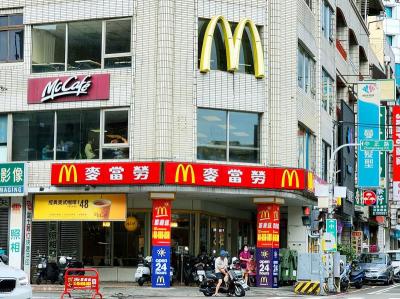
Fast food chain McDonald's is to raise prices by up to NT$5 on some products at its restaurants across Taiwan, starting on Wednesday next week, the company announced today. The prices of all extra value meals and sharing boxes are to increase by NT$5, while breakfast combos and creamy corn soup would go up by NT$3, the company said in a statement. The price of the main items of those meals, if ordered individually, would remain the same. Meanwhile, the price of a medium-sized lemon iced tea and hot cappuccino would rise by NT$3, extra dipping sauces for chicken nuggets would go up

Minister of Digital Affairs Lin Yi-ching (林宜敬) yesterday cited regulatory issues and national security concerns as an expert said that Taiwan is among the few Asian regions without Starlink. Lin made the remarks on Facebook after funP Innovation Group chief executive officer Nathan Chiu (邱繼弘) on Friday said Taiwan and four other countries in Asia — China, North Korea, Afghanistan and Syria — have no access to Starlink. Starlink has become available in 166 countries worldwide, including Ukraine, Malaysia, the Philippines and Vietnam, in the six years since it became commercial, he said. While China and North Korea block Starlink, Syria is not


 RSS
RSS