


Human rights advocates protested in front of the Straits Exchange Foundation (SEF) headquarters in Taipei yesterday, urging officials to include nuclear safety and personal safety on the agenda of the next round of talks with China that begins today.
The seventh meeting between the foundation and China’s Association for Relations Across the Taiwan Straits will be held in Tianjin, China, from today until Friday.
Last Wednesday, the foundation and the Atomic Energy Council confirmed that a nuclear agreement would be signed during the meeting, of which content would focus on improving information exchanges and establishing a reporting and connection mechanism between the two countries.
Developments in the nuclear industry, nuclear power technology transfers and treatment of nuclear waste would not be discussed, the council said.
The advocates, gathered by the Cross-Strait Agreement Watch Alliance, submitted a checklist of human rights issues to the foundation concerning the relationship between countries that they say are substantial to protect personal security.
Green Citizen Action’s Alliance secretary-general Tsui Shu-hsin (崔愫欣) said it was compulsory for countries that suffer nuclear power plant accidents to report them to nearby countries that may be affected.
“We have doubts whether China will honestly report nuclear accidents in time,” Tsui said. “When a radioactive leak occurred at the Daya Bay Nuclear Power Plant in May, media in Hong Kong were only informed about it a month later. Hong Kong is part of China and they were not notified in the shortest time, so do you really think China will report to us?”
She urged that a nuclear accident compensation mechanism and cleanup methods be discussed to ensure the safety of people living opposite China’s eastern coastline, where 14 nuclear power plants are located.
Democratic Progressive Party (DPP) Legislator Tien Chiu-chin (田秋堇) said a compensation mechanism would not be effective.
“I asked Mainland Affairs Council Minister Lai Shin-yuan (賴幸媛) in the legislature a few days ago whether Taiwanese who were severely affected by Chinese protein powder containing melamine were compensated by China and she replied: ‘No.’”
“It makes no sense to sign an agreement with China when it has no effect, just like signing the cross-strait food safety pact after the melamine-contained Chinese protein powder crisis,” she said, adding that signing an agreement would only give people a false impression that both countries had the ability to deal with the matter.
Tien urged the government to implement a goal of becoming a nuclear-free homeland, as stated in Article 23 of the Environmental Basic Act (環境基本法).
Lai Chung-chiang (賴中強), convener of the Cross-Strait Agreement Watch Alliance, said an agreement on protecting the safety of Taiwanese businesspeople could not be signed in this round of talks because the two sides have different legal systems.
He said the talks should include the opinions of civic groups and victims, and that personal security should not be limited to Taiwanese businesspeople, but also tourists, overseas students and all other citizens.
In addition, he said protection of personal security should include a reporting mechanism when a citizen is arrested, legal remedy, and the visiting rights of family members, governmental officials and an attorney.
Amnesty International Taiwan deputy director Yang Tsung-li (楊宗澧) said Lien Song-ching (連松慶) was sentenced to death for drug trafficking in China according to a document submitted by the Hong Kong Police Force in June, when another document from Hong Kong’s Senior Inspector of Police said no drugs were found.
Amnesty International has issued an emergency rescue statement on the case, Yang said, urging the government to take the case seriously and negotiate with Chinese officials to protect Taiwanese.
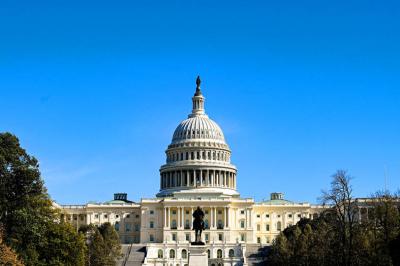
The US House of Representatives yesterday passed the PROTECT Taiwan Act, which stipulates that Washington would exclude China from participating in major global financial organizations if its actions directly threaten Taiwan’s security. The bill, proposed by Republican US Representative Frank Lucas, passed with 395 votes in favor and two against. It stipulates that if China’s actions pose any threat to Taiwan’s security, economic or social systems, the US would, “to the maximum extent practicable,” exclude China from international financial institutions, including the G20, the Bank for International Settlements and the Financial Stability Board. The bill makes it clear that China
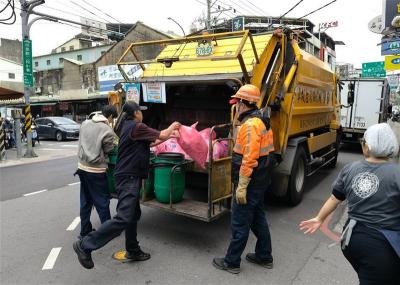
Garbage and recycling schedules are to vary from Saturday through Sunday next week over the Lunar New Year holiday period. The following collection information is from the governments of the six special municipalities. Taipei Regular service: Sunday to Monday next week. No service: Tuesday to Thursday next week. Extra service: Friday next week. Regular service resumes: Saturday next week. New Taipei City Extra service: Sunday. Adjusted collection time: Monday next week — garbage collection is to begin in the morning and end at 6pm. No service: Tuesday to Thursday next week. Regular service resumes: Friday next week. Note: Garbage can be dropped off at 70

A KFC branch in Kaohsiung may be fined between NT$60,000 and NT$200 million (US$1,907 and US$6.37 million), after a customer yesterday found an entire AAA battery inside an egg tart, the Kaohsiung Department of Health said today. The customer was about to microwave a box of egg tarts they had bought at the fast-food restaurant’s Nanzih (楠梓) branch when they checked the bottom and saw a dark shadow inside one of them, they said in a Threads post. The customer filmed themself taking the egg tart apart to reveal an entire AAA battery inside, which apparently showed signs of damage. Surveillance footage showed
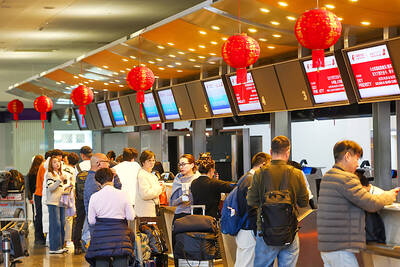
GROUP EFFORT: The number of inbound travelers rose 11 to 12 percent last month, with a significant increase in tourists from Europe and North America, an official said The government aims to attract 9.4 million visitors this year, the Tourism Administration said yesterday, citing last year’s success in diversifying tourist markets. Taiwan last year drew about 8.57 million international arrivals, 72.3 percent of pre-COVID-19 levels. By contrast, the nation had about 18.94 million outbound tourists last year, surpassing the pre-COVID-19 level of 17.1 million. The estimated tourism revenue deficit was about NT$700.9 billion (US$22.22 billion). Taoyuan International Airport Corp expects more than 160,000 passengers to pass through the nation’s largest airport daily during the Lunar New Year holiday, which begins on Saturday. As of Jan. 30, the nation’s average hotel occupancy rate


 RSS
RSS