


Free Wi-Fi service will be available at 2,520 government agency locations, tourist attractions and public transportation spots starting on Oct. 7, President Ma Ying-jeou (馬英九) said yesterday, touting the government’s efforts to expand free wireless services at public locations throughout the nation.
Describing free wireless services as a “digital right,” Ma said the public and foreign visitors could use the service to surf the Internet and send or receive e-mails at public locations.
“People feel welcome when they visit government agencies and get a cup of tea from civil servants. Now the government is offering free wireless services that I think will make people feel more welcome,” he said at the Presidential Office.
“Hopefully it will facilitate government services and help people obtain information in a faster, better way,” he said.
The service will be available inside central government agencies, major train stations, airports and public hospitals. Ma said the government would ensure the quality of free wireless services and expand the network so the entire public could enjoy the right to wireless services.
Research, Development and Evaluation Commission Deputy Minister Sung Yu-hsieh (宋餘俠) said the program would cost about NT$90 million (US$2.9 million).
The Taipei City Government launched a “TPE-Free” wireless service in July at public locations, including MRT stations, municpal libraries, administrative centers and branches of Taipei City Hospital.
Taipei City Department of Information Technology Commissioner Chang Chia-sheng (張家生) said the services would be extended to outdoor areas, including major roads and major residential and commercial areas, such as Zhongxiao E Road, Renai Road, Dunhua S Road and the Xinyi Commercial District.
Free wireless services offered by the central government and the Taipei City Government are available at connection speeds of 512kbps, which is fast enough for basic online functions.

SPACE VETERAN: Kjell N. Lindgren, who helps lead NASA’s human spaceflight missions, has been on two expeditions on the ISS and has spent 311 days in space Taiwan-born US astronaut Kjell N. Lindgren is to visit Taiwan to promote technological partnerships through one of the programs organized by the US for its 250th national anniversary. Lindgren would be in Taiwan from Tuesday to Saturday next week as part of the US Bureau of Educational and Cultural Affairs’ US Speaker Program, organized to celebrate the 250th anniversary of the signing of the Declaration of Independence, the American Institute in Taiwan (AIT) said in a statement yesterday. Lindgren plans to engage with key leaders across the nation “to advance cutting-edge technological partnerships and inspire the next generation of scientists and engineers,”

UNREASONABLE SURVEILLANCE: A camera targeted on an road by a neighbor captured a man’s habitual unsignaled turn into home, netting him dozens of tickets The Taichung High Administrative Court has canceled all 45 tickets given to a man for failing to use a turn signal while driving, as it considered long-term surveillance of his privacy more problematic than the traffic violations. The man, surnamed Tseng (曾), lives in Changhua County and was reported 45 times within a month for failing to signal while driving when he turned into the alley where his residence is. The reports were filed by his neighbor, who set up security cameras that constantly monitored not only the alley but also the door and yard of Tseng’s house. The surveillance occurred from July

A Japan Self-Defense Forces vessel entered the Taiwan Strait yesterday, Japanese media reported. After passing through the Taiwan Strait, the Ikazuchi was to proceed to the South China Sea to take part in a joint military exercise with the US and the Philippines, the reports said. Japan Self-Defense Force vessels were first reported to have passed through the strait in September, 2024, with two further transits taking place in February and June last year, the Asahi Shimbun reported. Yesterday’s transit also marked the first time since Japanese Prime Minister Sanae Takaichi took office that a Japanese warship has been sent through the Taiwan
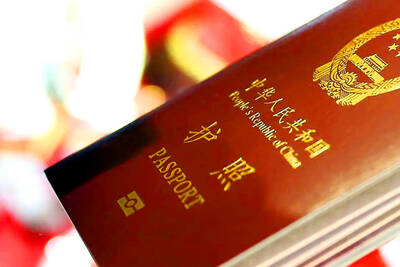
ANOTHER OPTION: The 13-year-old, whose residency status was revoked for holding a Chinese passport, could still apply for residency on humanitarian grounds, the government said The Executive Yuan has rejected an appeal from a 13-year-old Chinese student surnamed Lu (陸), whose permanent residency was revoked after immigration officers discovered he held a Chinese passport. Lu in December 2023 applied to settle in Taiwan to be with his mother, surnamed Lin (林), who is a Taiwan resident, an appeal decision released this month by the Executive Yuan showed. Lin settled in Taiwan after marrying a Taiwanese man in 2003, but the two divorced in 2011, and after marrying a Chinese man, she had Lu, the Executive Yuan’s appeals committee said. Lu’s application was approved in December 2024, and in


 RSS
RSS