


US Assistant Secretary of State for East Asian Affairs Kurt Campbell has refused to throw any new light on Washington deliberations — now in their final and most intense stage — on Taiwan’s request to buy 66 F-16C/D aircraft.
Asked directly for comment on the deliberations, Campbell said: “The United States has a national interest in maintaining peace and stability across the Taiwan Strait and we take that interest very seriously.”
“We are committed to Taiwan’s defense and we support the Taiwan Relations Act,” he said.

Photo: CNA
Speaking at a conference on “US Strategy in the Pacific” at the Center for Strategic and International Studies in Washington, Campbell said: “We frankly have been very pleased by the positive developments we have seen over the course of the last few years across the Strait.”
However, in terms of specifics on the proposed fighter deal, Campbell would make no comment.
US Secretary of State Hillary Rodham Clinton has said that US President Barack Obama will make a decision on the sale by Oct. 1.
There has been a great deal of speculation that he will bow down to Chinese pressure and refuse to sell the new fighters, offering instead to update and refit Taiwan’s existing F-16 fleet.
Nevertheless, there is enormous and growing pressure on Obama from the US Congress, leading academics, the arms industry and independent military experts to sell the advanced fighters.
The Wall Street Journal published an editorial this week saying that it was time for Congress to “act again to correct the executive branch’s inability to withstand pressure from China.”
The newspaper is supporting a proposal by Republican Senator John Cornyn of Texas who has promised to introduce an amendment to the defense authorization bill mandating the sale.
“The idea is that President Obama would find it difficult if not impossible to veto a law that keeps the entire military funded,” the Wall Street Journal said.
“A precedent was set for such a move in 2000, when a Republican-controlled Congress threatened to force former US president Bill Clinton to sell Aegis-equipped destroyers to Taiwan,” it added.
“That became a bargaining ploy that helped a lame-duck administration see its way to selling a bigger package of weapons and radars than it otherwise would have approved,” it said.
Robert Stevens, chief executive of Lockheed Martin Corp — maker of the F-16 — told a conference in Washington this week that allowing the sale would not involve an increase in Taiwan’s ability to defend itself.
“These are replacement airplanes that are requested to assure that there’s no degrading of the country’s ability to defend itself,” he said
“They [Taiwan] currently fly the F-16. They’ve flown the F-16 well and responsibly. So a request for replacement airplanes in my judgment is consistent with the kind of requests our country has received from other countries who buy the F-16,” Stevens added.
Also this week, Foreign Policy magazine published an article saying: “The United States has done more than any other country to turn China into a friend by welcoming it into the international community.”
“Alas, China has not fulfilled this US prophesy of friendship. Instead, China has built what all credible observers call a destabilizing military that has changed the status quo — by holding a gun to Taiwan’s head even as Taiwan makes bold attempts at peace — by claiming ever more territory in the South China Sea and by attempting to bully and intimidate Japan,” it said.
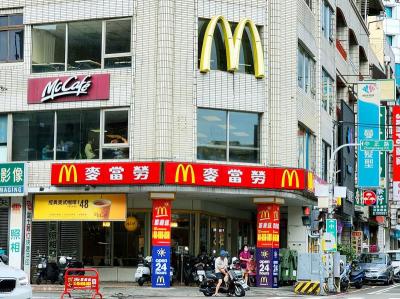
Fast food chain McDonald's is to raise prices by up to NT$5 on some products at its restaurants across Taiwan, starting on Wednesday next week, the company announced today. The prices of all extra value meals and sharing boxes are to increase by NT$5, while breakfast combos and creamy corn soup would go up by NT$3, the company said in a statement. The price of the main items of those meals, if ordered individually, would remain the same. Meanwhile, the price of a medium-sized lemon iced tea and hot cappuccino would rise by NT$3, extra dipping sauces for chicken nuggets would go up

FUKUOKA SITUATION: Japanese media reported that the pathogen is expected to be identified by the summer, while the CDC downplayed the idea that it was hMPV A “mysterious cold-like illness” reported in Japan’s Fukuoka Prefecture does not seem to be a new disease, but Japanese authorities have been asked about the situation, the Centers for Disease Control (CDC) said yesterday. The Fukuoka Prefectural Medical Association on Wednesday told a news conference that a “mystery cold” that has become a hot topic on social media is “highly likely to be caused by some kind of viral infection,” Japan’s KBC News reported. “Many people are experiencing symptoms starting with a sore throat, followed by a runny nose, phlegm and a severe cough,” KBC News reported, citing association officials. Health authorities are

Nvidia Corp CEO Jensen Huang (黃仁勳) arrived in Taiwan yesterday ahead of upcoming AI and technology events, saying he plans to meet with clients and Taiwan Semiconductor Manufacturing Co Chairman C.C. Wei (魏哲家) during his visit. After landing at Taipei Songshan Airport, Huang posed for photos with fans and handed out Yakult drinks to reporters and supporters waiting at the scene, saying he has “a lot to do” during the trip. Asked about reports that Nvidia’s planned headquarters site in Taipei’s Beitou Shilin Technology Park could break ground on May 27, Huang said that if the company holds an event, he would

Carrefour Taiwan is to begin using a new name from the start of July, but it cannot divulge the name until then, the chairman of the supermarket chain's parent company said today. President Chain Store Co chairman Lo Chih-hsien (羅智先) was asked by reporters after a shareholders' meeting to confirm whether the company has settled on a new name for the supermarket brand. In March, the government-registered name of two Carrefour Taiwan branches was quietly changed to "Le Chia Kang" (樂家康) in Chinese, raising speculation that has been selected as the name. Lo said that because of local regulations and contractual obligations, the


 RSS
RSS