


A leading US academic is predicting that as Taiwan moves closer to China under the policies of President Ma Ying-jeou (馬英九), Taipei’s “freedom of action” will erode.
Robert Sutter of George Washington University told a conference titled “The Future of US-Taiwan Relations” that there is a dark underside to the very positive sentiments that are expressed toward Taiwan by Washington.
“There is a lot of good feeling for Taiwan in Washington, but underneath this positive dynamic, Taiwan’s freedom of action is eroding,” he said.
“It cannot reverse its path. That’s the basic conclusion that I have come to,” he said.
Sutter said that the current trends in cross-strait relations were likely to continue and that a “break” was unlikely because the trends were perceived to be in the best interests of Taiwan, the US and China.
He told the conference, organized by the Washington-based Center for National Policy, that the Ma administration had provided decision-makers in all three countries with “a great sense of relief” from the anxiety and danger that emanated from former president Chen Shui-bian’s (陳水扁) “less China-friendly” policies.
At the same time, however, China’s strategic influence over Taiwan had become “enormous” and Taiwan had become “intimidated.” Also, Taiwan had become economically dependent on China and needed China’s permission to expand its international space, he said.
In a printed analysis handed out during the conference, Sutter said: “Close examination shows that public support given by the [US President] Barack Obama government for Ma’s cross-strait policies fails to hide the reduced overall US backing for Taiwan, especially for actions that risk complicating US-China relations for the sake of shoring up support for Taiwan.”
Even if the Democratic Progressive Party won the presidential election in January, Sutter said the party was moving toward the center and while the Taiwan-China relationship might stall for a while, there would be no fundamental break.
“Chinese leverage over Taiwan is growing every day,” he said.
The US wanted to deter China from attacking Taiwan, but at the same time it also wanted to keep the process moving toward an eventual settlement.
The US Congress, he said, would “posture in a certain way” on Taiwan’s behalf, but if things became dangerous they would pull back. Washington, he said, still had a strong determination to help Taiwan, but there was a reluctance to act.
“This administration is re--engaging with Asia big time, but where is Taiwan? It’s not mentioned. It’s not part of it. It’s not there,” he said. “The administration is full of good people. They like Taiwan [and] if China attacks Taiwan, they will be there.”
However, he said that if Taiwan moved in a direction that was not “keeping the engagement going with China,” US support would be thin.
“This pattern of growing ties between China and Taiwan is fully supported by the United States,” he said.
And he stressed that the pattern inevitably narrowed Taiwan’s freedom of action.
“They are just not going to be able to do a lot of the things they used to do and frankly, a lot of this is because they don’t want to. They don’t want to spend money on defense. They don’t want to lose out on the economic advantages of dealing with China,” he said.
“When we reach a point where Taiwan moves in a direction with China that surprises people, when it moves ahead, there might be some people who will point fingers and ask who lost Taiwan. We are all complicit in this. Unless we are out there strongly protesting what is going on — and I don’t see anybody doing that — we are all participants,” Sutter added.
Reminded that a substantial number of members of both houses of Congress had recently written to Obama urging him to sell F-16C/D aircraft to Taiwan, Sutter said that most people he talked to believed the president would agree to upgrade Taiwan’s older F-16A/B aircraft, but would not sell Taiwan the much needed F-16C/Ds.
He said that the upgrades would probably satisfy a lot of the members of Congress who signed the letters supporting F-16C/D sales.
“Yes, Congress likes Taiwan and when the president of Taiwan wants something, they support it, but what they are prepared to do about it if there is a big blow up with China, I am not sure,” he said.
However, he said, the F-16C/D sale was not “on the cards” anyway and so the congressional letters to Obama were “not a real test of how strong sentiment over Taiwan really is or isn’t.”
In response to other questions, Sutter said that he thought Taiwan and China were heading toward a convergence.
“Is this bad for the United States? I don’t think so. It doesn’t have to be if it is peaceful. If Taiwan says, ‘This is what we want,’ what is the US supposed to do — say we object?” he said.
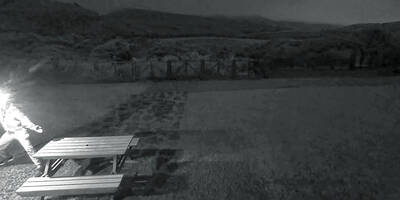
Yangmingshan National Park authorities yesterday urged visitors to respect public spaces and obey the law after a couple was caught on a camera livestream having sex at the park’s Qingtiangang (擎天崗) earlier in the day. The Shilin Police Precinct in Taipei said it has identified a suspect and his vehicle registration number, and would summon him for questioning. The case would be handled in accordance with public indecency charges, it added. The couple entered the park at about 11pm on Thursday and began fooling around by 1am yesterday, the police said, adding that the two were unaware of the park’s all-day live

Fast food chain McDonald's is to raise prices by up to NT$5 on some products at its restaurants across Taiwan, starting on Wednesday next week, the company announced today. The prices of all extra value meals and sharing boxes are to increase by NT$5, while breakfast combos and creamy corn soup would go up by NT$3, the company said in a statement. The price of the main items of those meals, if ordered individually, would remain the same. Meanwhile, the price of a medium-sized lemon iced tea and hot cappuccino would rise by NT$3, extra dipping sauces for chicken nuggets would go up

Yangmingshan National Park’s Qingtiangang (擎天崗) nature area has gone viral after a park livestream camera observed a couple in the throes of intimate congress, which was broadcast live on YouTube, drawing large late-night crowds and sparking a backlash over noise, bright lights and disruption to wildlife habitat. The area’s livestream footage appeared to show a couple engaging in sexual activity on a picnic table in the park on Friday last week, with the uncensored footage streamed publicly online. The footage quickly spread across social media, prompting a tide of visitors to travel to the site to “check in” and recreate the

Minister of Digital Affairs Lin Yi-ching (林宜敬) yesterday cited regulatory issues and national security concerns as an expert said that Taiwan is among the few Asian regions without Starlink. Lin made the remarks on Facebook after funP Innovation Group chief executive officer Nathan Chiu (邱繼弘) on Friday said Taiwan and four other countries in Asia — China, North Korea, Afghanistan and Syria — have no access to Starlink. Starlink has become available in 166 countries worldwide, including Ukraine, Malaysia, the Philippines and Vietnam, in the six years since it became commercial, he said. While China and North Korea block Starlink, Syria is not


 RSS
RSS