


Premier Wu Den-yih (吳敦義) yesterday reiterated that the government will not halt construction on the Fourth Nuclear Power Plant despite protests by anti-nuclear activists and residents from New Taipei City’s (新北市) Gongliao District (貢寮) outside the facility.
“I can assure you that we will not allow the Fourth Nuclear Power Plant to start operation unless it is safe. As for halting construction, I am afraid that is not easy,” Wu told the protesters during his inspection trip to the power plant.
At the request of the protesters, three people were allowed to attend the briefing given by -state-owned Taiwan Power Co (Tai-power), the plant’s operator, on the progress of construction work and precautionary measures put in place to deal with an earthquake or tsunami.
In light of the nuclear crisis at Japan’s tsunami-damaged Fukushima Dai-ichi nuclear power plant, the government, in an effort to alleviate safety concerns, has pushed back the operational date for the Fourth Nuclear Power Plant to 2013, one year later than originally planned.
A resident described the fourth Nuclear Power Plant as a “cannibalized vehicle” as Taipower did not follow the original design of the facilities at the plant laid out by General Electric, but instead arbitrarily introduced 700 design alterations, prompting compatibility concerns.
“The residents here and I have strong doubts about the quality of construction work as there have been a number of incidents, including floods and power outages at the plant over the past 10 years,” another resident said.
Wu instructed Taipower and the Atomic Energy Council, the national nuclear regulator, to take the misgivings people have expressed about the plant seriously and communicate with them in a open and candid way.
The government will invite international experts to inspect the safety of the plant during the pre-operation testing period to make sure that no errors occur during commercial operation, Wu added.

Yangmingshan National Park authorities yesterday urged visitors to respect public spaces and obey the law after a couple was caught on a camera livestream having sex at the park’s Qingtiangang (擎天崗) earlier in the day. The Shilin Police Precinct in Taipei said it has identified a suspect and his vehicle registration number, and would summon him for questioning. The case would be handled in accordance with public indecency charges, it added. The couple entered the park at about 11pm on Thursday and began fooling around by 1am yesterday, the police said, adding that the two were unaware of the park’s all-day live
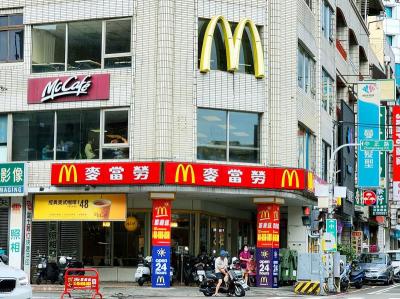
Fast food chain McDonald's is to raise prices by up to NT$5 on some products at its restaurants across Taiwan, starting on Wednesday next week, the company announced today. The prices of all extra value meals and sharing boxes are to increase by NT$5, while breakfast combos and creamy corn soup would go up by NT$3, the company said in a statement. The price of the main items of those meals, if ordered individually, would remain the same. Meanwhile, the price of a medium-sized lemon iced tea and hot cappuccino would rise by NT$3, extra dipping sauces for chicken nuggets would go up
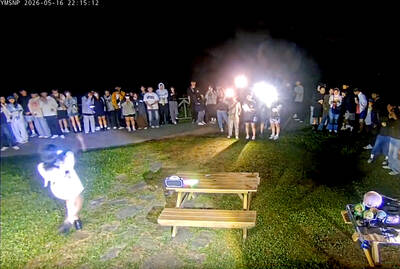
Yangmingshan National Park’s Qingtiangang (擎天崗) nature area has gone viral after a park livestream camera observed a couple in the throes of intimate congress, which was broadcast live on YouTube, drawing large late-night crowds and sparking a backlash over noise, bright lights and disruption to wildlife habitat. The area’s livestream footage appeared to show a couple engaging in sexual activity on a picnic table in the park on Friday last week, with the uncensored footage streamed publicly online. The footage quickly spread across social media, prompting a tide of visitors to travel to the site to “check in” and recreate the

Minister of Digital Affairs Lin Yi-ching (林宜敬) yesterday cited regulatory issues and national security concerns as an expert said that Taiwan is among the few Asian regions without Starlink. Lin made the remarks on Facebook after funP Innovation Group chief executive officer Nathan Chiu (邱繼弘) on Friday said Taiwan and four other countries in Asia — China, North Korea, Afghanistan and Syria — have no access to Starlink. Starlink has become available in 166 countries worldwide, including Ukraine, Malaysia, the Philippines and Vietnam, in the six years since it became commercial, he said. While China and North Korea block Starlink, Syria is not


 RSS
RSS