

Students’ rights to an education should always take priority over teachers’ labor rights, Minister of Education Wu Ching-chi (吳清基) said yesterday in response to complaints about teachers being denied the right to strike.
“I believe teachers understand that students’ right to an education has to take precedence over their rights as workers,” Wu said when approached for comment. “Without students, we won’t need teachers. If teachers sacrifice the rights of students to an education so they can go on strike, that will be unacceptable.”
The question of whether teachers should be allowed to form and participate in labor unions had been a controversial issue in Taiwan. Teachers had been barred from forming labor unions under the Republic of China Act that took effect on Nov. 1, 1929.
The National Teachers Association had argued that the issue was a matter of teachers’ rights, while some parental groups feared that students’ rights might be compromised if teachers were allowed to organize unions.
An amendment to the Labor Union Act (工會法) cleared the legislative floor on Tuesday, granting teachers the rights to organize and take part in labor unions.
However, they are not allowed to form labor unions within their own school. In other words, teachers can only form a labor union with teachers from other schools, thus making the unions a municipal or national level organization.
Although teachers are now free to form labor unions, they are still forbidden from launching strikes, as stipulated in the Settlement of Labor-Management Dispute Act (勞資爭議處理法).
Association chairman Liu Chin-hsu (劉欽旭) said the amendment would only allow teachers to establish “shell labor unions.”
However, Hsieh Kuo-ching (謝國清), chairman of the National Alliance of Parents Organization, said parents should feel relieved that teachers could not go on strike.
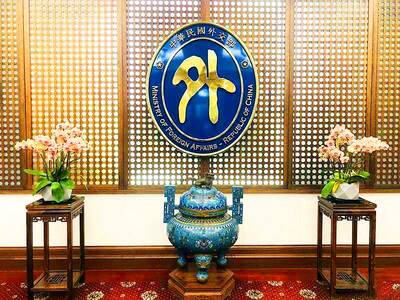
SOUTHBOUND POLICY: Agencies said Thailand, Brunei and the Philippines would benefit from continuation of the program, but Cambodia was rebuffed over rhetoric Conditional visa waiver programs for holders of Thai, Bruneian and Philippine passports are to be extended to July 31 next year to help implement Taiwan’s New Southbound Policy, the Bureau of Consular Affairs said on Friday. The decision was a result of cross-ministry meetings chaired by the Ministry of Foreign Affairs since April 21 for a comprehensive review of the ministry’s visa waiver program for Thai, Brunei and Philippine nationals, the Ministry of the Interior’s Travel Authorization Certificate (TAC), and the Ministry of Transportation and Communication’s Guanhong Project (觀宏專案), also known as the Project for Simplifying Visa Regulations for High-end Group
Taiwan will remove Cambodia from two visa facilitation programs on Aug. 1, while extending eased entry arrangements for Thailand, India and several other Southeast and South Asian countries, the Ministry of Foreign Affairs said Friday. Cambodian nationals will no longer be eligible for the Guanhong Project, which eases visa requirements for certain tour groups, or the Travel Authorization Certificate program, which offers conditional visa-free entry, MOFA said. In a news release, the ministry said Cambodia had failed to reciprocate Taiwan’s goodwill and had instead echoed China in statements undermining Taiwan’s sovereignty. MOFA also accused Cambodia of appearing to support Beijing’s possible use of
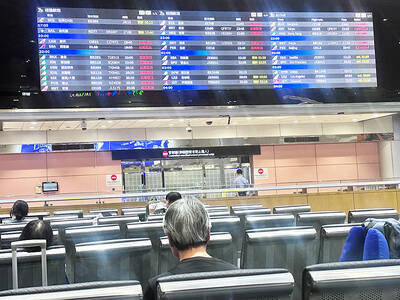
Travel agencies and hotels offering airport pickup services face fines beginning next month if they continue to hold space in arrival halls with placards, luggage or other personal items, Taoyuan International Airport Corp (TIAC) said in a letter to operators. As the number of visitors to Taiwan continues to grow, many travel agencies and hotels provide meet-and-greet services that allow arriving travelers to head directly to their hotels or begin their itineraries upon landing. However, some pickup personnel have been occupying the wall near the exit of the arrival hall with signs, luggage and personal items, obstructing passenger flow, disrupting terminal
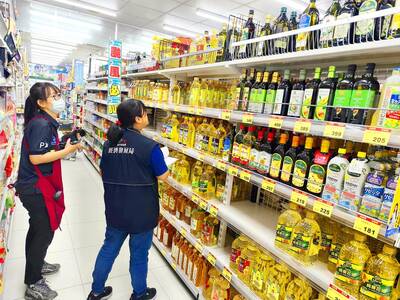
The Food and Drug Administration (FDA) yesterday said that two additional batches of cooking oil produced by Central Union Oil Corp had been found to contain excessive levels of the carcinogen benzopyrene. The contamination was traced to two tainted downstream products, bringing the total number of affected soybean-based cooking oil batches to seven of the 30 batches produced by the company from April to June, the agency said. The tainted oil has affected a total of 1,322 businesses, it added. As of 11am yesterday, 2,584.4 tonnes of contaminated oil products had been removed from shelves, while another 5,126.7 tonnes had been preemptively withdrawn


 RSS
RSS