


Uncertainty over the fate of Department of Health (DOH) Minister Yaung Chih-liang (楊志良) increased yesterday after he revealed that he would still meet President Ma Ying-jeou (馬英九) next Wednesday to brief him on a proposal to increase national health insurance premiums, despite his resignation on Monday.
“It would be very disrespectful to the nation if I missed the scheduled briefing session with the president,” the minister told an impromptu press conference yesterday morning, fueling speculation that he might remain in his post and that his resignation was orchestrated.
Two days after his shock announcement, Yaung stuck to his usual message that the country’s healthcare system must increase premiums to remain solvent.
Yaung resigned on Monday, saying he was unable to deliver on Premier Wu Den-yih’s (吳敦義) promise to ensure that 75 percent of the insured population be spared from the proposed increase in premiums.
Yaung also voiced concern over the government’s possible intention to implement a multiple-rate payment scale, saying that this would necessitate an amendment to the National Insurance Act (全民健保法).
“If the Executive Yuang is adamant on the multi-rate payment scale, then that is what we will discuss,” he said, adding that the purpose of raising premiums was not to further burden the average citizen, but to ensure that all people can enjoy high-quality healthcare.
Under the current system, all insurers must pay 4.55 percent of 30 percent of their registered insurance subscription. The insurance subscription refers to the level at which an employer registers an employee for health insurance, and it is usually roughly equivalent to an employee’s monthly salary.
The department says that a slight increase — to 5.09 percent — could help the debt-ridden Bureau of National Health Insurance (BNHI) recover an extra NT$48.5 billion (US$1.52 billion) a year.
On average, each person would pay NT$78 more each month under the DOH’s plan, which in Yaung’s words, is “equivalent to the cost of a lunch box.”
Asked how he would respond if the president asked him to stay, Yaung would only say: “The fate of my career matters very little.”
BNHI Director-general Cheng Shou-hsia (鄭守夏) is expected to hold a press conference this morning to explain the details of the proposed hike.
Although Wu has rejected Yaung’s resignation twice, the outspoken minister failed to appear at yesterday’s Sanitation, Environment and Social Welfare Committee meeting, which adjourned after only nine minutes.
Committee members said the meeting would reconvene after the new minister is installed.
Yaung has publicly supported former health minister Yeh Ching-chuan’s (葉金川) return to the post.
Medical professionals have speculated that another longtime healthcare reform advocate, former president of the Taiwan Hospital Association Delon Wu (吳德朗) might take over, while others say current Deputy Minister Chang Shan-chwen (張上淳) was the most likely candidate.
Meanwhile, 17 medical associations yesterday released a joint statement urging Yaung to rethink his resignation, touting the minister as a “strong talent” to steer the country through the national insurance crisis.
Yesterday afternoon, Ma met Yaung at Chinese Nationalist Party (KMT) headquarters and urged him not to resign.
Ma, who also doubles as KMT chairman, had a private talk with Yaung for about five minutes before presiding over the KMT Central Standing Committee meeting.
“President Ma told Minister Yaung that all the problems [related to the insurance proposal] can be solved. He urged him not to be rash and not act on impulse,” KMT Spokesman Su Jun-pin (蘇俊賓) said, declining to say whether Yang had changed his mind after meeting Ma.
ADDITIONAL REPORTING BY MO YAN-CHIH
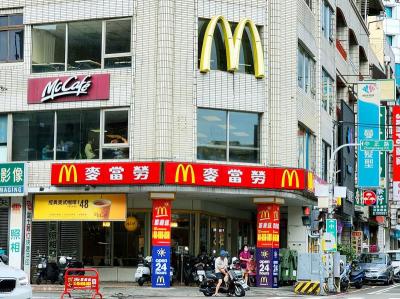
Fast food chain McDonald's is to raise prices by up to NT$5 on some products at its restaurants across Taiwan, starting on Wednesday next week, the company announced today. The prices of all extra value meals and sharing boxes are to increase by NT$5, while breakfast combos and creamy corn soup would go up by NT$3, the company said in a statement. The price of the main items of those meals, if ordered individually, would remain the same. Meanwhile, the price of a medium-sized lemon iced tea and hot cappuccino would rise by NT$3, extra dipping sauces for chicken nuggets would go up
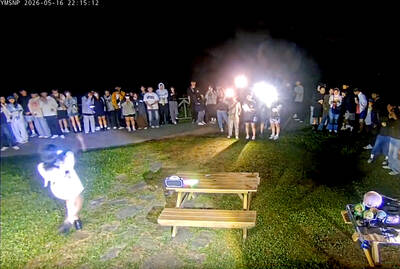
Yangmingshan National Park’s Qingtiangang (擎天崗) nature area has gone viral after a park livestream camera observed a couple in the throes of intimate congress, which was broadcast live on YouTube, drawing large late-night crowds and sparking a backlash over noise, bright lights and disruption to wildlife habitat. The area’s livestream footage appeared to show a couple engaging in sexual activity on a picnic table in the park on Friday last week, with the uncensored footage streamed publicly online. The footage quickly spread across social media, prompting a tide of visitors to travel to the site to “check in” and recreate the

Minister of Digital Affairs Lin Yi-ching (林宜敬) yesterday cited regulatory issues and national security concerns as an expert said that Taiwan is among the few Asian regions without Starlink. Lin made the remarks on Facebook after funP Innovation Group chief executive officer Nathan Chiu (邱繼弘) on Friday said Taiwan and four other countries in Asia — China, North Korea, Afghanistan and Syria — have no access to Starlink. Starlink has become available in 166 countries worldwide, including Ukraine, Malaysia, the Philippines and Vietnam, in the six years since it became commercial, he said. While China and North Korea block Starlink, Syria is not
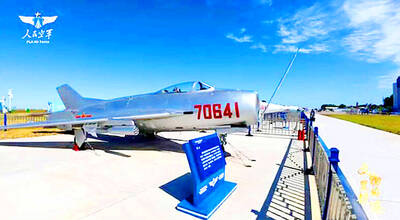
GROUNDED: A KMT lawmaker proposed eliminating drone development programs and freezing funding for counterdrone systems, despite China’s adoption of the technology China has deployed attack drones at air bases near the Taiwan Strait in a strategy aimed at overwhelming Taiwan’s air defense systems through saturation attacks, the Mainland Affairs Council (MAC) said. The council’s latest quarterly report on China said that satellite imagery and open-source intelligence indicate that the Chinese People’s Liberation Army (PLA) had converted retired J-6 fighter jets into J-6W drones, which the PLA has stationed at six air bases near Taiwan, five in China’s Fujian Province and one in Guangdong Province. The report cited J. Michael Dahm, a senior fellow at the US-based Mitchell Institute, as saying that China has


 RSS
RSS