


A documentary on exiled Uighur rights activist Rebiya Kadeer and a film featuring ordinary Tibetans’ views on China will be screened in five cities around the country on Thursday to mark the 60th anniversary of the establishment of the People’s Republic of China (PRC), an opposition magazine said yesterday.
The Movement, a magazine established by former Democratic Progressive Party (DPP) legislator Lo Wen-chia (羅文嘉), and the Taiwan Friends of Tibet will co-host the event.
“[The PRC] will celebrate its 60th birthday on Oct. 1. While China is deemed a rising power in politics and economics, we want to tell the world about its hegemonic nature and that its brutal treatment of Tibetans and Uighurs has not changed,” Lo said.
The suffering of Tibetans and Uighurs under the Chinese regime should be revealed as it celebrates the 60th anniversary of its founding, Taiwan Friends of Tibet chairwoman Chow Mei-li (周美里) said.
“Since the March uprising last year, [Beijing] has continued to arrest Tibetans,” Chao said.
One of the two films to be shown in Taipei, Taichung, Tainan, Kaohsiung and Pingtung on Thursday is the 10 Conditions of Love, a documentary about Kadeer, the leader of the World Uyghur Congress who lives in Washington in exile, and directed by Australia-based Jeff Daniels.
Also to be shown is Leaving Fear Behind by Tibetan director Dhondup Wangchen, who traversed thousands of kilometers to ask ordinary Tibetans what they feel about the Dalai Lama, China and the Olympic Games and completed the interviews in March last year.
The footage was smuggled out of Tibet under extraordinary circumstances and edited in Europe, while Wangchen was arrested in July last year on allegations of “inciting separatism and stealing, secretly gathering, purchasing and illegally providing intelligence for an organization, institution, or personnel outside the country.”
Chao said the Chinese authorities had ignored calls by Amnesty International and many human rights groups to release Wangchen, who has reportedly been tortured in prison.

Fast food chain McDonald's is to raise prices by up to NT$5 on some products at its restaurants across Taiwan, starting on Wednesday next week, the company announced today. The prices of all extra value meals and sharing boxes are to increase by NT$5, while breakfast combos and creamy corn soup would go up by NT$3, the company said in a statement. The price of the main items of those meals, if ordered individually, would remain the same. Meanwhile, the price of a medium-sized lemon iced tea and hot cappuccino would rise by NT$3, extra dipping sauces for chicken nuggets would go up

Yangmingshan National Park’s Qingtiangang (擎天崗) nature area has gone viral after a park livestream camera observed a couple in the throes of intimate congress, which was broadcast live on YouTube, drawing large late-night crowds and sparking a backlash over noise, bright lights and disruption to wildlife habitat. The area’s livestream footage appeared to show a couple engaging in sexual activity on a picnic table in the park on Friday last week, with the uncensored footage streamed publicly online. The footage quickly spread across social media, prompting a tide of visitors to travel to the site to “check in” and recreate the

Minister of Digital Affairs Lin Yi-ching (林宜敬) yesterday cited regulatory issues and national security concerns as an expert said that Taiwan is among the few Asian regions without Starlink. Lin made the remarks on Facebook after funP Innovation Group chief executive officer Nathan Chiu (邱繼弘) on Friday said Taiwan and four other countries in Asia — China, North Korea, Afghanistan and Syria — have no access to Starlink. Starlink has become available in 166 countries worldwide, including Ukraine, Malaysia, the Philippines and Vietnam, in the six years since it became commercial, he said. While China and North Korea block Starlink, Syria is not
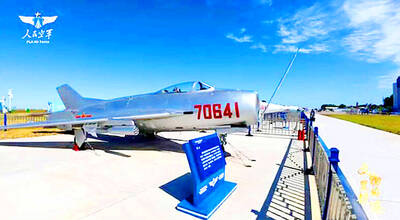
GROUNDED: A KMT lawmaker proposed eliminating drone development programs and freezing funding for counterdrone systems, despite China’s adoption of the technology China has deployed attack drones at air bases near the Taiwan Strait in a strategy aimed at overwhelming Taiwan’s air defense systems through saturation attacks, the Mainland Affairs Council (MAC) said. The council’s latest quarterly report on China said that satellite imagery and open-source intelligence indicate that the Chinese People’s Liberation Army (PLA) had converted retired J-6 fighter jets into J-6W drones, which the PLA has stationed at six air bases near Taiwan, five in China’s Fujian Province and one in Guangdong Province. The report cited J. Michael Dahm, a senior fellow at the US-based Mitchell Institute, as saying that China has


 RSS
RSS