


A broad-based dialogue as close as possible to a consensus is essential before Taiwan’s cross-strait negotiations can advance to more difficult issues, American Institute in Taiwan (AIT) Director Stephen Young said yesterday, adding that Taiwan’s democracy plays an important role in managing the process.
Speaking at an American Chamber of Commerce (AmCham) luncheon, Young likened the changing level of difficulty in negations to a video game in which players face tougher challenges as they move up levels.
“Even as we welcome Taiwan’s increased engagement with the People’s Republic of China, however, we must not lose sight of the qualities that underpin Taiwan’s unique success: the vibrant democracy, civil society and open economy,” Young said.
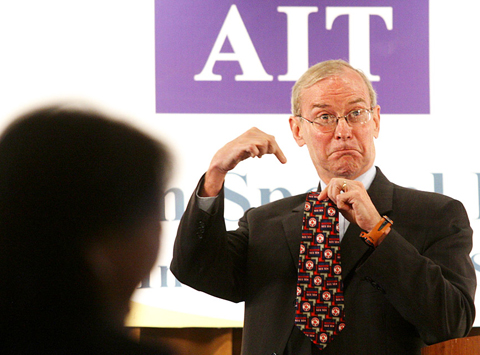
PHOTO: CNA
Young said it is important in these tumultuous economic and political times that “Taiwan sustains its achievements in this area, including by fostering open dialogue and consensus-building across party lines.”
The government’s plan to sign an economic cooperation framework agreement with Beijing has sparked opposition from the pan-green camp. While pro-government supporters believe the deal would strengthen Taiwan’s economic muscle, the Democratic Progressive Party and the Taiwan Solidarity Union say that any treaties with Beijing must first win public consensus before being signed.
When asked about the possibility of Washington sending a Cabinet member, especially one with an economic profile, to visit Taiwan, Young said such an option had never been excluded but acknowledged it had been a long time since a high-level government official had visited.
Young said that while he understood the symbolism behind such visits, “I am not distressed by the channel of communication between us.”
US-Taiwan relations have always been firmly rooted in the pursuit of mutual interests, Young said, adding that the infrastructure for joining hands and the willingness to do so, such as over an extradition treaty and an agricultural pact, have been established.
Young is set to leave his posting this summer after serving as the top US representative to Taiwan for three years.
Washington has yet to announce his successor. The current US deputy chief of mission to Seoul, William Stanton, is rumored to be the likely replacement.
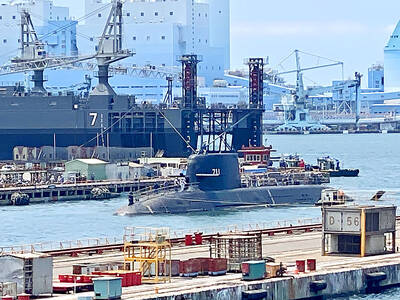
AGING: While Japan has 22 submarines, Taiwan only operates four, two of which were commissioned by the US in 1945 and 1946, and transferred to Taiwan in 1973 Taiwan would need at least 12 submarines to reach modern fleet capabilities, CSBC Corp, Taiwan chairman Chen Cheng-hung (陳政宏) said in an interview broadcast on Friday, citing a US assessment. CSBC is testing the nation’s first indigenous defense submarine, the Hai Kun (海鯤, Narwhal), which is scheduled to be delivered to the navy next month or in July. The Hai Kun has completed torpedo-firing tests and is scheduled to undergo overnight sea trials, Chen said on an SET TV military affairs program. Taiwan would require at least 12 submarines to establish a modern submarine force after assessing the nation’s operational environment and defense

A white king snake that frightened passengers and caused a stir on a Taipei MRT train on Friday evening has been claimed by its owner, who would be fined, Taipei Rapid Transit Corp (TRTC) said yesterday. A person on Threads posted that he thought he was lucky to find an empty row of seats on Friday after boarding a train on the Bannan (Blue) Line, only to spot a white snake with black stripes after sitting down. Startled, he jumped up, he wrote, describing the encounter as “terrifying.” “Taipei’s rat control plan: Release snakes on the metro,” one person wrote in reply, referring
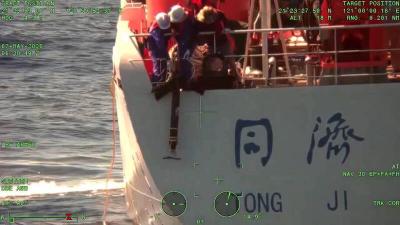
The coast guard today said that it had disrupted "illegal" operations by a Chinese research ship in waters close to the nation and driven it away, part of what Taipei sees a provocative pattern of China's stepped up maritime activities. The coast guard said that it on Thursday last week detected the Chinese ship Tongji (同濟號), which was commissioned only last year, 29 nautical miles (54km) southeast of the southern tip of Taiwan, although just outside restricted waters. The ship was observed lowering ropes into the water, suspected to be the deployment of scientific instruments for "illegal" survey operations, and the coast
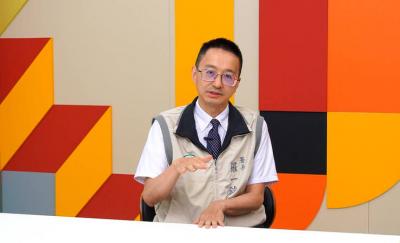
Taiwan’s two cases of hantavirus so far this year are on par with previous years’ case numbers, and the government is coordinating rat extermination work, so there should not be any outbreaks, Centers for Disease Control (CDC) Director-General Philip Lo (羅一鈞) said today in an interview with the Liberty Times (the Taipei Times’ sister newspaper). An increase in rat sightings in Taipei and New Taipei City has raised concerns about the spread of hantavirus, as rats can carry the disease. In January, a man in his 70s who lived in Taipei’s Daan District (大安) tested positive posthumously for hantavirus, Taiwan’s


 RSS
RSS