


Electric arc furnaces (EAF) are frequently used in the scrap metal industry. When improperly treated, the dust they produce causes heavy metal contamination in soil and underground water, and can release dioxins into the air.
To ensure companies follow EAF dust regulations, the Environmental Protection Administration’s (EPA) southern inspection squad last year formed a special team and discovered 40 cases in which businesses failed to follow EAF dust regulations.
“EAF dust is what is left over when scrap metal is heated to extremely high temperatures [up to 1,800ºC] to reclaim the metal that is needed,” southern inspection squad director Lee Chien-te (李建德) said.
“For example, say you are trying to extract steel from scrap metal, but your scrap also contains bits of zinc, lead, mercury or plastic — the chloride [from plastic], mercury, zinc and lead vaporizes and once the steel has been taken away, the oxidized zinc, lead and dioxins [resulting from the burning plastic] are oxidized and cooled in the extractive air flow and mixed into a resulting dust,” Lee said.
The dust is collected by environmental protection facilities in the factories for further processing, Lee said.
While aluminum EAF dust is generally benign and can be processed in regular landfills, steel and iron dust is mostly toxic and needs to go through a more complex treatment process — such as solidifying the dust into blocks and placing them in landfills designated for harmful substances, he said.
However, not every factory that produces toxic dust complies with the regulations, as the process costs more than processing regular waste, Lee said.
“We targeted factories that make secondary metals and found 40 cases where the dust was not treated properly. While some of it was aluminum dust, some was steel or iron,” Lee said.
While no cases were found where businesses directly deposited the dust into the soil, Lee said some businesses left toxic substances exposed.
He said with time, oxidized heavy metals would ooze out and find their way into the soil and underground water.
“This year, we will continue to tackle illegal treatment of EAF dust and we hope that all businesses will shoulder their responsibility to the environment and honestly report on their EAF dust. Those who fail to do so will face heavy fines,” Lee said.

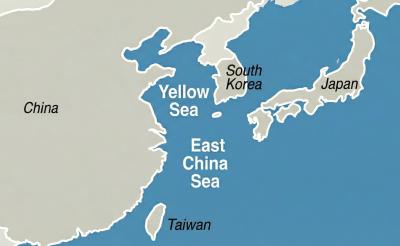
China has reserved offshore airspace in the Yellow Sea and East China Sea from March 27 to May 6, issuing alerts usually used to warn of military exercises, although no such exercises have been announced, the Wall Street Journal (WSJ) reported yesterday. Reserving such a large area for 40 days without explanation is an “unusual step,” as military exercises normally only last a few days, the paper said. These alerts, known as Notice to Air Missions (Notams), “are intended to inform pilots and aviation authorities of temporary airspace hazards or restrictions,” the article said. The airspace reserved in the alert is

South Korea is planning to revise its controversial electronic arrival card, a step Taiwanese officials said prompted them to hold off on planned retaliatory measures, a South Korean media report said yesterday. A Yonhap News Agency report said that the South Korean Ministry of Foreign Affairs is planning to remove the “previous departure place” and “next destination” fields from its e-arrival card system. The plan, reached after interagency consultations, is under review and aims to simplify entry procedures and align the electronic form with the paper version, a South Korean ministry official said. The fields — which appeared only on the electronic form

A bipartisan group of US senators has introduced a bill to enhance cooperation with Taiwan on drone development and to reduce reliance on supply chains linked to China. The proposed Blue Skies for Taiwan Act of 2026 was introduced by Republican US senators Ted Cruz and John Curtis, and Democratic US senators Jeff Merkley and Andy Kim. The legislation seeks to ease constraints on Taiwan-US cooperation in uncrewed aerial systems (UAS), including dependence on China-sourced components, limited access to capital and regulatory barriers under US export controls, a news release issued by Cruz on Wednesday said. The bill would establish a "Blue UAS
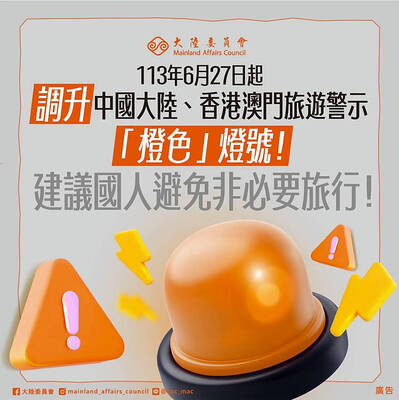
More than 6,000 Taiwanese students have participated in exchange programs in China over the past two years, despite the Mainland Affairs Council’s (MAC) “orange light” travel advisory, government records showed. The MAC’s publicly available registry showed that Taiwanese college and university students who went on exchange programs across the Strait numbered 3,592 and 2,966 people respectively. The National Immigration Agency data revealed that 2,296 and 2,551 Chinese students visited Taiwan for study in the same two years. A review of the Web sites of publicly-run universities and colleges showed that Taiwanese higher education institutions continued to recruit students for Chinese educational programs without


 RSS
RSS