


President Ma Ying-jeou (馬英九) yesterday promised to revive the nation’s tourism industry and local economy with a NT$30 billion (US$890 million) tourism industry development fund.
The government is also seeking visa-free travel to the US and European countries, the president said.
The number of visitors to Taiwan and Japan increased after the two nations granted 90-day visa-free entry to each other’s citizens. The government will continue negotiating with the US and the EU in a bid to secure visa-free travel programs, Ma said.
Statistics from the Tourism Bureau showed that the number of tourists visiting Taiwan increased by 3.5 percent last year.
The growth is encouraging given the fact that departures dropped by 5.5 percent during the year, Ma said.
The number of tourists visiting Taiwan each year was still much less when compared with other countries in Asia such as Hong Kong, South Korea and Singapore.
“Following the implementation of cross-strait direct links, Taiwan is no longer subject to any restrictions in terms of its transport and connection to the outside world. Taiwan should use its geographical advantage to develop the tourism industry,” Ma said yesterday at the “Tour Taiwan Year 2009” festivities held at the Grand Hotel.
Accompanied by Minister of Transportation and Communications Mao Chi-kuo (毛治國) and representatives from the tourism industry, Ma promised to carry out his campaign promise of establishing a NT$30 billion fund to help develop the tourism industry and also to focus the government’s efforts on integrating the tourism industry with healthcare and cultural industries to create even more business opportunities.
In addition to attracting Chinese visitors, the government and private sectors should also provide more measures to attract visitors from other countries, Ma said.
The Cabinet has listed NT$1 billion this year for tourism industry developmentt, Ma said.
ADDITIONAL REPORTING BY CNA
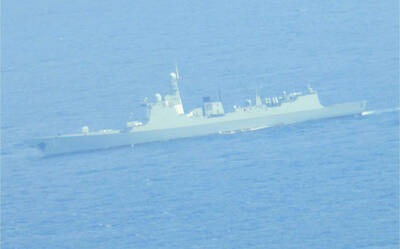
The military has spotted two Chinese warships operating in waters near Penghu County in the Taiwan Strait and sent its own naval and air forces to monitor the vessels, the Ministry of National Defense (MND) said. Beijing sends warships and warplanes into the waters and skies around Taiwan on an almost daily basis, drawing condemnation from Taipei. While the ministry offers daily updates on the locations of Chinese military aircraft, it only rarely gives details of where Chinese warships are operating, generally only when it detects aircraft carriers, as happened last week. A Chinese destroyer and a frigate entered waters to the southwest
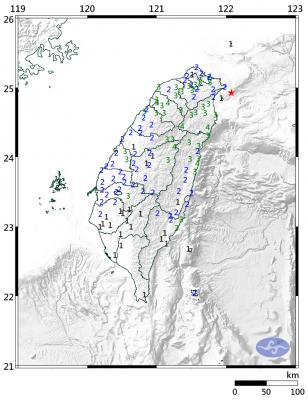
A magnitude 6.1 earthquake struck off the coast of Yilan County at 8:39pm tonight, the Central Weather Administration (CWA) said, with no immediate reports of damage or injuries. The epicenter was 38.7km east-northeast of Yilan County Hall at a focal depth of 98.3km, the CWA’s Seismological Center said. The quake’s maximum intensity, which gauges the actual physical effect of a seismic event, was a level 4 on Taiwan’s 7-tier intensity scale, the center said. That intensity level was recorded in Yilan County’s Nanao Township (南澳), Hsinchu County’s Guansi Township (關西), Nantou County’s Hehuanshan (合歡山) and Hualien County’s Yanliao (鹽寮). An intensity of 3 was
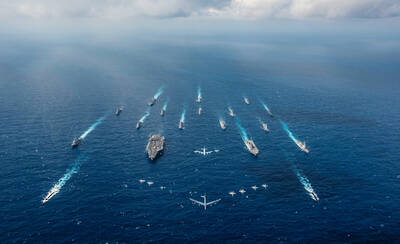
Japanese Prime Minister Sanae Takaichi’s comment last year on Tokyo’s potential reaction to a Taiwan-China conflict has forced Beijing to rewrite its invasion plans, a retired Japanese general said. Takaichi told the Diet on Nov. 7 last year that a Chinese naval blockade or military attack on Taiwan could constitute a “survival-threatening situation” for Japan, potentially allowing Tokyo to exercise its right to collective self-defense. Former Japan Ground Self-Defense Force general Kiyofumi Ogawa said in a recent speech that the remark has been interpreted as meaning Japan could intervene in the early stages of a Taiwan Strait conflict, undermining China’s previous assumptions
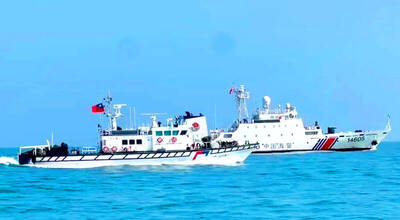
Instead of focusing solely on the threat of a full-scale military invasion, the US and its allies must prepare for a potential Chinese “quarantine” of Taiwan enforced through customs inspections, Stanford University Hoover fellow Eyck Freymann said in a Foreign Affairs article published on Wednesday. China could use various “gray zone” tactics in “reconfiguring the regional and ultimately the global economic order without a war,” said Freymann, who is also a nonresident research fellow at the US Naval War College. China might seize control of Taiwan’s links to the outside world by requiring all flights and ships entering or leaving Taiwan


 RSS
RSS