


Taipei Times: You previously said the KTA planned to continue to push the agenda; could you elaborate?
Yu Chu-cheng (于居正): We are going to improve how we approach the issue. The Referendum Law (公民投票法) stipulates that we are unable to propose a similar referendum within three years. We will improve our strategy in communicating the issue to parents. We are likely to push the agenda by lobbying city councilors to increase the government budget reserved for education.
Although we suffered defeat in this referendum, the issue touched everyone’s hearts, regardless of their stance on the matter. The referendum also showed people that we should care more about our next generation.
Many city councilors have called us to offer their encouragement and promised to push the issue for us in the city council. This is wonderful because they never discusse issues like this with us. Although the outcome of the referendum was unsatisfactory, we were still pleased because the bid was meaningful. More than 90 percent of the people who voted on the referendum agreed with the need [to reduce the number of students in a class]. With such strong public support, we will continue to push the agenda.
TT: The turnout of the referendum was 5.35 percent. How do you feel about that? Do you think it could be because the public is too used to discussing political issues while ignoring public policy issues?
Yu: Many factors could have contributed to the low turnout. First of all, the city government urging people to vote against the referendum in the election commission’s official announcement of the referendum had something of a negative impact on the outcome. Also, many borough chiefs failed to issue voting notices to residents. Without the notices, people didn’t know which voting station they should go to. The election commission, as an impartial government agency, should have carried out its responsibility by distributing the notice to every single voter.
I think people are interested in the topic of this referendum. As long as they have children, they will be interested.
But the problem was that it was not held simultaneously with major national elections.
Many people were unclear about the referendum question. If it had been held with major national elections, more voters would have cast their referendum ballots while voting in the elections. It would have had more exposure. As an independent civic group, we did not have any access to major promotion channels. The decrease in the number of voting stations — from some 800 to 300 stations — might have also influenced the outcome, because it made voting inconvenient.
We made a lot of efforts to schedule the referendum on the same day as the legislative or presidential election. We collected the 50,000 signatures required for the second legal threshold of the referendum within two months after passing the first threshold. We urged the election commission to speed up its review process, but the process was still very slow and we could not do anything about it.
I think the Referendum Law should be amended so that an independent organization is responsible for reviewing the signatures. The election commission is not an independent government branch because it depends on the city government for its budget.
Although we asked the election commission to increase the number of voting stations, the commission declined and complained of a limited budget. I felt very discouraged [when hearing this] because people had made such an effort [to gather enough signatures for the referendum]. I felt that we were all alone when pushing the referendum.
TT: How much money did the KTA spend on pushing the referendum?
Yu: Around NT$2 million [US$60,000]. We are not very rich. We spent time raising funds for the referendum, but the economy was bad, so we did not raise a lot of money. We could only depend on teachers to promote the issue. Unfortunately, it failed to become a national issue.
We had been trying to attract reporters to cover the referendum, but while we were promoting the referendum, the media were preoccupied with the wrangling between the pan-blue and the pan-green camps, the visit by [Association for Relations Across the Taiwan Strait Chairman] Chen Yunlin (陳雲林) and the [money-laundering] allegations against former president Chen Shui-bian (陳水扁). Our referendum didn’t get national coverage.

Yangmingshan National Park authorities yesterday urged visitors to respect public spaces and obey the law after a couple was caught on a camera livestream having sex at the park’s Qingtiangang (擎天崗) earlier in the day. The Shilin Police Precinct in Taipei said it has identified a suspect and his vehicle registration number, and would summon him for questioning. The case would be handled in accordance with public indecency charges, it added. The couple entered the park at about 11pm on Thursday and began fooling around by 1am yesterday, the police said, adding that the two were unaware of the park’s all-day live
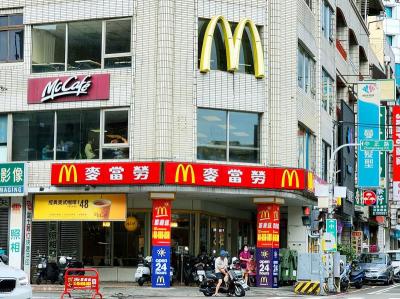
Fast food chain McDonald's is to raise prices by up to NT$5 on some products at its restaurants across Taiwan, starting on Wednesday next week, the company announced today. The prices of all extra value meals and sharing boxes are to increase by NT$5, while breakfast combos and creamy corn soup would go up by NT$3, the company said in a statement. The price of the main items of those meals, if ordered individually, would remain the same. Meanwhile, the price of a medium-sized lemon iced tea and hot cappuccino would rise by NT$3, extra dipping sauces for chicken nuggets would go up

Yangmingshan National Park’s Qingtiangang (擎天崗) nature area has gone viral after a park livestream camera observed a couple in the throes of intimate congress, which was broadcast live on YouTube, drawing large late-night crowds and sparking a backlash over noise, bright lights and disruption to wildlife habitat. The area’s livestream footage appeared to show a couple engaging in sexual activity on a picnic table in the park on Friday last week, with the uncensored footage streamed publicly online. The footage quickly spread across social media, prompting a tide of visitors to travel to the site to “check in” and recreate the

Minister of Digital Affairs Lin Yi-ching (林宜敬) yesterday cited regulatory issues and national security concerns as an expert said that Taiwan is among the few Asian regions without Starlink. Lin made the remarks on Facebook after funP Innovation Group chief executive officer Nathan Chiu (邱繼弘) on Friday said Taiwan and four other countries in Asia — China, North Korea, Afghanistan and Syria — have no access to Starlink. Starlink has become available in 166 countries worldwide, including Ukraine, Malaysia, the Philippines and Vietnam, in the six years since it became commercial, he said. While China and North Korea block Starlink, Syria is not


 RSS
RSS